A 562-Kilometer Desert Road Kept Alive by 109 Couples
The Taklamakan Desert in Xinjiang is a place so dry that locals have long called it the Sea of Death. Rain barely falls, and for hundreds of kilometers there is no surface water at all. Yet a 562-kilometer asphalt highway runs straight through it, and on both sides of that road grows a belt of trees that stretches as far as the eye can see.
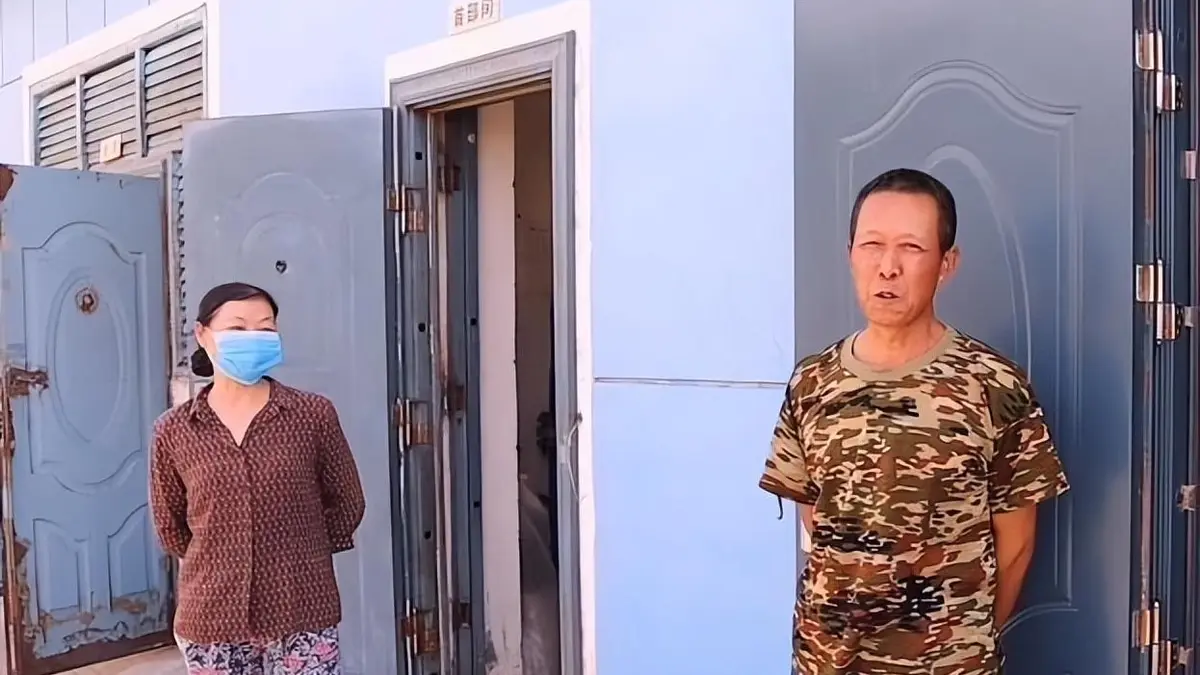
What keeps those trees alive is a system that is easy to miss from a moving car. Every four kilometers, a small house with blue walls and a blue roof stands beside the road. There are 109 of them in total. Each one covers a well, and each well supplies the water that drips into the roots of the roadside greenery. Without the wells, the sand would reclaim the road within a season.
What makes the arrangement unusual is who lives in those houses. Each one is home to a married couple, and many of them have stayed for more than a decade. They are not passing workers on a rotation. They live there year-round, in the middle of a desert, with the nearest neighbor four kilometers away in either direction.
Life in a well house is built around a strict routine. The pumps and drip lines have to be checked, the trees have to be watched for disease and wind damage, and the sand that piles up against the fence has to be cleared. A breakdown in the irrigation system can kill a stretch of trees quickly, so the work is constant and unforgiving. Water for drinking and cooking is scarce and has to be brought in.
The couples who take these posts describe the isolation as the hardest part. There is no village, no market, no crowd, and for long stretches the only sound is wind and the hum of machinery. Some keep small gardens or animals. Some rely on radio and phones to stay in touch with family far away. Over years, the routine itself becomes a kind of company.
The highway has become a modest tourist curiosity in recent years. Drivers crossing the desert sometimes stop to photograph the blue houses and to talk with the people inside. Visitors often come away struck by how ordinary the couples make an extraordinary life sound: they are tending trees, fixing pipes, and getting up early, much like anyone else.
The greening of a desert road is usually told as an engineering success, a story of pumps, pipes and perseverance against sand. The well houses add a human chapter. The trees that shelter the highway exist because 109 couples agreed to live in one of the emptiest places on earth, four kilometers apart, and to keep the water running.
For travelers, the lesson is simple and slightly humbling. The scenery that makes a desert crossing memorable is not natural at all. It is maintained, meter by meter, by people whose names most drivers never learn. The next time a car slows to take a picture of that green line against the sand, it is worth remembering who is inside the little blue house watching the water.