MiniMax Breaks Its IPO Price Even as Revenue Doubles
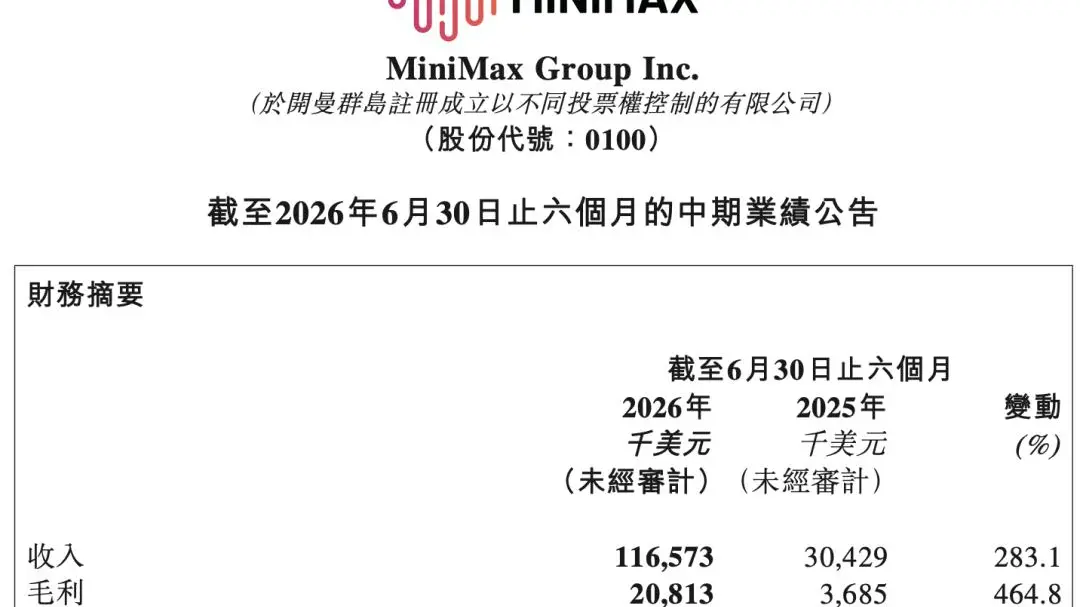
MiniMax, one of China’s best-known artificial intelligence startups, closed at HK$160.7 in Hong Kong on October 22, slipping below its IPO price for the first time. The stock touched HK$158.9 during the session, a drop of more than 7% on the day.
The fall is striking because it runs against the company’s own numbers. In its disclosed 2026 interim results, MiniMax reported first-half revenue of $116.6 million, more than double the same period a year earlier. For a young AI company, that is the kind of growth investors usually reward.
The market, however, is measuring MiniMax against a much higher mark. In March, the shares reached HK$1,330, a historic high that briefly pushed the company’s market value above HK$400 billion. At the latest close, that value is about HK$56.3 billion — a fraction of the peak, even though the business has kept expanding.
That gap is the heart of the story. When a stock is priced for perfection, rapid revenue growth is no longer enough; investors start asking when the growth turns into durable profit. MiniMax sits in a crowded field of large language model developers in China, where several well-funded players are competing for users, enterprise contracts and computing power.
The broader Hong Kong market has also turned more cautious about newly listed technology names. Recent weeks have brought a wave of withdrawn or delayed listings, and several companies have seen their share prices drift below issue levels. Investors are becoming pickier about valuation and timing, even as the IPO pipeline stays busy.
MiniMax’s own listing was one of the more closely watched AI debuts in the city. Its products include consumer-facing AI applications and model services sold to businesses, and the company has been among the Chinese firms pushing multimodal models that handle text, images and audio.
For global readers, the lesson is familiar from AI listings elsewhere: revenue momentum and share-price momentum are two different things. A company can double its sales and still disappoint, if the listing price already assumed years of flawless execution.
The next signal will be MiniMax’s full-year results and any disclosure on how much of its revenue comes from repeat enterprise customers rather than one-off projects. Until then, the market appears to be waiting for proof that fast growth can be sustained — and eventually paid for.