China Opens Four High-Speed Rail Lines in One Day
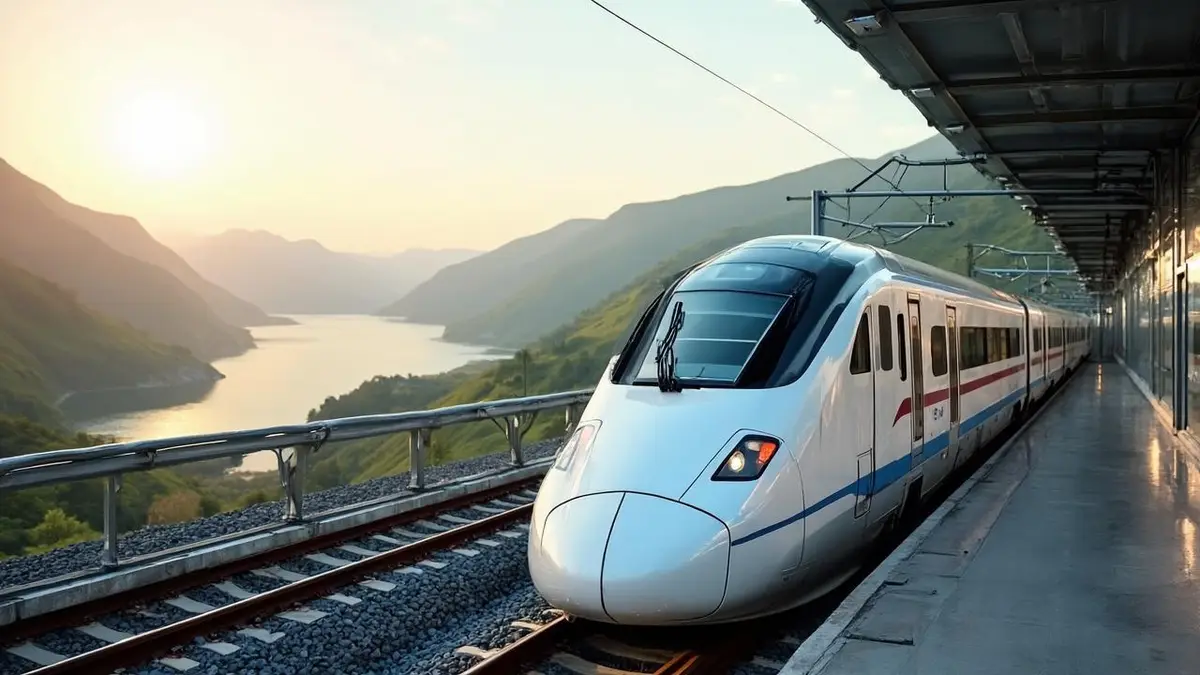
China added four high-speed rail lines to its network on September 28, a single-day expansion that spans the country’s north, northwest, center and northeast just as millions of travelers prepare for the week-long National Day holiday.
The new routes include the Xiong’an–Shangqiu section of the Beijing–Hong Kong high-speed corridor, the Xi’an–Ankang section of the Xi’an–Chongqing line, the Yichang–Xingshan railway in central Hubei province, and the Harbin–Yichun line in the far northeast. Together they extend a rail grid that planners describe as “eight vertical and eight horizontal” corridors, a long-term blueprint for stitching the country together by train.
The Xiong’an–Shangqiu link may be the most closely watched. It starts at Xiong’an Station, a hub built around the new city of Xiong’an in Hebei province, and runs through Cangzhou and Hengshui before reaching Shangqiu in Henan. The fastest trip between the two endpoints is now about two hours and 27 minutes, a journey that previously required far longer by road or connecting trains.
In the northwest, the Xi’an–Ankang section cuts through the Qinling Mountains, a range that has historically slowed travel between the Wei River valley and southern Shaanxi. The Yichang–Xingshan line threads through the mountainous terrain of western Hubei, near the Three Gorges region. In the northeast, the Harbin–Yichun route pushes high-speed service deeper into Heilongjiang province, a region known for its forests and winter scenery.
For travelers, the practical effect is straightforward: shorter trips and more options. For smaller cities along the routes, the arrival of high-speed rail is often treated as an economic milestone. Local governments expect faster access to larger labor markets, tourists and logistics networks, and several places along the new lines are marking their first-ever high-speed rail service.
The timing is deliberate. National Day, which begins October 1, is one of China’s two big annual travel seasons, alongside the Spring Festival. Rail authorities typically add trains and extend operating hours to absorb the surge. New capacity that comes online just before the holiday can ease pressure on the busiest corridors and give holidaymakers alternatives to packed flights.
China’s high-speed rail network is already the largest in the world, and it continues to grow in pieces rather than all at once. Individual sections open as they are completed, gradually closing gaps between cities that were previously connected only by slower conventional lines. The four lines launched this week follow that pattern: none is a standalone project, and each fills in a segment of a longer planned corridor.
Analysts caution that new rail lines do not automatically translate into balanced regional growth. Smaller stations sometimes see limited service at first, and the economic benefits depend on how well local areas connect housing, industry and tourism to the new stops. Still, for residents of the newly connected cities, the change is immediate: a trip that once consumed a day can now fit into a morning.
With the holiday travel rush about to begin, the four new lines will get an early stress test. If the first wave of passengers moves smoothly, the openings will stand as a quiet but tangible upgrade to how people across four regions reach one another.