A Rare Aristotle Text Surfaces in a Silk Road Church Ruin
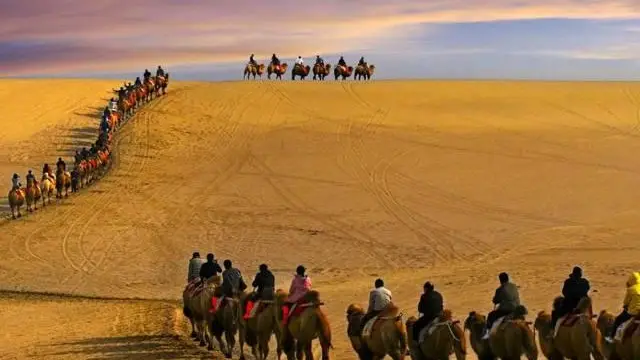
In the sun-baked desert outside Turpan, in China’s far western Xinjiang region, the ruins of a small Christian monastery have yielded one of the most surprising finds in Silk Road archaeology: fragments of a philosophical work by Aristotle, copied in Syriac script and left behind more than a thousand years ago.
The site, known as the Xipang (Xipang) Nestorian monastery near the Grape Valley, was first explored in 1905 by the German archaeologist Albert von Le Coq, who removed a cache of Syriac documents. For decades those fragments sat in museum collections, largely unstudied. Then Chinese scholar Lin Lijuan began the painstaking work of matching and rejoining the scattered pieces. Her reconstruction revealed something remarkable: several fragments carry passages from the tenth chapter of Aristotle’s Categories, the foundational text of Western logic and metaphysics.
The discovery matters because of its date. The Turpan fragments predate by at least several hundred years the Copernican moment when Jesuit missionaries brought printed Aristotle to the Ming court in the late 16th century. The famous Coimbra editions carried by Nicolas Trigault in the early 1600s were long thought to be the first Aristotle to reach China. The desert monastery quietly overturns that assumption.
How did Greek philosophy end up in a Central Asian church? The answer lies in the Silk Road’s role as a conduit not only for silk and spices but for ideas. Nestorian Christianity, a branch of the faith that flourished in the Middle East and Central Asia, established communities along the trade routes into China. Monks and scribes carried manuscripts in Syriac, the liturgical language of many Eastern churches, and some of those texts included Greek philosophy translated into Syriac. Turpan, a fertile oasis on the northern Silk Road, was a cosmopolitan crossroads where merchants, monks and scholars of many faiths met.
The monastery itself reflects that mixing. Its layout and murals show a blend of Central Asian, Chinese and West Asian influences, a reminder that the region’s cultural life was once far more interconnected than its remote setting suggests. The Aristotle fragments fit into this picture: a working library in a desert outpost, where Christian monks studied logic and philosophy alongside their religious texts.
For historians of science and philosophy, the find raises fresh questions about how knowledge traveled. It suggests that Aristotelian ideas may have circulated in China’s western borderlands centuries before they became a subject of elite debate in the imperial capital. It also highlights the role of religious minorities in preserving and transmitting classical learning.
The fragments are not the only treasures from the site. The same collection of Syriac documents includes liturgical texts, letters and other writings that offer a rare window into daily life in a medieval Christian community on the Silk Road. Scholars are still working through the material, and more connections are likely to emerge.
For visitors, the story is a reminder that the Silk Road was never just a route for goods. It was a channel for books, beliefs and ideas, and sometimes those ideas survived in the most unexpected places: a ruined monastery in the desert, waiting a century for someone to piece them back together.