Unitree's Wang Xingxing Says Physical AI Is About to Break Through
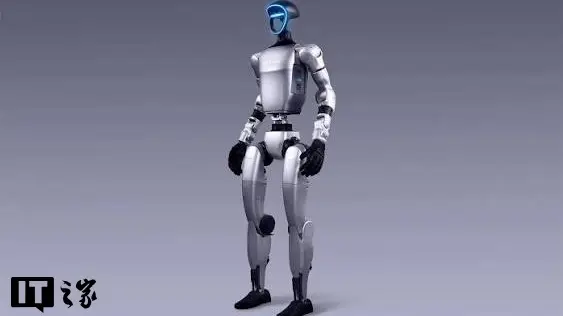
Wang Xingxing, founder of Chinese robotics company Unitree, told an audience in Hangzhou on October 22 that physical AI — artificial intelligence embodied in machines that move and act in the real world — is showing the first signs of a breakthrough. Speaking at the 2026 World Physical AI Conference and Unitree Partner Ecosystem Conference, he said the arrival of GPT-6 has made the leap feel close, possibly within the next one to three years.
Wang’s definition of the “ChatGPT moment” for embodied intelligence is concrete: a robot should be able to enter an unfamiliar environment and complete about 80 percent of its main tasks through voice or text commands. He argued that large models are already strong at planning and navigation, but the core challenge remains aligning what AI models output with what real robots can actually do. That gap between digital intelligence and physical action is where the next wave of progress will be won or lost.
Unitree, based in Hangzhou, has become one of the most visible names in the humanoid robot industry. Wang said the company’s G1 humanoid robot, launched in May 2024, has produced roughly 10,000 to 20,000 units, making it the world’s best-selling humanoid robot. The figure offers a rare public glimpse of production scale in a sector where most companies still talk in prototypes rather than shipments.
Wang also pushed back on the idea that the world has fully embraced AI. He said almost everyone, including himself, still underestimates how seriously AI should be taken. For top model developers, he noted, models have already begun to self-evolve — writing their own programs and collecting their own data with only light human guidance. But the effects are not yet felt widely because technology takes five to ten years to spread from a breakthrough to everyday use.
The conference comes as investor enthusiasm for embodied intelligence has returned. Unitree’s shares have risen sharply in recent trading sessions, lifting its market value back above 200 billion yuan, though the company has cautioned that its rolling price-to-earnings ratio is extremely high. The stock moves underline how much expectations for physical AI now rest on a small number of listed names.
Beyond Unitree, the broader Chinese AI ecosystem is moving quickly on several fronts. MiniMax recently released a new Flash model that topped agent-task rankings, while DeepSeek open-sourced its internal inference framework, DeepInfer. Security researchers also disclosed serious PHP vulnerabilities found with AI assistance and coordinated a global fix. Together, these developments show a sector where model capability, infrastructure and safety are advancing at the same time.
For global readers, Wang’s remarks matter because China is now a major testing ground for physical AI. Humanoid robots are being built at scale, and companies are competing to prove that machines can work reliably outside labs and factories. If Wang’s timeline holds, the next few years could see robots move from demonstrations to everyday deployment — a shift that would affect manufacturing, logistics and services worldwide. Whether that promise is met depends less on flashy demos than on the unglamorous work of making models and machines speak the same language.