China's Holiday Highway Charging Crunch: Four Hours to Save $2.50
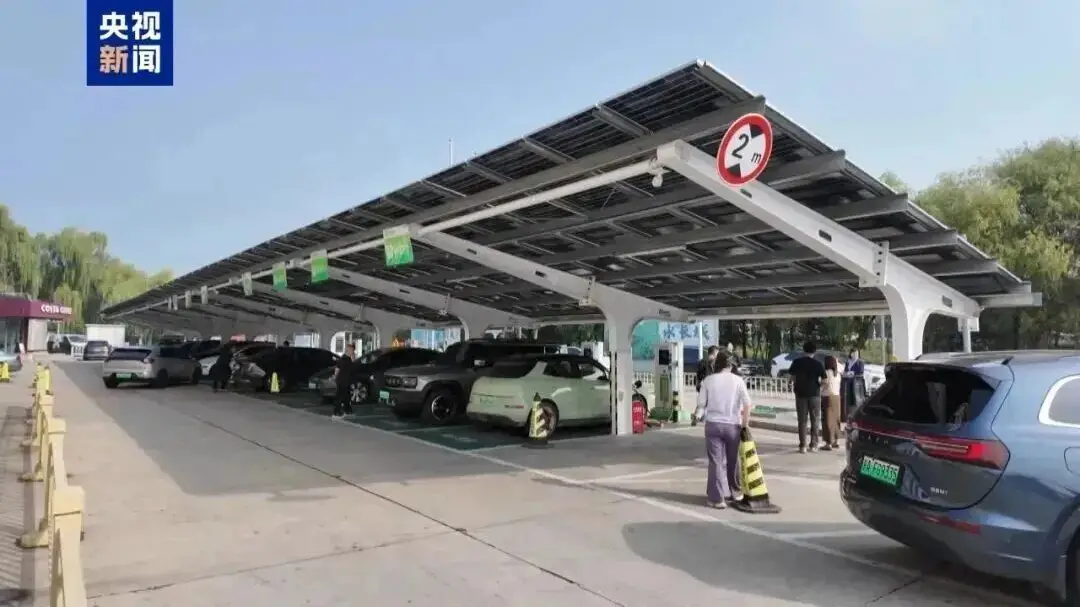
Every long holiday in China brings the same two headaches on the highway: charging and driver-assistance systems. For nine months, automakers had bragged about how fast they were building battery-swap stations and fast chargers, and how reliable their assisted driving had become. Then Golden Week arrived, the week-long National Day holiday that sends hundreds of millions of people onto the roads at once, and the report card came back looking ugly.
This year’s flashpoint was the charging queue. Articles circulating on Chinese tech sites described drivers waiting up to four hours at highway service areas just to save around 18 yuan, roughly $2.50, compared with charging later in the city. The math is brutal: a queue of cars stretches past the restrooms, families take turns napping in the driver’s seat, and the plug becomes the most contested object in the parking lot.
The fight is not only between driver and charger. It is between two kinds of cars. Pure electric vehicles, which rely entirely on the battery, and range-extender electric vehicles, which carry a small gasoline engine to generate electricity when the battery runs low, both line up at the same fast-charging posts. Pure EV owners argue the hybrids do not really need the plug and could just burn a little fuel to keep moving. Hybrid owners counter that they paid for electric driving too, and that the charger is public infrastructure, not a private club.
On social media, the argument gets personal. Some EV drivers post photos of a line of hybrids and ask why they are hogging the few working guns. Hybrid drivers post their own photos of empty charging bays at other times of year and ask why they should be treated as second-class citizens during the one week that matters. Neither side is entirely wrong, which is why the debate returns every holiday like clockwork.
Behind the argument is a simple numbers problem. China has built the world’s largest charging network, but it is not evenly distributed. City dwellers rarely struggle to find a plug on an ordinary Tuesday. On a holiday highway, demand spikes far beyond what any operator planned for, and the weakest link is not the number of stations but the speed of the cars charging and the patience of the people waiting.
Automakers have tried to fix this with faster charging platforms, bigger batteries, and battery-swap stations where a driver exchanges a depleted pack for a full one in minutes. Those solutions work well in the cities where they are concentrated. On the long-haul corridors between provinces, they are still thin. The result is a system that looks impressive on a map and fragile on the first day of a holiday.
The same gap shows up in driver assistance. Every year there are stories of drivers napping behind the wheel on the highway while the car steers itself, and of horns failing to wake them. Carmakers keep improving the software, but the gap between marketing language and real-world behavior is exactly what a crowded highway exposes.
None of this means electric cars are failing in China. Sales keep climbing, and the charging network keeps growing. But Golden Week has become an annual audit, and this year’s audit says the same thing it said last year: the hardware is arriving faster than the habits, the rules, and the patience of the people using it.