A Brake Pedal Test Shakes a $150,000 Chinese Luxury Car
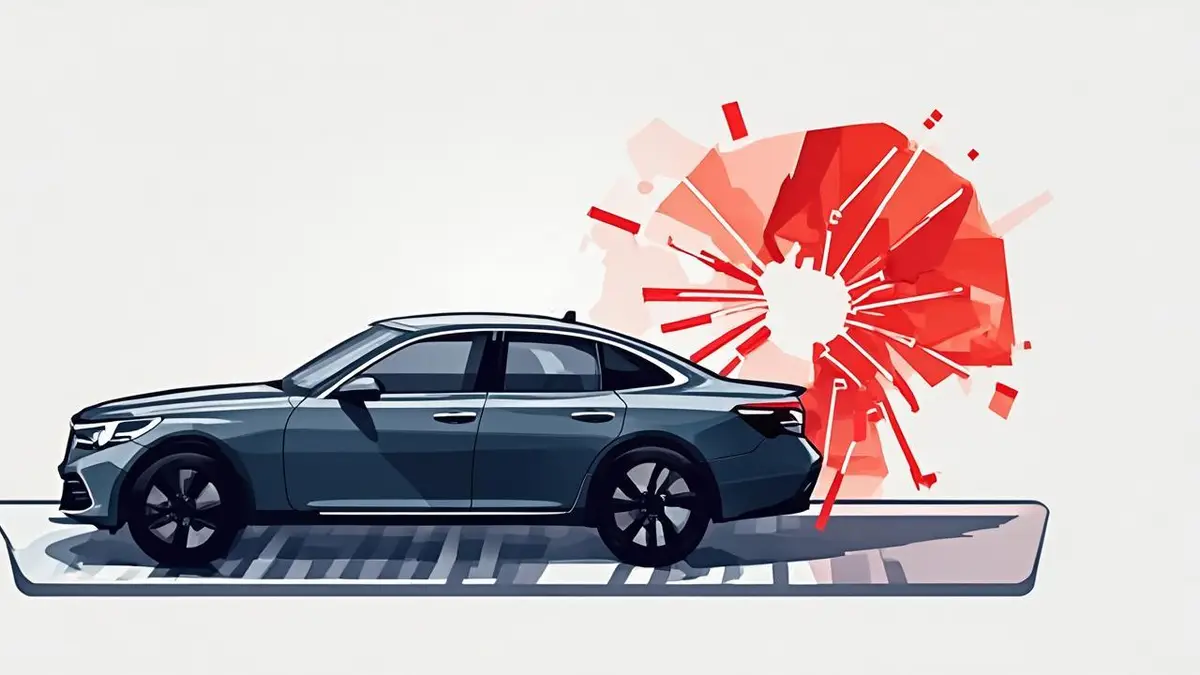
Three brand-new Maextro V800 sedans, each priced around one million yuan (roughly $150,000), were driven to 100 kilometers per hour and then braked hard to a stop. On the third, fourth and second stops respectively, the brake pedal bracket snapped. The footage, published on October 8 by the car review platform Dongchedi, spread across Chinese social media within hours and turned a young luxury brand into the center of a national argument about how safe cars really are.
Maextro is a joint venture between Huawei, the telecoms giant that now supplies car software and electronics, and JAC Motors, an established state-linked automaker. The brand sits at the very top of China’s electric vehicle market, aimed at buyers who would otherwise consider a Mercedes-Benz S-Class or a BMW 7 Series. That makes the timing painful: the V800 is still in its early sales and delivery phase, and the controversy strikes directly at what customers pay a premium for — the belief that an expensive car is a safe one.
The debate has two camps. One side argues that a pedal that breaks under a driver’s foot is a lethal structural defect, and that a car’s design must carry enough redundancy that no single failed part can disable the brakes. The other side asks whether the test itself was fair. Dongchedi ran repeated emergency stops in quick succession, a scenario that goes well beyond the conditions Chinese national standards require manufacturers to design for. In normal driving, a driver brakes hard once, not over and over with barely any cooling time.
That question — how much force counts as pushing past the limit — has no easy answer. A brake pedal is engineered to withstand the heaviest realistic stamp a panicked driver can produce, with a safety margin on top. But a margin is not infinite, and no standard spells out what happens when a media outlet invents its own extreme protocol. The result is an argument where both sides can sound reasonable, and where the public has no independent referee.
Consumers quickly took the worry into their own hands. Would the incident raise insurance premiums for the model? Reporters visiting a Huawei car showroom in Beijing’s Tongzhou district found that buyers could still insure a new V800 on site, with quotes from major insurers broadly unchanged. Insurance agents said premiums track whether a model has a documented pattern of claims, not a single viral video. Second-hand buyers, though, are watching resale values nervously.
The deeper issue is who gets to define automotive safety in China. Not the traffic generated by a media platform, and not the public relations language of the manufacturer either, as one commentary put it. Independent, transparent and repeatable testing matters enormously in a market where buyers increasingly judge cars by online reviews rather than brand heritage. When a test is neither standardized nor fully disclosed, it can inform the public and mislead it at the same time.
For Maextro, the next few weeks will be a test of crisis management. The company can publish its own engineering data, invite third-party labs to replicate the test, or redesign the bracket and explain what changed. Silence, or a purely legalistic response, would let the narrative harden. For everyone else — drivers, regulators and the platforms that shape what millions of people believe about cars — the case is a reminder that safety claims deserve better evidence than a viral clip.