China's Tungsten Squeeze Rewrites the Global Supply Chain
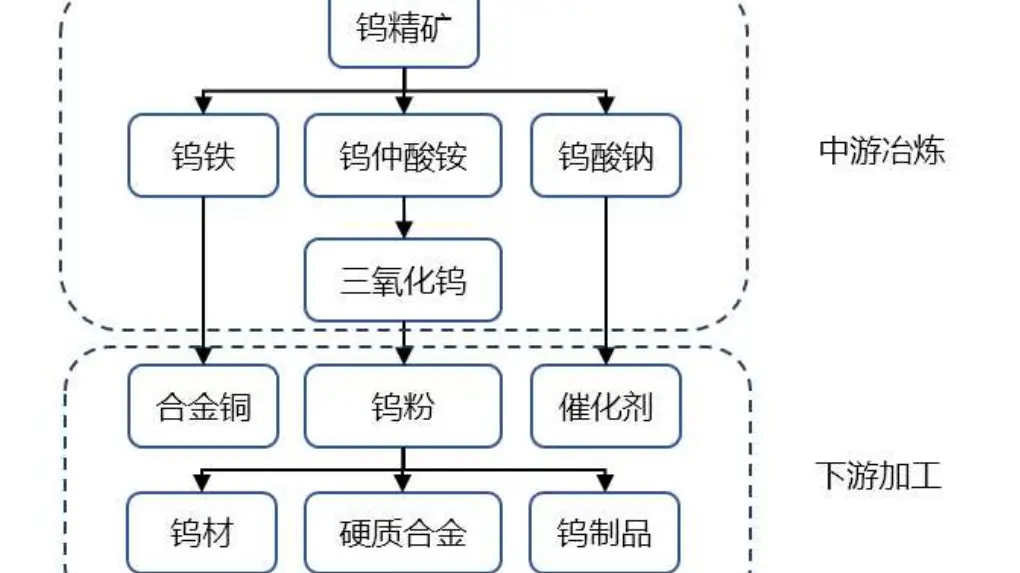
China sits on the world’s largest reserves of tungsten, the densest practical metal for extreme heat, yet the country’s own mines keep producing less of it. That contradiction is quietly reshaping a global supply chain most people never think about, and it is starting to show up in the price of everything from cutting tools to car parts.
Tungsten, often called wolfram in industry, has the highest melting point of any metal — roughly 3,400 degrees Celsius. That makes it indispensable for machining hard steel, drilling, mining equipment, armor-piercing rounds and the heat shields inside semiconductor factories. There is no cheap substitute. When supply tightens, factories do not switch materials; they pay more or slow down.
China has dominated tungsten for decades, producing the overwhelming majority of the world’s supply and holding more than half the known reserves. But domestic output has been declining, squeezed by exhausted high-grade deposits, stricter environmental rules and a deliberate policy shift toward conserving a strategic resource rather than selling it cheaply.
Beijing has tightened export controls on tungsten and related technologies in recent years, requiring licenses for certain shipments. The stated logic is resource security: keep more of a finite, strategically important metal at home for domestic industry. For buyers in Europe, Japan and the United States, the practical effect is a smaller, more expensive and less predictable market.
The squeeze lands hardest on toolmakers and manufacturers. Tungsten carbide tools cut the metal that goes into engines, transmissions and aircraft frames. When tool prices rise, the cost ripples through every factory that machines parts. Automakers feel it indirectly but broadly, especially as they ramp up electric vehicle production, which consumes more precision-machined components, not fewer.
Semiconductor manufacturing is another pressure point. Tungsten is used in chip fabrication for contacts and barriers, and foundries have been stockpiling. The same metal also appears in radiation shielding, aerospace components and high-performance alloys, meaning a single supply constraint touches defense, energy and consumer electronics at once.
Other countries are responding. New mining projects are being explored in Australia, Vietnam, Portugal, Spain and South Korea, and recycling of tungsten scrap is gaining investment. But bringing a tungsten mine online takes years, often a decade from exploration to production, and permitting is slow. Recycled supply can ease the gap, not close it.
For global readers, the tungsten story is a case study in how a quiet industrial input can become a geopolitical and commercial flashpoint without anyone announcing it. The metal is invisible in the showroom, but it touches the cutting tools that build the car, the chips that run it and the machinery that made the factory. As China shifts from volume exporter to resource manager, the rest of the world is being forced to rethink where its hardest metal comes from and how much it is willing to pay for certainty.
The next few years will reveal whether new mines and recycling can loosen China’s grip, or whether tungsten joins the list of materials where supply is decided less by geology than by policy.