Qiantu New M8 to Bring L3-Ready Self-Driving Hardware to the Mass Market
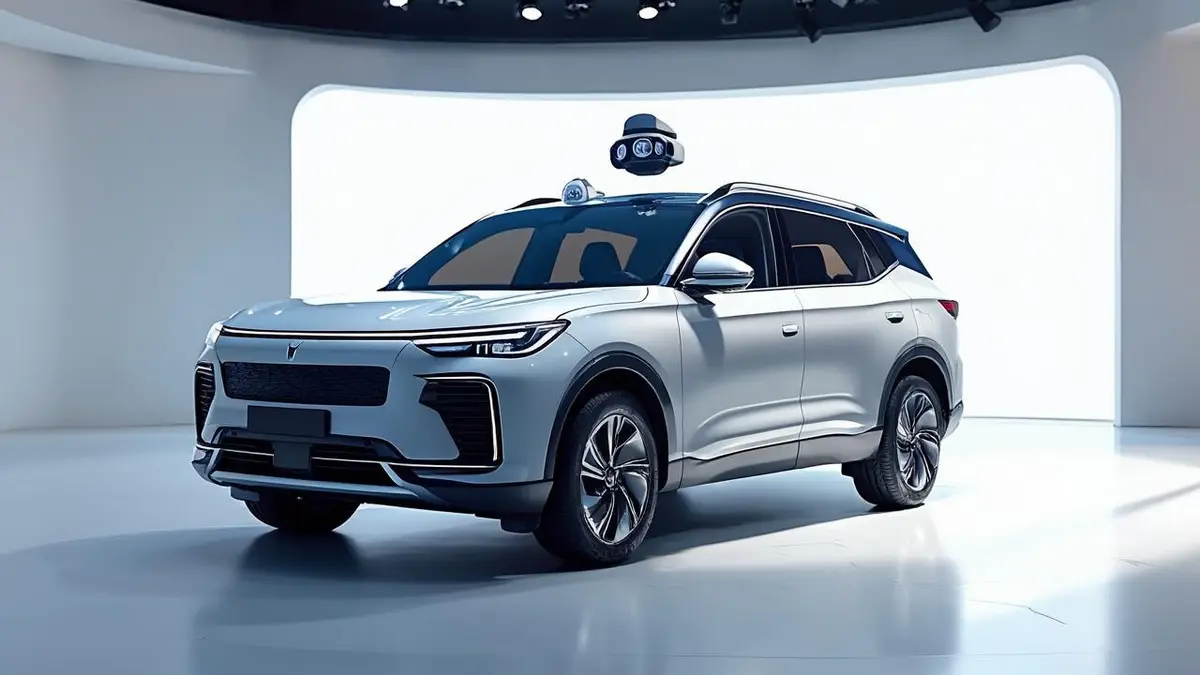
AITO, the electric car brand jointly developed by Chinese automaker Seres and tech giant Huawei, has announced that its upcoming Qiantu New M8 SUV will come with an autonomous-driving architecture designed to support L3-level autonomy as standard equipment across every trim. L3 is the level at which a car can handle most driving tasks itself, though a human driver must still be ready to take over when the system asks.
The announcement, made on September 27, also confirmed that the New M8 will carry Huawei’s Qiankun ADS 5 advanced driver assistance system and a new generation of omnidirectional, multi-sensor fusion perception hardware. Pre-sales are scheduled to open on September 30, according to the company’s plans. The vehicle is being designed and developed jointly by Seres and Huawei.
For buyers, the significance lies in what is normally an expensive option becoming standard. Automakers worldwide typically reserve high-end assisted-driving hardware for premium trims, so fitting an L3-oriented platform to an entire model line signals how fiercely China’s electric vehicle market is competing on smart-driving features rather than price alone.
Huawei’s Qiankun ADS is one of the country’s most closely watched driver-assistance systems, and each new version is treated as a benchmark by rivals and customers alike. The company has positioned the system around a combination of cameras, radar and lidar working together, an approach known as sensor fusion, which helps a vehicle build a more reliable picture of its surroundings than any single sensor could.
The New M8 keeps an interior familiar to the brand, with quilted seat stitching and a redesigned centre console, small refinements rather than a radical rethink. The bigger story is under the skin, where the hardware is laid out with future software upgrades in mind.
AITO also took the occasion to stress that it remains a member of HIMA, Huawei’s wider automotive alliance that bundles several partner brands under one technology and retail umbrella. That reassurance matters in a market where brand identities and partnerships have shifted quickly, and where customers want to know which company stands behind the software in their car.
China’s assisted-driving race has moved quickly from simple highway cruising features to city-street navigation, and regulators have been tightening rules around how such functions are marketed. Automakers have grown careful about promising full autonomy, which makes the phrase “L3-ready architecture” a deliberate choice: the hardware is prepared, but the legal and regulatory green light for hands-off driving is a separate question.
For global readers, the New M8 is a useful window into how Chinese automakers and technology suppliers are converging. Huawei supplies chips, sensors, software and even showrooms; Seres builds the vehicles. If the model sells well after pre-sales open, it will strengthen the case that software-defined cars, sold on driving intelligence rather than horsepower, are becoming the norm in the world’s largest electric vehicle market.