China's Seeds to Get Their Own Ride to Space
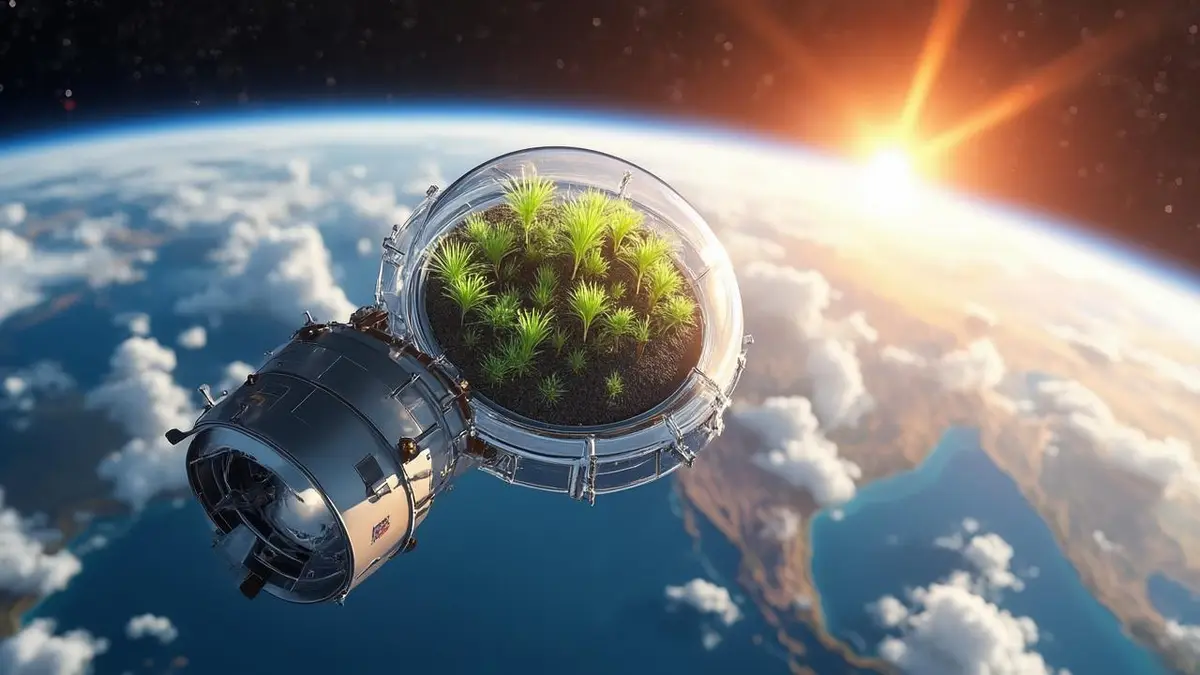
For years, Chinese crop scientists who wanted to expose seeds to the space environment had to wait for a spare slot on a satellite or spacecraft — a practice the industry calls “carpooling.” That is about to change. On September 27, the Shaanxi Engineering Research Center for Space Breeding and Zhongke Satellite Technology Group signed a cooperation agreement at Xi’an University to jointly build a Space Biology Space Mutagenesis Laboratory, and announced the official launch of China’s first dedicated commercial satellite for space breeding.
Space breeding, also known as space mutation breeding, involves sending crop seeds or tissue-cultured seedlings into space. There, they are exposed to cosmic rays, microgravity, high vacuum and other conditions impossible to reproduce on Earth. These stresses can alter a plant’s genetic material in ways that occasionally produce useful traits — higher yields, stronger disease resistance, shorter growing cycles or better tolerance of salt and drought. When the seeds return, researchers grow them out over several generations and select the most promising lines.
China has been a pioneer in this field for decades. Since the 1980s, dozens of satellites and crewed missions have carried seeds into orbit, and varieties developed through space breeding — including rice, wheat, cotton, peppers and tomatoes — have been approved for planting across the country. But the process has always depended on whatever room was left over on missions designed for other purposes. A dedicated satellite changes that calculation. Seeds will have their own “chartered flight,” with experiments designed around their needs rather than squeezed into someone else’s schedule.
The new laboratory, based at Xi’an University, will be open to research institutions and companies across China, according to the agreement. Its founders say the platform is intended to accelerate the pipeline from orbit to field, shortening the years of selection that normally follow a space mission. Zhongke Satellite Technology Group, based in China’s northwestern Shaanxi province, will handle the satellite side, while the research center brings decades of experience in mutation breeding and crop evaluation.
The commercial angle is significant. Space breeding has historically been a state-funded scientific endeavor, but the new project is being described as commercially driven, with an eye toward serving agricultural companies that want proprietary seed varieties. That could make the service available to a wider range of breeders, including smaller firms and regional agricultural institutes that could never afford a satellite mission of their own.
Global interest in space-based plant research is growing. The International Space Station has hosted countless plant experiments, and NASA and other agencies study how crops might one day be grown on long-duration missions to the Moon and Mars. China’s Tiangong space station has also conducted seed experiments, and the country’s lunar missions have carried plant samples. But the Chinese effort stands out for its scale and its focus on practical agriculture rather than pure research.
For farmers, the payoff is not immediate. A new variety typically takes years of testing and regulatory approval before it reaches fields. Yet the launch of a dedicated satellite marks a shift: space breeding is moving from a lucky byproduct of other missions to an industry with its own infrastructure. If the model works, the next generation of climate-resilient crops may owe part of their pedigree to a small satellite circling overhead.