China's PCB Makers Raise $4 Billion in Record AI-Driven Expansion
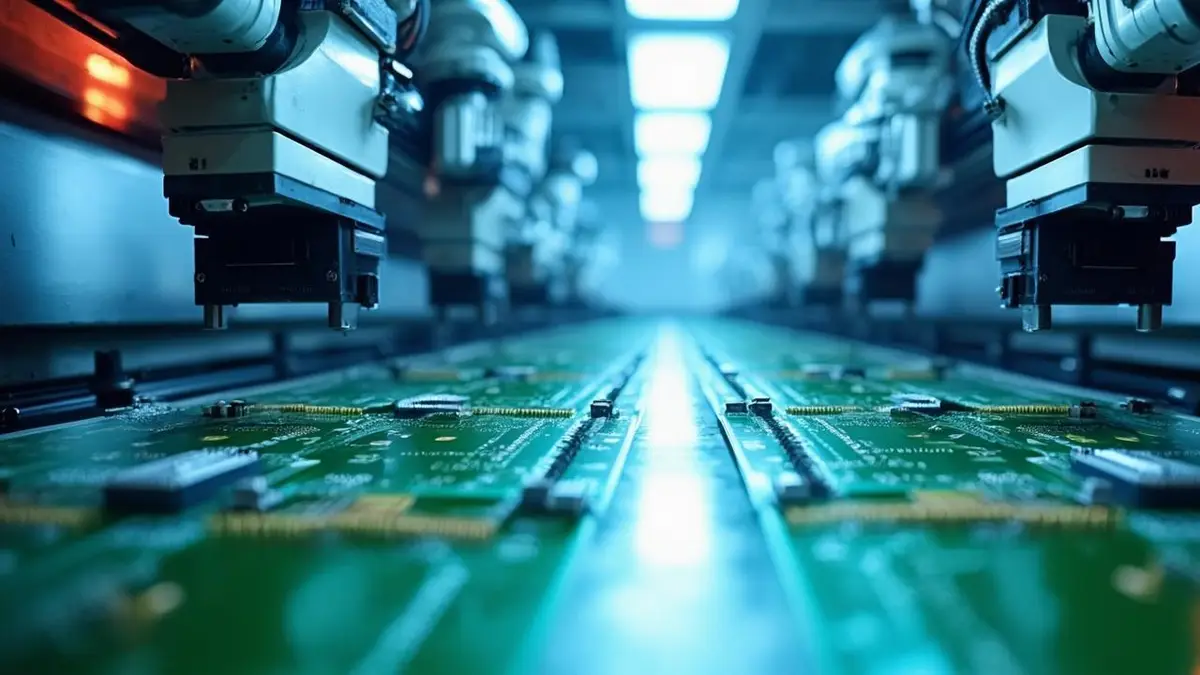
China’s printed circuit board industry is in the middle of its biggest fundraising and capacity-expansion wave on record, as manufacturers race to supply the hardware that powers artificial intelligence data centers.
According to an industry tally reported by Securities Market Weekly, 13 PCB companies had disclosed private placement plans or completed share sales between the start of 2026 and September 20, raising roughly 29.3 billion yuan (about 4.1 billion US dollars). That figure is 4.52 times the industry’s total fundraising for all of 2025, according to the report — a striking jump for a sector that most consumers never think about.
Printed circuit boards, or PCBs, are the flat boards that hold and connect chips, capacitors and other components inside almost every electronic device. They sit inside smartphones, cars, laptops, washing machines — and, increasingly, inside the towering server racks that train and run AI models. The more powerful the chip, the more sophisticated the board that carries it, and the more it costs.
The fundraising wave is led by some of the country’s largest board makers. Pengding Holdings, one of the biggest names in the sector, is among the companies that have announced major share-sale plans, according to the report. Others are using the money to build new factories, upgrade production lines for higher-layer-count boards, and expand into substrates used in advanced chip packaging.
Analysts quoted in the report describe the surge as the start of a new expansion cycle. Demand for AI servers has pushed up orders for high-end, high-layer boards, while traditional consumer electronics demand has been relatively steady. Companies that can produce these more advanced boards command better margins, and the fundraising is aimed at capturing that business before capacity catches up with demand.
There are risks. PCB manufacturing is cyclical, and heavy spending by many players at once can lead to oversupply if demand cools. Building a new factory takes time, and the equipment needed for advanced board production is expensive and often imported. The report notes that investors will be watching whether the new capacity comes online in step with actual orders or arrives late to a softer market.
The trend also reflects a broader pattern in China’s manufacturing economy. As growth in traditional consumer electronics slows, companies across the supply chain are pivoting toward AI-related hardware, from servers and cooling systems to power equipment and advanced packaging. Capital markets have rewarded that pivot: PCB shares have been among the better performers in China’s A-share market this year, and the ability to raise money through private placements shows that institutional investors are willing to fund the build-out.
For global readers, the story matters because China produces a large share of the world’s circuit boards. What happens to Chinese PCB capacity affects prices and lead times for electronics makers everywhere, from laptop brands to automakers. If the current wave of investment succeeds, it could cement China’s role as the default manufacturing base for AI-era hardware. If it overshoots, it could produce a period of price competition that squeezes smaller suppliers.
For now, the money is flowing and the factories are being planned. The next year or two will show whether the AI boom can absorb all the boards China is preparing to make.