China's New Family Dramas Ask Who Pays for Love
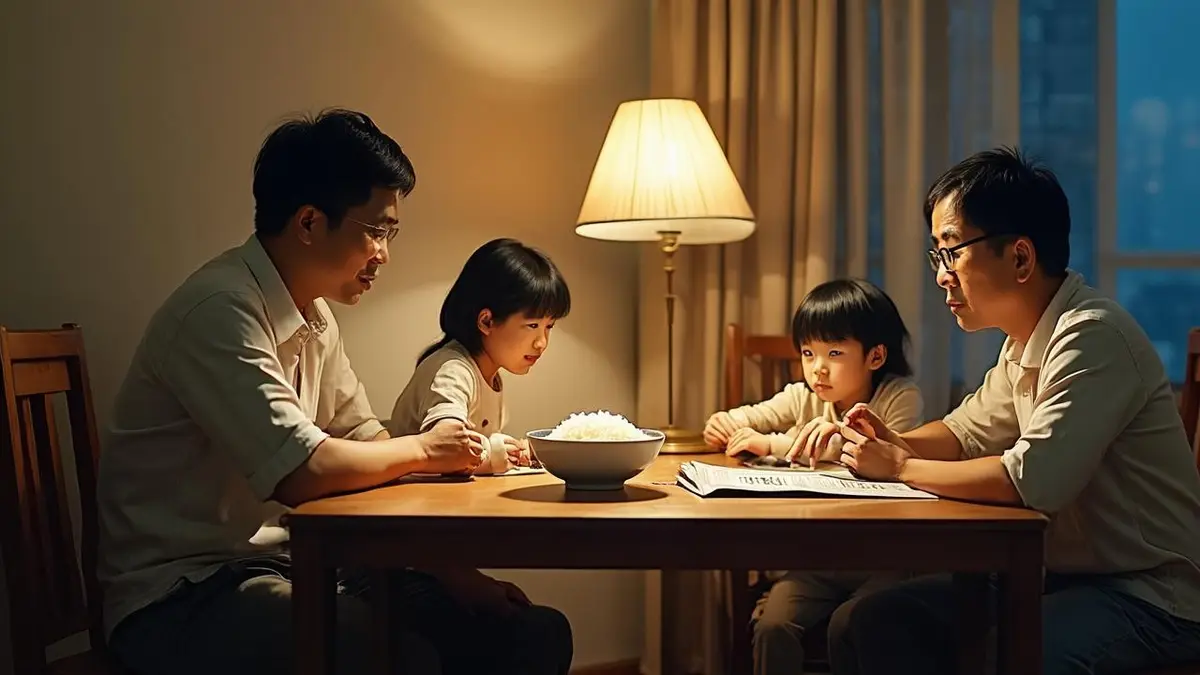
Chinese cinemas this September have been unusually quiet for a month known for blockbusters, yet one small film has kept drawing crowds and arguments. Burning Dad (燃烧吧!爸爸), released on September 5, follows Gu Liyan, a Shanghai student played by Wen Qi, who is about to graduate and look for work when her father suffers a serious accident. The title sounds like a热血 sports drama, but audiences quickly discover the “burning” is literal: the film uses fire and physical destruction as a metaphor for how a family’s habit of mutual sacrifice can consume the people inside it.
That metaphor has landed at a moment when Chinese audiences seem hungry to rethink the family bargain. For generations, the ideal child was the one who gave up a dream to care for a parent, and the ideal parent was the one who gave up everything for a child. Funerals required visible grief, weddings required visible joy, and loyalty was measured by what you were willing to lose. The film asks what happens when everyone is performing devotion so hard that no one notices what they actually need.
A second cultural event this month has deepened the conversation. Jing Yidan, one of Chinese television’s most recognizable hosts, died in September after suffering a brain haemorrhage in Harbin in June and being treated in Beijing for nearly three months. Her daughter announced the news on Jing’s WeChat account, describing her mother’s sincerity, clarity and stubbornness. For decades Jing was a calm, unhurried presence on CCTV, a voice associated with a slower, more deliberate era of broadcasting. Many Chinese viewers responded by recalling how television once invited families to sit together in silence, rather than argue across a dinner table.
Taken together, the film and the mourning for Jing point to something less visible than box-office numbers: a change in how Chinese people talk about obligation. On social media, younger viewers have been posting about the pressure to call home, to send money, to be grateful in the expected way. Older commenters often reply that sacrifice is not a burden but a language of love. Neither side is simply right, which is why the film has become a conversation rather than a verdict.
Scholars of Chinese family life note that urbanisation, smaller households and longer working hours have changed the arithmetic of care. In a city like Shanghai, where the film is set, a single adult child may be the only person available to manage an ageing parent’s medical care, housing and finances. That practical reality makes the old language of devotion feel both necessary and suffocating, especially when a career is just beginning.
The film does not offer a tidy solution. Its characters argue, fail and occasionally surprise each other, and the ending leaves room for ambivalence. That restraint may be why it has travelled beyond arthouse circles into ordinary conversation. Several viewers said the most radical thing about the movie was not the fire, but the suggestion that a family can survive without anyone being sacrificed.
In a culture that often measures love by what it costs, that is a genuinely new idea. Whether it changes behaviour is another question, but the fact that so many people are debating it suggests the answer is no longer assumed.