Why Chicken Gizzards Are Nature's Indestructible Stone Mill
Can a leech survive being swallowed by a chicken? The question sounds like a schoolyard dare, but it recently became one of the most-read science posts on Zhihu, China’s Quora-like platform, drawing hundreds of thousands of readers. The answer, according to the viral explainer, is an emphatic no — and the reason reveals one of the most remarkable pieces of biological engineering in the animal kingdom.
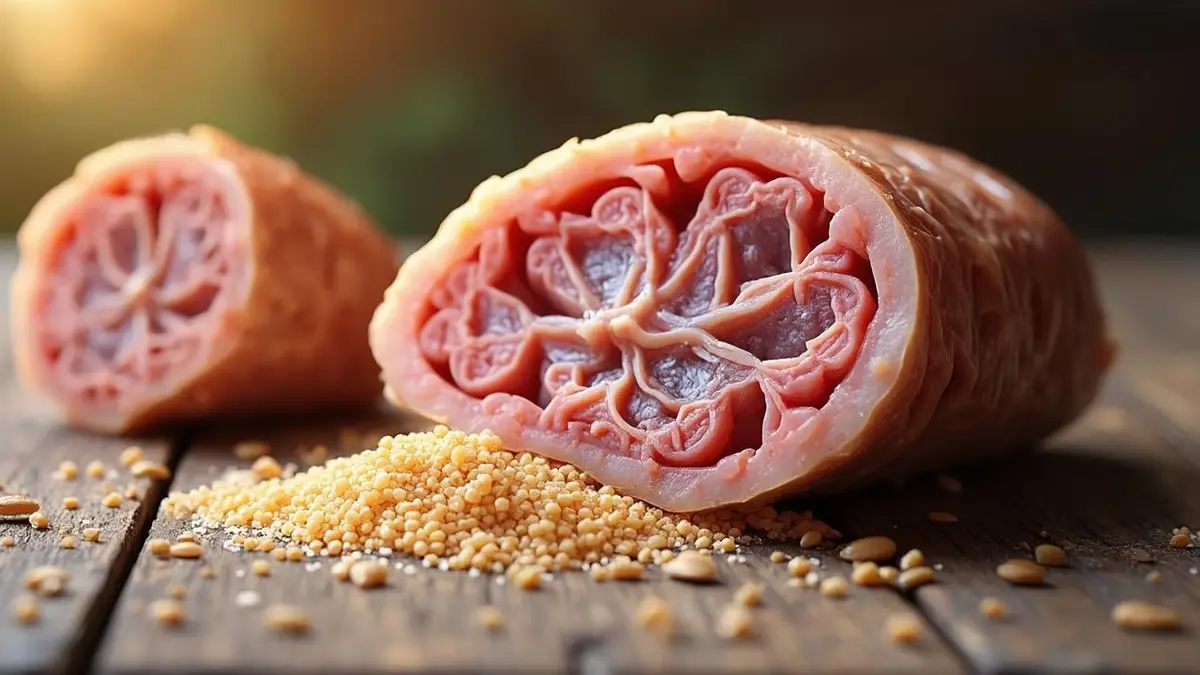
The star of the story is the gizzard, known in Chinese kitchens as the chicken gizzard or jizhen. Anyone who has cleaned a chicken knows this organ: a fist-sized ball of dense muscle with a tough, leathery lining. What most people do not realize is that it functions like a ball mill, the industrial machine used to crush ore into powder. The gizzard’s powerful muscles contract rhythmically, while grit and small stones the bird swallows act as grinding media. Together they pulverize seeds, insects and anything else the chicken pecks up.
The lining of the gizzard is the key to its toughness. It is covered by a hard, keratin-rich layer called the koilin membrane, which is constantly renewed and repaired. The explainer compares it to industrial-grade armor: it resists scratches from sharp stones, so a soft-bodied leech would stand no chance. Even if the leech arrived alive, it would be crushed, ground and digested long before it could attach itself and feed on blood.
That is not the only defense. A chicken’s digestive tract is a hostile environment from start to finish. The proventriculus, the glandular stomach that precedes the gizzard, secretes strong acid and digestive enzymes. By the time food reaches the gizzard, it is already bathed in a chemical bath designed to break down proteins. The mechanical grinding that follows finishes the job.
The explainer uses vivid comparisons to make the point. If the chicken is a walking food processor, the gizzard is its blender blade. The author notes that the organ’s muscle walls are strong enough to crack grains and hard seeds, and its surface regenerates so quickly that even coarse sand does not wear it down. A leech, which lacks any hard parts, is simply no match.
Readers responded with a mix of fascination and dark humor. Some recalled childhood warnings about swallowing leeches while swimming, and others asked whether similar myths apply to ducks or geese. The post became a small cultural moment, showing how a quirky question can turn into a lesson in anatomy and evolution. It also highlighted the appeal of Zhihu’s long-form answer culture, where experts and enthusiasts write detailed, illustrated explanations.
For global readers, the story is a reminder that everyday animals are full of surprises. The chicken gizzard is not just a popular ingredient in soups, stir-fries and skewers across Asia. It is a biological machine refined over millions of years, capable of grinding tough food with a force that would destroy most soft-bodied creatures. The next time you see a chicken pecking at the ground, remember: inside that bird is a mill that never stops working.
The original question may have been whimsical, but the answer is grounded in real biology. Leeches that attach to the skin of animals or humans feed on blood externally, using suckers and anticoagulant saliva. Inside a chicken, however, there is no skin to attach to, no safe place to hide, and no escape from the relentless grinding. The gizzard wins, every time.