Why Mountain Streams Never Run Dry — Until You Actually Look
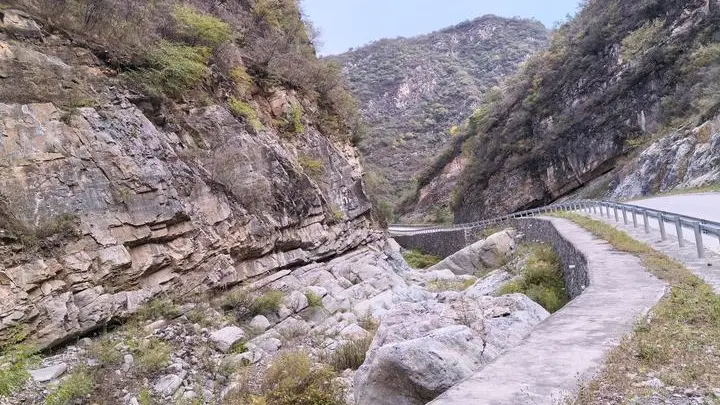
Anyone who has hiked in the hills above a Chinese city has heard the same reassuring line: don’t worry, the stream up there runs all year. A recent answer on the Chinese Q&A platform Zhihu, written by a self-described ecological planner, took that folk belief apart with unusual patience — and struck a nerve with readers tired of confident, evidence-free answers.
The writer, who says he has spent the past week surveying plants across a stretch of the Yongding River gorge roughly 30 kilometers east-west and 15 kilometers north-south, walked every gully in that area. His conclusion was blunt: over most of the year, most of those streams have no water in them at all. When water flows, people call it a creek. When it doesn’t, they call it a gully and stop thinking about it. The stream, in other words, exists mostly in the name.
His explanation for why some channels still run in dry months is not mystical. Mountain catchments store water underground in soil, cracks and weathered rock, releasing it slowly long after the last rain. Springs and seeps feed the channel from below. Where the geology is favorable and the catchment is large, that release can keep a trickle going through winter. Where it isn’t, the bed is dry sand and boulders for months on end. Northern China, with its concentrated summer rains and long dry seasons, leans heavily toward the second case.
That distinction matters more than it sounds. Rivers and streams that appear permanent on maps shape how cities plan water supplies, how villages site wells, and how hikers judge risk. If a channel is assumed to flow year-round, nobody bothers to check. The answer’s author notes that in the area he surveyed, only a handful of channels carried water at all during his fieldwork.
Chinese social media users responded less to the hydrology than to the frustration behind it. The writer complained that on today’s Zhihu, one group of users asks random questions and another group answers them at equal random, with nobody checking facts. His post reads as a small protest in favor of going outside and looking.
There is a practical takeaway for travelers, too. In China’s northern hills, a trail described as following a stream may follow a dry bed for much of the year, and flash floods can arrive within hours of rain falling somewhere upstream, even under a clear sky. Reading the landscape — the width of the channel, the size of the cobbles, the lines of debris caught in trees — tells you more than any seasonal label.
The post also quietly reframes what conservation means in these dry mountains. If a channel is dry half the year, its ecology is built around that dryness. Fish and insects time their lives to shrinking pools; plants along the banks tolerate months of thirst. Treating such a place as a failed river, or trying to make it flow, misunderstands what it already is.
For readers outside China, the exchange is a reminder that the landscapes we imagine are often tidier than the ones that exist. A stream that runs all year is a lovely idea. A gully that runs for four months and hides underground for eight is the more common truth — and, as the ecologist suggests, worth walking out to see for yourself.