China's Yiwu Sells a $17 Million Flying Saucer, But Who Will Fly It?
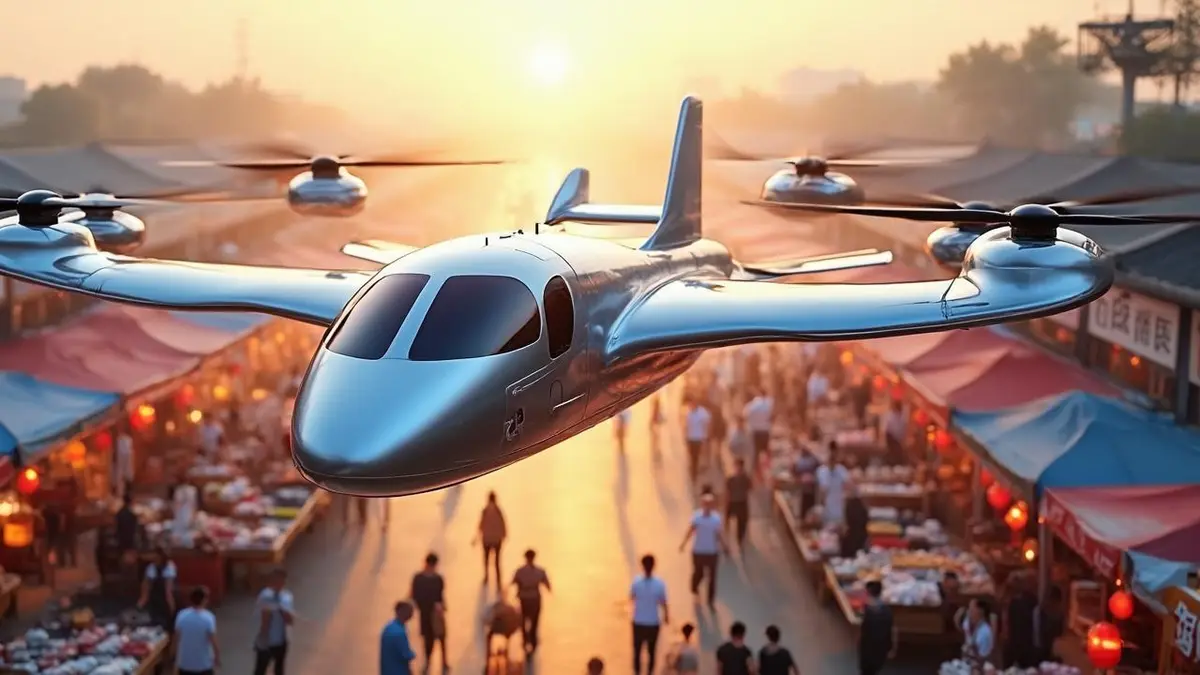
A flying saucer went on sale in China this month — and someone actually bought one. At a trade fair in Yiwu, the eastern Chinese city famous for supplying the world’s cheap goods, a company displayed a manned multirotor aircraft that looks like a classic sci-fi saucer and announced a single order worth 120 million yuan, roughly 17 million US dollars. Chinese social media quickly lit up with a mix of fascination and alarm.
Stripped of its shell, the vehicle is essentially a very large drone with a seat bolted on. It carries a passenger, takes off and lands vertically, and runs on electric rotors. According to online commentators familiar with aviation, the model holds a drone airworthiness certificate rather than the stricter certification required for conventional passenger aircraft — a distinction that matters enormously for anyone thinking about climbing aboard.
That certification gap is at the heart of the skepticism. A drone certificate covers unmanned operations, where a crash endangers property rather than people. Once a human is sitting in the machine, the safety margins change completely. Engineers pointed out that the design appears simple, with limited redundancy in its rotors and power systems, and that the passenger compartment offers little protection in a hard landing. One widely shared comment put it bluntly: keep your distance from this model.
The questions go beyond this single aircraft. For years, China has been one of the most active markets for electric vertical takeoff and landing vehicles, often called eVTOLs, with startups promising air taxis and short-hop urban flights. Regulators have moved cautiously, issuing experimental approvals for cargo and tourism routes rather than city commuting. A manned saucer sold at a consumer goods fair suggests the technology is drifting toward the retail market faster than the rules and safety culture can follow.
There is also the puzzle of who the customer is. A 120-million-yuan order at a trade show is not the same as a consumer purchase; such deals are often signed with tourism operators, scenic spots or local governments hoping to build a novelty attraction. Low-altitude sightseeing flights over lakes and mountains have become a small but growing business in China, and a saucer-shaped craft is an obvious marketing draw. Whether it can operate safely, day after day, in wind and rain, is another matter entirely.
Yiwu itself is a fitting stage for the story. The city’s wholesale markets supply everything from Christmas decorations to kitchen gadgets to buyers from across the world, and its traders have a talent for turning a novel product into a mass-market commodity at astonishing speed. If the flying saucer follows that pattern, early buyers will be paying for spectacle, not transportation.
For ordinary travelers, the honest answer to ‘how far away is this?’ is: much further than the headlines suggest. A passenger-carrying aircraft needs years of testing, accumulated flight hours, pilot training standards, maintenance networks and insurance products before it becomes a normal purchase. The flying saucer in Yiwu is best understood as a sign of how quickly Chinese hardware companies experiment — and how wide the gap remains between a striking prototype and a machine you would trust with your family.
That gap is not a reason to dismiss the field. Electric aviation is advancing worldwide, and China’s supply chains for batteries, motors and composite materials give its companies real advantages. But the next milestone will not be a flashy order at a trade fair. It will be quiet, boring things: redundant systems, emergency procedures, and regulators willing to say no until the numbers are proven.