Tesla Suppliers Race to Build Humanoid Robots Before Mass Production
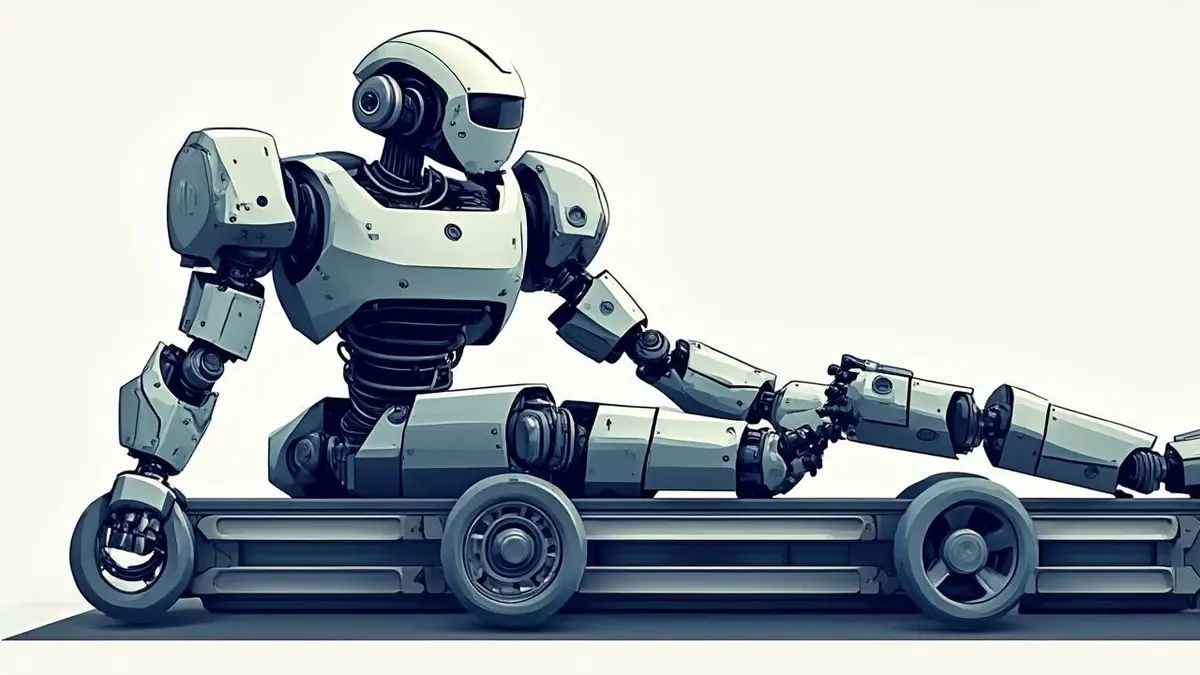
The companies that built their businesses supplying Tesla are now working on a different product: humanoid robots. According to Chinese tech outlet TMTPost, parts makers including Junsheng, Tuopu and Sanhua are racing to develop robots and the components inside them, positioning themselves for a market that does not yet exist at scale but could dwarf their current business.
The logic is simple. A humanoid robot is, mechanically, a bundle of the same things a car needs: motors, actuators, precision gears, sensors, wiring and lightweight structural parts. A supplier that already makes these at automotive quality and volume has a head start over a startup building a robot from scratch. When Tesla first showed its Optimus robot, it leaned on exactly this argument — that its car supply chain could be repurposed to build machines.
Those suppliers are now trying to prove the same thing in reverse. Rather than waiting for robot orders to arrive, several have set up dedicated robot divisions, shown prototype joints and hands, and begun pitching themselves to anyone building a humanoid, not just Tesla. The pitch is capacity: a car parts factory can stamp, mold and assemble at a scale that most robotics companies cannot match.
The timing matters. Humanoid robots have spent years as demonstration videos. The current phase is about whether they can be manufactured reliably and cheaply enough to sell. That is a manufacturing problem, and China’s electric-vehicle supply chain is the world’s most developed answer to manufacturing problems at volume.
It is also a defensive move. Margins in auto parts are thin and brutally competitive, and Chinese EV makers have spent two years pushing suppliers to cut prices. Robots offer a second act with better economics, at least in theory. If a supplier can become the standard actuator or joint maker for the industry, it captures a position that is hard to dislodge.
The risk is that demand arrives more slowly than the investment. Building robot production lines costs money before there are buyers, and several companies are doing it simultaneously. That raises the prospect of overcapacity in components before the robots themselves are sold in meaningful numbers — a pattern China’s EV industry knows well.
There is also the question of who ends up owning the robot. Car suppliers are component makers by habit. Some are now considering selling complete machines, which means competing with the technology companies that designed them and with the automakers that may build robots in-house.
For global readers, the significance is less about any single robot and more about where the hardware will come from. If humanoid robots do become a mass-market product, the supply chain that makes them may look a lot like the one that made electric cars cheap. That chain runs through China, and the companies now quietly retooling are betting that the next big order will not be for a car part at all.