A Yunnan Blacksmith Hammers His Way Into Global TikTok Fame
A young man from Yunnan province has become an unexpected star on TikTok, and the reason is not dancing, comedy or a catchy song. It is the sound of a hammer striking hot metal. Videos of his blacksmithing have traveled far beyond China, drawing viewers who say they cannot stop watching the rhythmic, almost meditative process of shaping iron by hand.
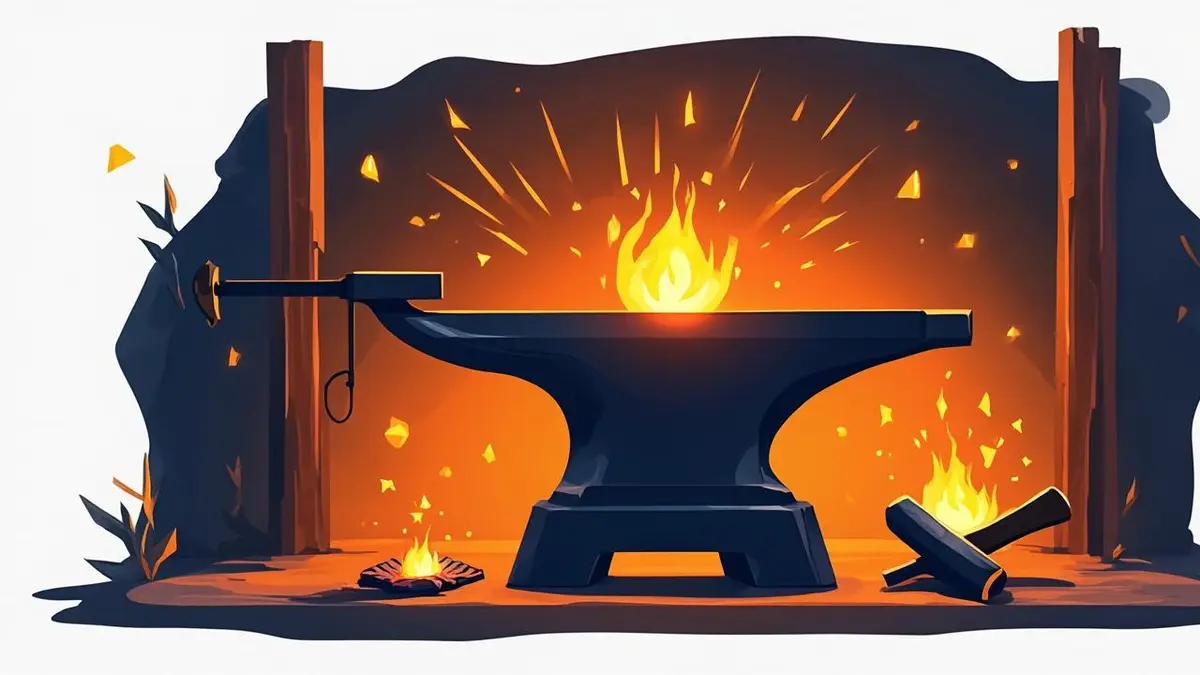
His workshop looks like a place out of an older century. A small forge glows orange, a heavy anvil sits on a wooden block, and finished pieces — knives, farm tools, simple ornaments — hang along the wall. In each clip, he heats a bar of steel until it turns bright yellow, then works it with quick, confident blows. Sparks scatter, the metal bends, and a rough lump slowly becomes something useful and clean-lined.
What makes the videos work is their honesty. There is no dramatic music, no jump cuts, no exaggerated reactions. Viewers hear the bellows, the hammer and the hiss of cooling metal. Many comment that the clips feel like a break from the noisy, over-edited internet. A few seconds in, the algorithm seems to understand: this is satisfying to watch.
Blacksmithing is an old trade in China, and Yunnan, a mountainous province in the southwest, has a long history of metalwork linked to its many ethnic communities. Traditional smiths there once made everything from farming blades to horse gear and household tools. That world shrank as factories produced cheaper goods, and many young people left villages for city jobs. The fact that a Yunnan craftsman can now reach a global audience from a rural workshop is a small but striking reversal.
The audience is not only foreign. Chinese viewers have also taken to his clips, often asking where they can buy the pieces or whether he takes custom orders. Some say the videos remind them of grandparents who repaired rather than replaced things. Others simply enjoy watching a skill that cannot be faked. You either hit the metal correctly or you ruin the work.
For global viewers, the appeal may be broader than nostalgia. Handmade craft has become a luxury in a world of instant, mass-produced objects. A knife forged by hand carries the trace of the person who made it — the heat, the timing, the small imperfections. That story sells, whether through a TikTok video or a weekend craft market in Europe or North America.
There is also a practical lesson in the clips. Blacksmithing is loud, hot and physically demanding. It requires patience, and mistakes are expensive. Watching someone master it, blow by blow, offers the same quiet pleasure as watching a potter or a woodworker. The craft is not exotic; it is simply human skill, filmed without decoration.
For the young smith, the sudden attention may bring opportunities: online sales, collaborations, perhaps a workshop that trains others. For his viewers, the videos offer something simpler. In a feed full of noise, a hammer, an anvil and a pair of steady hands can still hold attention — and remind people that some things are worth making slowly.