China's Oil Tanker Trucks Ran Overweight for Two Years
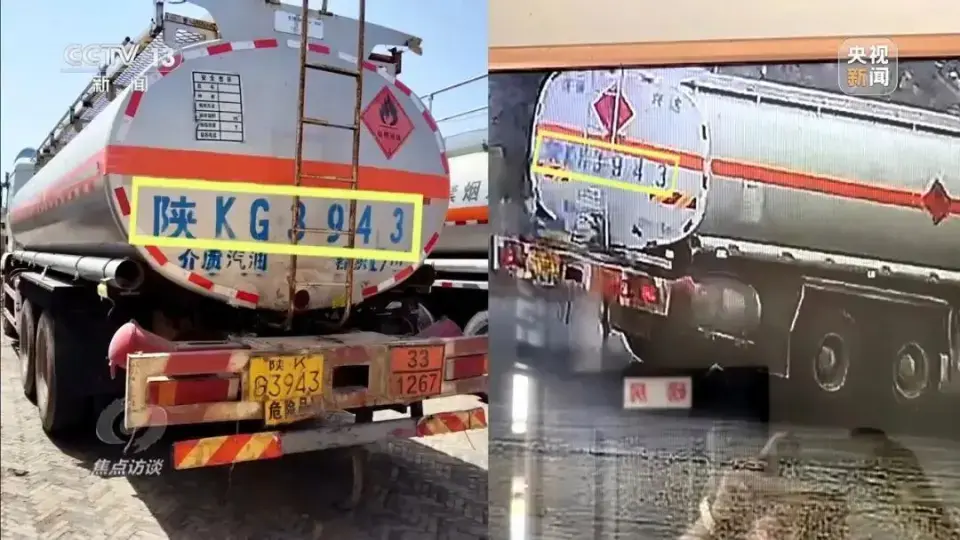
A tanker truck rated to carry 14 tons of crude oil was routinely filled with 22 tons, roughly sixty percent over its legal limit. That was not a one-off lapse by a single driver. According to an investigation broadcast on October 10 by CCTV, China’s state television network, it was standard practice at a transport company in Jingbian County, Yulin, in the northern province of Shaanxi, carried out by a fleet of more than sixty tanker trucks over a period of more than two years.
The company at the center of the report, Xingda Comprehensive Development, hauls crude oil from scattered wellheads to collection points across the Ordos Basin, one of China’s older onshore oil regions. The county sits at the edge of the Mu Us Desert, where wells are numerous and distances between them are long. Regulators set weight limits on tanker trucks because overloaded vehicles need far more distance to stop, chew through tires and brakes faster, and roll over more easily on the winding rural roads that connect these sites.
The more striking finding concerned paperwork. According to the broadcast, one of the companies named in the report, Fengmao Logistics in Qiannan Prefecture, Guizhou Province, submitted 84 hazardous-goods inspection reports, and none of them held up under scrutiny. In total, 91 inspection reports were examined and the investigation concluded that not one was genuine. In other words, the trucks were not passing safety checks and then occasionally exceeding limits; they were operating without meaningful checks at all. The Chinese phrase used to describe this in the coverage translates roughly to running naked, stripped of the documentation that is supposed to keep dangerous cargo safe.
Hazardous materials transport is among the most tightly regulated corners of China’s road freight industry. Crude oil is flammable, and a serious spill or fire on a rural highway can contaminate farmland and water supplies. Drivers in this segment are typically paid by the trip or by volume delivered, which creates an incentive to load heavy and drive fast. When inspections are easy to fake, that incentive faces no counterweight.
It is worth noting what the story is not. This is not a case of stolen oil or smuggling. The crude in these trucks was legitimate production moving through legitimate channels. The failure was in the safety system around it: the weighing stations, the inspection regime, and the companies hired to run both.
Local authorities in Shaanxi and Guizhou have said they are investigating, and the transport companies named have not publicly responded in detail. Whether the problem is confined to these two firms or reflects a broader gap in how hazardous cargo is monitored across remote oil country is the question regulators now face.
For global readers, the episode is a reminder of how much of the world’s oil moves not through pipelines or supertankers but in trucks on ordinary roads. China produces roughly four million barrels of crude a day, much of it from mature, scattered fields where road haulage is the only practical link between wellhead and pipeline. That makes the humble tanker truck a critical piece of energy infrastructure, and makes the paperwork that governs it more than a formality.