Ava Xiaomi? No — Avatr's T09 Concept Brings Four Lidar to Paris
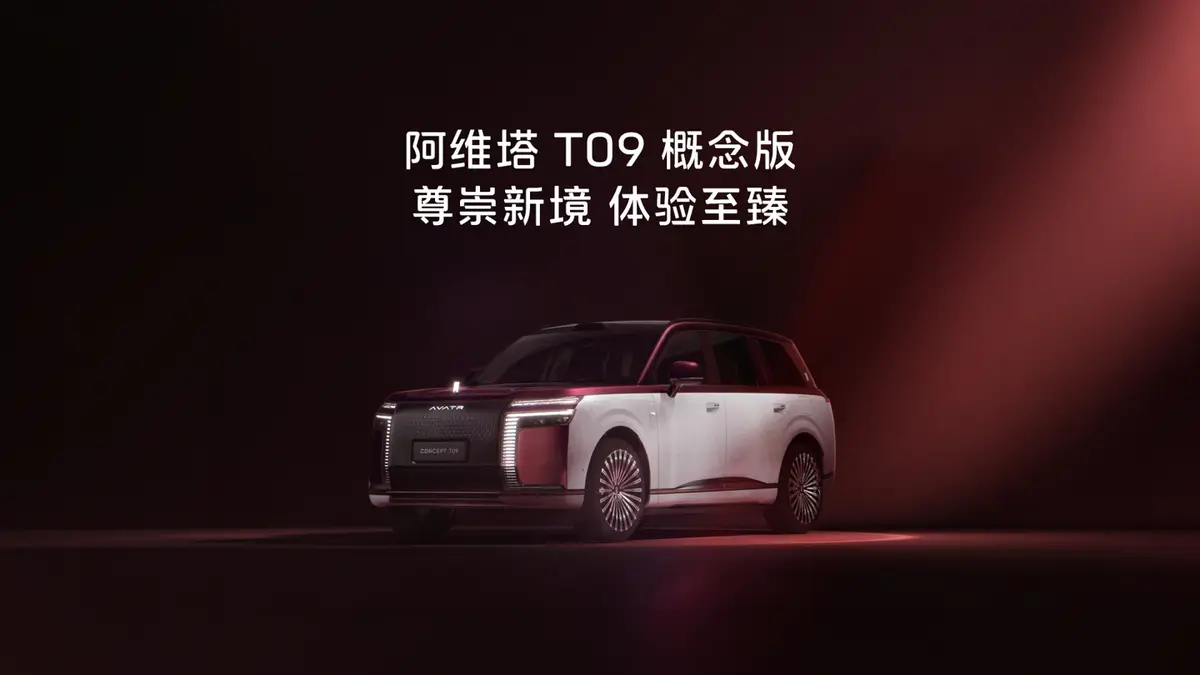
Avatr, a premium electric-vehicle brand backed by Changan Automobile and Huawei, chose Paris for the global debut of its T09 concept, a new flagship SUV that previews the company’s most expensive model yet. The reveal, held on October 11, marks the first high-end flagship jointly designed by Avatr and Huawei’s Qiankun automotive unit, and it signals how aggressively Chinese EV makers are pushing into luxury territory once dominated by European brands.
The most eye-catching technical detail is the sensor suite: four lidar units are mounted around the vehicle, a configuration that goes beyond the single or dual lidar setups common on today’s advanced driver-assistance systems. More sensors generally mean richer three-dimensional coverage of the road, which matters for the complex urban driving scenarios Chinese automakers are racing to master. Avatr has not yet detailed the full computing platform, but the Huawei partnership suggests the production car will lean on the same in-house chips and software stack that Huawei supplies to several partner brands.
Design-wise, the T09 introduces a new Avatr visual language. The front end uses a grille built from hundreds of small logo-like units arranged in a pattern, paired with crystal-array headlights and a double-layer diamond-cut finish. Two contrasting colors, a deep crimson and a soft cotton white, create a deliberate vertical and horizontal split across the body. A new illuminated badge on the D-pillar blends into the architecture, while the rear gets a long, one-piece crystal taillight. The overall silhouette is described as imposing and substantial rather than sporty.
Inside, the concept follows the template of China’s ultra-luxury segment: independent rear seats, entertainment screens, a refrigerator and, in some rivals, even a coffee machine. The idea is that the owner may spend more time being driven than driving. That positioning places the T09 against a growing field of six-figure domestic models from brands such as BYD’s Yangwang and Huawei’s Aito, all competing for wealthy buyers who once defaulted to German marques.
Avatr says the production version is planned for launch within 2026, with an estimated price above 500,000 yuan, roughly $70,000. That is a bold ask for a young brand. Avatr has sold well in the 200,000 to 400,000 yuan range, but the T09 would test whether Chinese consumers will pay luxury money for a domestic badge — a question that has become one of the defining contests of the country’s auto industry.
The Paris setting was not accidental. Chinese EV makers have been using European auto shows to build brand recognition and signal global ambition, even as actual sales in Europe remain modest. A concept car is a low-risk way to test reactions: it generates press coverage without committing to production numbers or a European launch date.
For now, the T09 remains a show car, and several details — range, battery supplier, exact driver-assistance capabilities — are still unconfirmed. But the direction is clear. Avatr wants to be seen as a technology-led luxury brand, and it is betting that four lidar sensors and a Huawei-designed brain are the credentials that matter most to its next generation of buyers.