AI Glasses Are Selling Fast, But Nobody Needs Them Yet
AI glasses are having a moment, at least on paper. Shipments are growing fast, exhibitors can barely keep demo units on tables at trade shows, and every major consumer electronics brand seems to have a pair in development. Yet ask a buyer what the glasses are actually for, and the answer tends to trail off.
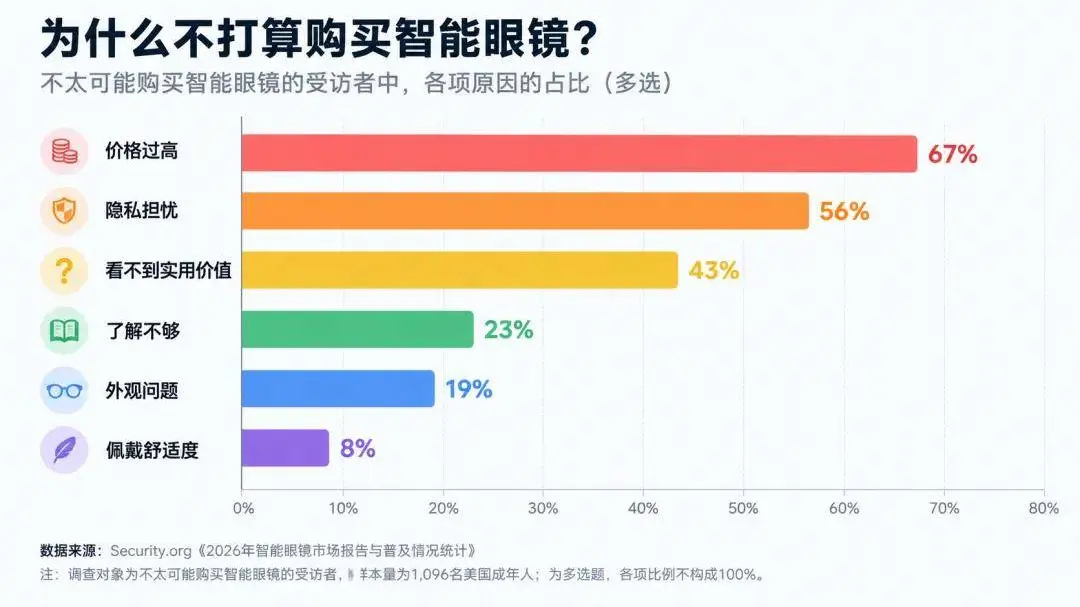
The problem is not hardware. Modern frames are light enough to wear for hours, batteries have improved, and the cameras and microphones inside them are genuinely capable. The problem is that almost everything the glasses do, a phone already does better. You can ask them to translate a menu, identify a landmark, or read a message aloud. You can also do all of that by taking your phone out of your pocket, which most people find faster and less awkward.
That is the definition of a chicken-rib product: something that is not bad, exactly, but that nobody would miss. Analysts who track the category keep returning to the same question. Not how many things can the glasses do, but what must be done through glasses? Until that question has a real answer, growth in shipments reflects curiosity and corporate enthusiasm more than genuine demand.
Privacy is the second wall. A camera on your face changes how other people behave around you, and not in a good way. Cafes, gyms and schools have started asking wearers to take them off. Any product that makes strangers uncomfortable has a ceiling on how often it gets worn, and a device you leave at home is a device that never becomes a habit.
Interaction is the third wall. Voice commands work fine in a quiet room and fail badly on a busy street. Touch controls on the temple are fiddly. Gesture recognition still looks like a party trick. The industry has not settled on how a person should talk to a computer that lives on their nose, and without that, every use case feels like a demo rather than a routine.
The most credible near-term niches are narrow and practical. Warehouse workers who need hands free. Surgeons and technicians following checklists. Cyclists and runners who want navigation without looking down. Travelers navigating an unfamiliar city with their hands full of luggage. These are real needs, and they are also small markets compared with the phone business that manufacturers are hoping to disrupt.
The companies that win this category will probably not be the ones with the longest feature list. They will be the ones that find a single task where glasses are not just convenient but clearly superior, then make that task work flawlessly, every time, in bright sun and noisy streets. That is a slower path than the current hype cycle implies, and it is the only one that leads anywhere.
For now, the honest description of AI glasses is a promising accessory still searching for its reason to exist. The hardware is ready. The software is catching up. The reason is missing. Until someone finds it, the category will keep growing in shipment charts and keep sitting in drawers.