Why Your Star Anise Might Be a Poisonous Lookalike
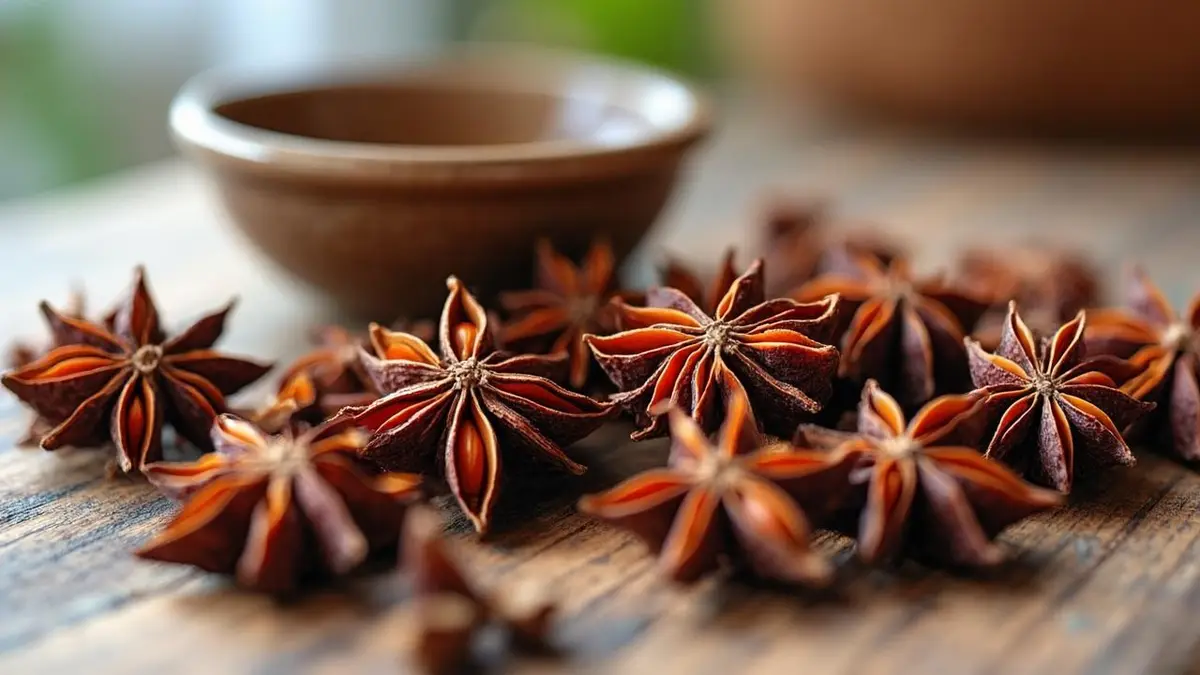
A routine grocery run in Zhejiang province turned into a small panic this month when a woman and her children counted the points on a star anise pod and found 13 instead of the usual eight. A quick search told her the extra-pointed spice was likely Japanese star anise, a close botanical relative known in Chinese as mangcao and widely described as toxic. The story spread quickly online, prompting families across the country to raid their spice jars and count.
Star anise, or bajiao, is one of the most recognizable flavors in Chinese cooking. It anchors braised pork, soy-sauce eggs, hot pot broths and the famous five-spice blend. The pods come from an evergreen tree native to southern China and northern Vietnam, and the good ones almost always show eight plump, boat-shaped points arranged around a small central seed. That neat geometry is where the spice gets its Chinese name, which literally means eight points.
Japanese star anise looks similar enough to fool a hurried shopper. It grows on a related tree, and its pods often carry more points — commonly 11 to 13 — and they tend to be smaller, thinner and more irregular. The two plants are close enough that they share a family, but not close enough to share a kitchen. Japanese star anise contains compounds, including a neurotoxin called anisatin, that can cause vomiting, abdominal pain and, in larger doses, more serious neurological symptoms. It is not something to sprinkle into a stew.
So is counting points enough? Food-safety educators say it is a good first check, but not a guarantee. A genuine star anise pod should have eight points, each fat and rounded, with a visible seed inside. The impostor usually has more points that look scrawnier and often lacks a proper seed. Smell is another clue: real star anise has a warm, sweet, licorice-like aroma, while the toxic lookalike smells sharper and less pleasant. Taste is a last resort, and not a recommended one.
Experts also caution against buying loose spices from unlabeled bins or unfamiliar online sellers. Reputable brands and sealed packages are safer because the product has passed through inspection. If a pod looks wrong, the advice is simple: throw it out rather than risk a family meal. The tiny cost of a replacement bag is nothing compared with a trip to the hospital.
The scare has a broader message about how much trust people place in the look of their food. Spices are often sold in bulk, scooped by hand and never examined closely. Most of the time that is fine. But when two plants look nearly identical and one of them is poisonous, a few seconds of counting can matter. The Zhejiang mother did exactly what safety campaigns hope people will do: she noticed something odd and checked.
For cooks who want to be sure, the practical routine is quick. Count the points, look for a seed, give the pod a sniff, and buy from sources that label their products. Star anise is a small player in the pantry, but it shows up in dishes that define home cooking for millions of people. Getting it right is worth the extra glance.
The story has also become an unexpected lesson in botany. Two trees from the same plant family, separated by a few letters in a Latin name, end up on opposite sides of a dinner table. One perfumes a pot of braised beef; the other can send a diner to the emergency room. The difference, it turns out, is something anyone can learn to spot in a supermarket aisle.