Chinese Scientist Recalls How Life Was Found Above the Clouds
How high can life reach? For most of human history the answer was a guess. A new essay by a Chinese science writer, published this week on the blog platform of ScienceNet, traces the surprisingly dramatic history of efforts to find out, and the picture that emerges is one of patient, sometimes accidental discovery.
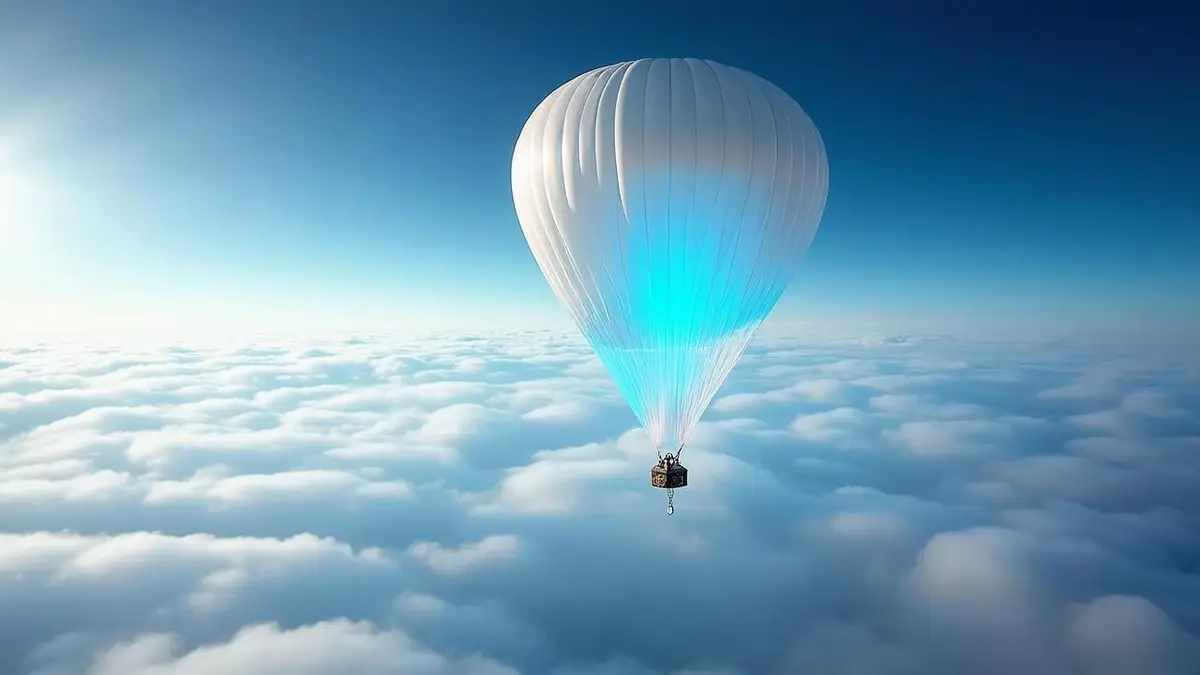
The story begins in the 1930s, when a United States Army Air Corps helium balloon called Explorer II climbed roughly 22 kilometers into the sky. It carried sterile sampling devices that opened on the way down, capturing air from the stratosphere. Back in the laboratory, researchers cultured the samples and found ten kinds of bacteria and fungi. It was the first time anyone had recovered living, culturable microbes from that altitude, and the feat was reported in 1936. At the time, the work was limited by the tools of the era: there was no way to identify organisms by their DNA, so scientists could not tell whether the microbes were genuine residents of the upper atmosphere or merely passengers carried up from the ground.
That ambiguity haunted the field for decades. Every new claim of life at extreme altitude faced the same objection: contamination. A balloon, an aircraft, or a rocket could easily pick up spores near the surface and deposit them in a sample collected far above. The essay notes that researchers responded by tightening their methods, sterilizing equipment, opening and closing collectors at precise moments, and designing controls that could reveal whether a microbe had truly been floating in the stratosphere.
The stakes went beyond curiosity. Defining the upper boundary of the biosphere matters for understanding how life spreads around the planet, how resilient cells are to radiation and cold, and whether Earth’s atmosphere could carry organisms between continents. It also shapes thinking about life elsewhere in the solar system, where similar extremes of temperature and radiation prevail.
Modern techniques changed the game. With DNA sequencing, scientists no longer needed to grow microbes in a dish to know they existed. They could compare genetic material from high-altitude samples with known species and, crucially, with the microbes found on the ground and on the sampling equipment itself. That allowed them to distinguish genuine high-flyers from stowaways with far more confidence than the balloon pioneers could muster.
The essay’s author, writing under the name Zhang Wuchang, treats the history as a lesson in scientific humility. Early researchers were not wrong to be excited, but they lacked the tools to answer their own questions. Each generation inherited both the discoveries and the doubts of the one before, and each round of technology pushed the boundary a little higher and made it a little more solid.
For readers far from any laboratory, the tale is a reminder that some of the most basic facts about our planet were settled only recently, and that the line between sky and living world is thinner, and stranger, than it looks. The full account, part of a longer series, appears on ScienceNet, a science blog network operated by the Chinese Academy of Sciences.