The Lantana's Trick: Why One Bush Blooms in Many Colors
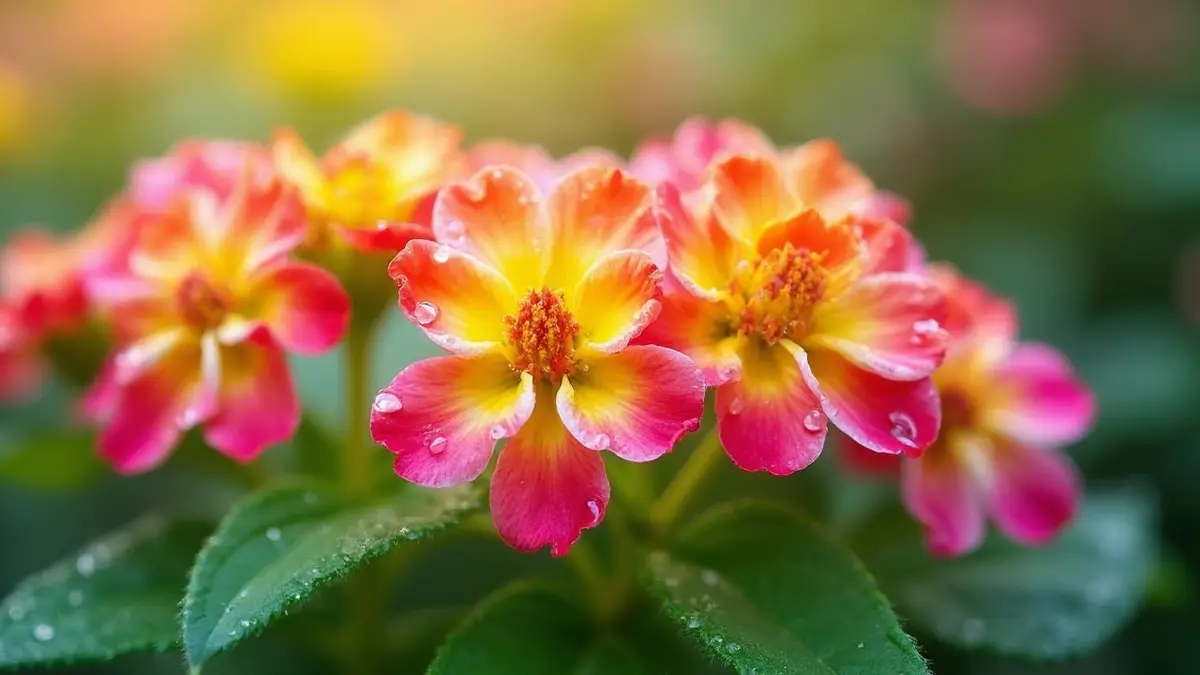
A patch of lantana growing outside a laboratory door in China recently turned a routine walk to work into an impromptu seminar. The flowers on a single plant displayed a rainbow of hues, prompting colleagues to stop and argue about what could possibly cause such variety within one bush. The question is a good one, because lantana’s color-changing habit is one of the more elegant pieces of everyday botany hiding in plain sight.
Lantana belongs to the verbena family, and in China it is known by a string of affectionate nicknames: “color-changing grass,” “five-color plum,” and “five-color hydrangea.” It also answers to a less flattering name — “stinky grass” — because crushed leaves release a sharp, pungent odor. The plant thrives in southern China, where it can flower almost year-round. Its blooms are arranged in flat-topped clusters called umbels, and the defining feature is that flowers at different positions in the same cluster are different colors.
Typically, the newest flowers open at the center of the cluster in shades of yellow or orange, while older ones toward the outer ring deepen into red, pink, or purple. The effect is a single flower head that looks like a tiny sunset, shifting from warm to cool as it ages. A casual observer might assume this is simple decay — petals fading as they die. But the change is an active, controlled process, not a passive one.
Researchers who study plant-pollinator relationships describe this as a form of honest advertising. Young flowers contain nectar and are ready to be visited; older flowers have already given up their nectar and are effectively closed for business. By changing color, the plant sends a clear signal: yellow means “come here,” red means “nothing left for you.” Insects such as butterflies and bees learn the code quickly, saving energy by skipping flowers that offer no reward.
This kind of signaling benefits both sides. The plant gets more efficient pollination because visitors concentrate on fresh blooms, and the insects waste less time on empty ones. It is a small, wordless negotiation that plays out in gardens and roadsides across the tropics and subtropics every day. The color change is also tied to shifts in the flower’s internal chemistry, including changes in acidity and pigment production, which alter how light is reflected.
Lantana’s story is a reminder that the plants around us are not passive decoration. They monitor their own condition and communicate it, even if the audience is a bee rather than a human. The next time you pass a bush covered in yellow, orange, and red at once, you are not seeing a random mix. You are reading a message about nectar, written in color and aimed at very small readers.
The plant’s dual reputation — beautiful and useful to pollinators on one hand, invasive and smelly on the other — makes it a favorite subject for botanists and gardeners alike. In many warm regions it spreads aggressively, which is why some places treat it as a weed rather than a treasure. Still, for anyone curious about how nature solves everyday problems, the lantana cluster offers a compact and colorful lesson.
So why does the lantana change color? Because it pays to be clear. Flowers that advertise their age honestly attract the right visitors at the right time, and the plant gets the pollen movement it needs. The next time a colleague stops to stare at that patch by the door, they are not just admiring a pretty plant. They are watching a quiet, centuries-old conversation between flower and insect, conducted entirely in shades of yellow and red.