Chinese Scientists Use Nanomedicine to Target Aging Cells
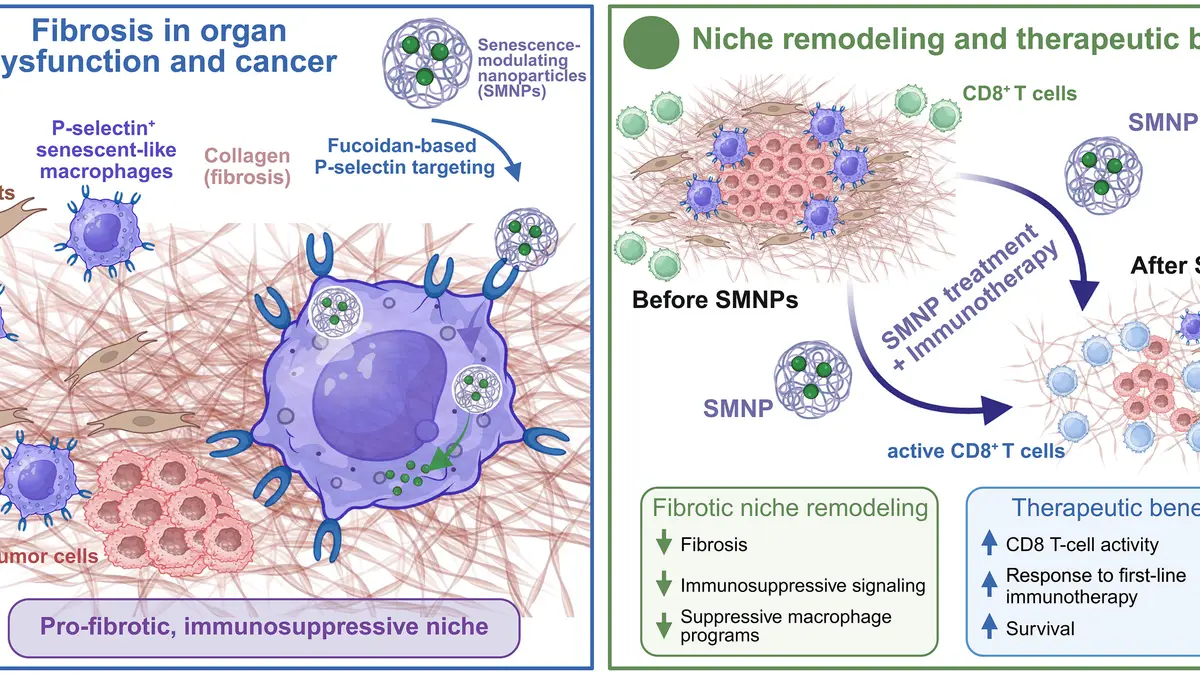
Aging cells that refuse to die are increasingly seen as a root cause of chronic disease. Now, a team of Chinese researchers has demonstrated a way to hunt them down with precision, using nanoparticles designed to recognize the distinctive surface chemistry of these so-called senescent cells. The work, published in the journal Science, points toward a new class of nanomedicines that could one day treat fibrosis and improve cancer immunotherapy without the collateral damage of existing drugs.
Senescent cells are not simply worn-out cells. When tissues are injured, these cells temporarily stop dividing and release a cocktail of signaling molecules that help orchestrate repair. The problem arises when they linger. Over time, they fuel chronic inflammation, promote the buildup of stiff scar tissue known as fibrosis, and create an immunosuppressive environment that shields tumors from the body’s defenses. Clearing them has become a major goal in aging research, but most experimental drugs target broad features of senescence and can harm healthy tissues.
The new approach borrows from the logic of precision oncology. The researchers engineered nanoparticles that bind to proteins found on the surface of senescent cells, allowing the particles to deliver their payload only where needed. In animal models, this targeted strategy reduced fibrosis in multiple organs and, when combined with immunotherapy, made tumors more responsive to treatment. The particles essentially act as a clean-up crew, removing the inflammatory cells that otherwise blunt the immune system’s attack.
What makes the finding notable is its selectivity. Earlier attempts to eliminate senescent cells often relied on genetic tricks or drugs that had to be activated by specific enzymes, limiting their use to certain tissues. The nanoparticle platform appears more adaptable, potentially allowing clinicians to adjust the targeting molecule for different conditions. The team emphasized that the technology is still in early stages, with human trials likely years away, but the proof of concept is significant.
The study adds to a growing body of work from Chinese laboratories on the biology of aging. In recent years, research groups across the country have published influential papers on stem cell exhaustion, epigenetic clocks, and the role of chronic inflammation in age-related disease. This latest contribution, however, stands out for its therapeutic angle: rather than merely describing why senescent cells are harmful, it offers a concrete method for removing them with minimal side effects.
For global readers unfamiliar with the science, the stakes are straightforward. Fibrosis underlies many common conditions, from liver cirrhosis to lung scarring after severe infections, and it currently has few effective treatments. Cancer immunotherapy, meanwhile, works wonders for some patients but fails in many others, often because the tumor microenvironment is packed with suppressive senescent cells. A tool that clears these cells could make existing therapies work better for more people.
The path from mouse studies to human medicine is long and uncertain. Nanoparticles must be proven safe, manufacturing must be scaled up, and clinical trials must show benefit in patients. Yet the direction of travel is clear. As populations age, therapies that target the underlying drivers of chronic disease, rather than just managing symptoms, are attracting intense interest from both scientists and investors. This study suggests that the immune system’s own cleanup mechanisms can be given a precise assist.
For now, the work remains a promising early step. The researchers are planning further studies to test the nanoparticles in larger animals and to refine the targeting strategy. If the approach holds up, it could eventually become part of a new generation of medicines that treat aging not as an inevitable decline but as a biological process that can be carefully managed.