China's Double Ninth Festival: Why '99' Means 'Forever'
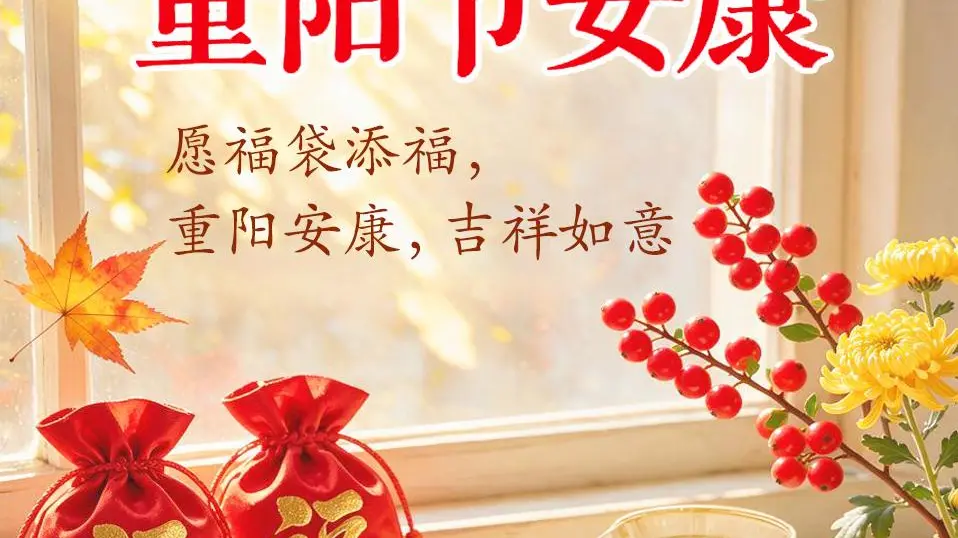
Every year in early autumn, families across China mark a festival that few outsiders know: the Double Ninth Festival, or Chongyang. It falls on the ninth day of the ninth lunar month — this year on October 18 — and its name comes from the doubling of the number nine. In Chinese tradition, nine is a yang number, associated with warmth and positivity, and because the word for nine sounds like ‘long-lasting,’ the date carries a wish for a long and healthy life. That is why the festival has become a day to honor elders, with younger generations visiting parents and grandparents, bringing gifts, and sharing meals.
The most visible custom is climbing a hill or mountain. In cities, people head to the nearest high ground at dawn; in the countryside, families hike to scenic peaks. The idea is to ‘ascend high’ (denggao), a symbolic act of rising above misfortune and inviting good luck. It is also a chance to enjoy the crisp autumn air and the turning leaves. Many parks and tourist spots organize organized climbs, and it is common to see three generations walking together, grandparents setting a slow but steady pace.
Chrysanthemums are the flower of the festival. They bloom in late autumn, when most other flowers have faded, and are seen as a symbol of resilience and longevity. People display potted chrysanthemums at home, visit flower shows, and in some regions drink chrysanthemum wine or tea, believed to have health benefits. In the past, it was also customary to wear a sprig of dogwood (zhuyu), a plant with a strong scent thought to ward off evil. Today, the dogwood tradition has largely faded, but chrysanthemums remain central.
Food plays a part, too. In many areas, people eat chongyang cake (gao), a steamed cake whose name sounds like ‘high,’ echoing the climbing custom. The cake is often layered with red dates, walnuts, and osmanthus, and given as a gift to elders. In some southern regions, families make rice cakes with chestnuts, while in the north, a simple millet cake is more common. The food is less about extravagance and more about the shared act of making and giving.
Since 1989, the Chinese government has officially designated the Double Ninth as Senior Citizens’ Day, encouraging respect for the elderly. But the festival’s roots go back more than a thousand years. It was first recorded in the Han dynasty (around 2000 years ago) and became popular during the Tang dynasty, when poets wrote verses about climbing heights and missing absent friends. One of the most famous lines in Chinese literature, by the Tang poet Wang Wei, describes feeling homesick on this day: ‘I know my brothers are climbing high, and one of them is missing me.’ It is still taught in schools.
For modern Chinese, the Double Ninth is a quieter holiday than Spring Festival or Mid-Autumn. There is no national day off, so most people celebrate on the nearest weekend. But its message — respect for age, gratitude for family, and the enjoyment of autumn — resonates. In a fast-aging society, the festival’s emphasis on elders feels more relevant than ever. Many companies and schools organize visits to nursing homes, and social media fills with messages of blessings for grandparents.
The greetings exchanged on this day often include the phrase ‘chongyang ankang’ — may you be safe and healthy on Double Ninth. It is a simple wish, but one that captures the festival’s spirit: a moment to pause, look after those who came before us, and appreciate the season’s beauty.