China's Autumn Travel Calendar: Eight Golden Destinations for Late October
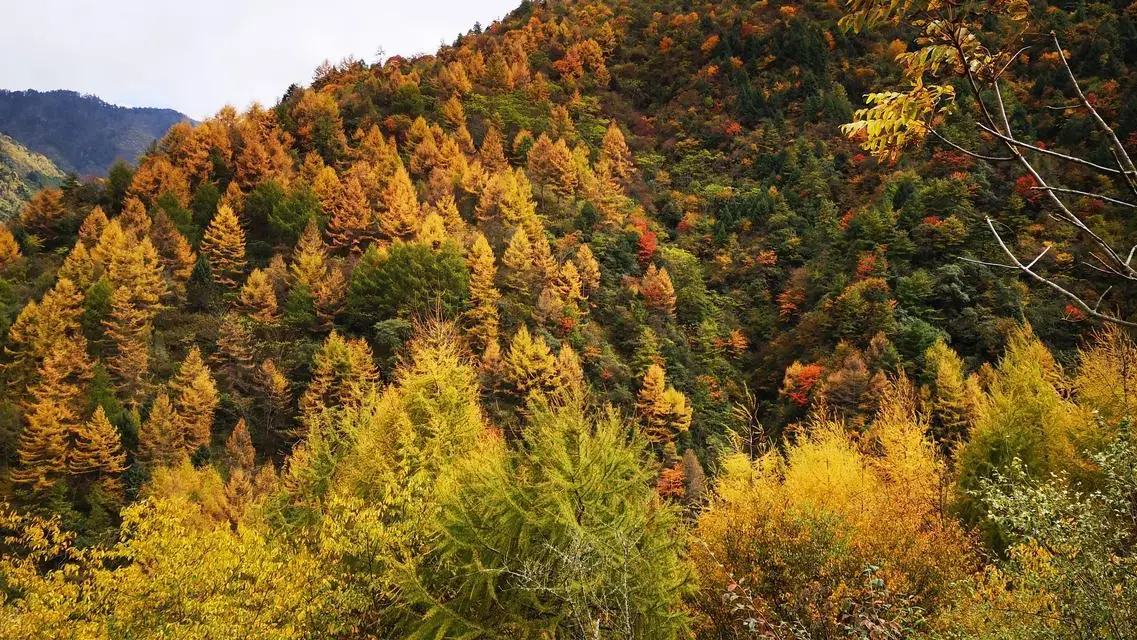
Every autumn, Chinese travel writers publish their annual autumn foliage guides, and the latest one making the rounds names eight destinations where the golds and reds are about to peak between late October and November. The timing matters: this is the window when China’s most photogenic seasonal landscapes are at their best, and when domestic travelers plan short trips around weekends.
The first recommendation is Miyaluo in Lixian County, in Sichuan’s Aba Prefecture. Along National Highway 317, the river valley is flanked by dense stands of maple, maple-like trees, birch and larch. The red leaves are most intense from late October to early November. Several viewing platforms line the road, and travelers who want to photograph morning mist are advised to stay overnight in Lixian or Miyaluo town, heading out around seven in the morning when fog drifts through the valley and the red foliage appears and disappears.
Second on the list is Tuole Ginkgo Village in Panzhou, Guizhou. The village is home to more than a thousand old ginkgo trees, their thick roots reaching toward old houses, with stone-paved paths running through the settlement. Small bridges, flowing water, yellow walls, gray tiles and golden canopies combine into a scene that rewards slowing down rather than simply viewing a grove of trees.
The guide also includes practical advice drawn from experienced outdoor travelers. In the high-altitude wilderness of the Tibetan Plateau, including the Kekexili nature reserve, lighting a fire at night to keep warm is described as effectively gambling with your life. Safety notices issued by the reserve’s management bureau and local climate data back up the warning, and as of October 2026 the true wilderness interior remains off-limits to ordinary hikers, with many unauthorized crossings ending in search-and-rescue operations.
For travelers heading to high-altitude areas such as Daocheng Yading in Sichuan, the recent death of a 21-year-old hiker serves as a sobering reminder. According to Huashang Net, the young man, surnamed Chen, was an experienced hiker who had previously trekked at 4,700 meters without altitude sickness. A fellow hiker reported that by the time they met him on the 12th, his condition had deteriorated severely and he was speaking one word at a time. The case has prompted discussion about responsibility and preparedness on high trails.
Beyond foliage, the autumn travel conversation also touches on how people move through the season. One widely shared story describes a long-distance motorcycle trip that paused in Taizhou, where a traveler sat down at a shared public piano in a shopping district and drew a crowd with a fluent performance. Such moments have become part of the appeal of domestic travel: unexpected encounters in ordinary places.
For global readers, the takeaway is that China’s autumn travel season is highly regional. The northeast and southwest peak at different times, and local advice often matters more than national lists. Whether you are chasing red maples in Sichuan, golden ginkgo in Guizhou or simply a quiet mountain town, late October and early November are the weeks to plan around. The full list of eight destinations is circulating widely on Chinese travel platforms, offering a starting point for anyone hoping to catch the season before it fades.