China's Mountain Lore: Why Huangshan Outshines the Five Sacred Peaks
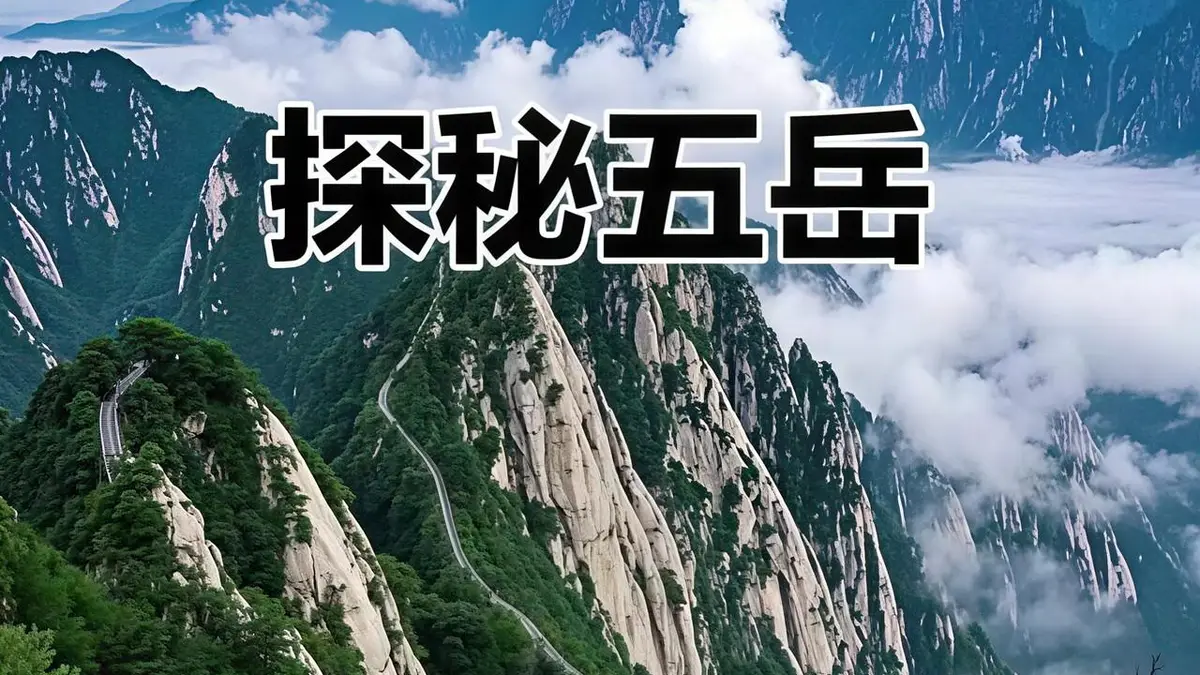
There is a proverb that every Chinese schoolchild learns: once you have seen the Five Great Mountains, no other mountain is worth climbing; once you have seen Huangshan, no other mountain is worth seeing at all. The line is a compliment wrapped inside a paradox. It praises the five sacred peaks of Chinese tradition — Tai in the east, Hua in the west, Heng in the south, Heng in the north and Song in the centre — while quietly suggesting that a single mountain in Anhui province outclasses them all.
That tension is the subject of a long essay now circulating among Chinese travel readers. The writer, by his own admission no great scholar and no great walker, was moved to put down his thoughts after reading a friend’s travel prose about Huangshan. That friend’s piece went further, setting Huangshan directly against Hua Mountain in Shaanxi and weighing their respective heights and virtues. The result is a small, thoughtful argument about how Chinese people decide which landscape deserves their devotion.
Mountain worship in China is unusually old. The Five Great Mountains were not chosen for their altitude — none of them is especially tall by global standards — but for their place in ritual geography. Emperors climbed them to report to heaven. Daoist and Buddhist monasteries clung to their slopes. Poets such as Li Bai and Su Dongpo turned them into shorthand for aspiration, exile and return. To climb a sacred mountain was to move through a landscape that had already been written about for two thousand years.
Huangshan entered that conversation late and from a different direction. It was never a ceremonial centre. What it offered instead was spectacle: granite pillars rising out of cloud, pines that grip bare rock, hot springs, and a sea of mist that appears and vanishes by the hour. It became famous as a subject for ink painters before it became famous as a destination, and that order matters. Visitors arrive already carrying an image in their heads.
So which mountain wins? The essay does not really settle the question, and that seems to be the point. Hua Mountain offers vertigo — narrow plank walks bolted to a cliff face, a trail that demands nerve as much as stamina. Huangshan offers atmosphere, a landscape that changes shape with the weather. One rewards the body, the other the eye. Comparing them is a little like comparing a cathedral to a sunset.
What the piece captures well is a shift in how Chinese travellers now relate to their own scenery. For earlier generations, a mountain was a cultural text to be read. For many younger visitors, it is an experience to be photographed, timed and shared, with cable cars, timed entry slots and sunrise viewing platforms. Both impulses can coexist, but they produce very different journeys.
The practical takeaway for anyone planning a trip is simple enough. Huangshan is genuinely crowded, particularly around dawn at the well-known viewing points, and the classic advice is to stay overnight on the mountain rather than attempt a day trip from the city below. The Five Great Mountains are quieter, cheaper and easier to reach by high-speed rail, and each has its own character: Tai for pilgrimage, Hua for drama, Song for martial legend.
Perhaps the proverb survives because it is not really a ranking at all. It is an invitation. The Five Great Mountains teach you what a mountain has meant in China. Huangshan shows you what one can look like. Travellers who manage both, the essay suggests, come home with something better than a verdict — a sense of how many different things a single peak can be asked to hold.