China's Northernmost High-Speed Rail Opens, Shrinking a Seven-Hour Trip
China’s northernmost high-speed railway opened to passengers on September 28, cutting a long, slow journey across Heilongjiang province down to roughly the length of a feature film. The Harbin–Yichun line runs 318 kilometers at a designed speed of 250 kilometers per hour, and turns a trip that once took about seven hours into as little as one hour and 46 minutes.
The route links Harbin, the provincial capital and the largest city in China’s northeast, with Yichun, a forested region near the Russian border known for its timber and its cold, snowy winters. Along the way it also pulls smaller places into the national high-speed network. Suihua, a city of several million people, is now as little as 42 minutes from Harbin by rail; Tieli, another stop, is closer still.
For decades the northeast has been one of China’s most industrialized regions, home to steel, machinery, coal and timber. It has also been one of the slowest-growing, as heavy industry declined and younger workers moved south. Faster rail is one of the tools Chinese planners have used to try to reverse that drift, on the theory that a city within an hour or two of a major hub can share in its jobs, hospitals and universities.
Officials describe the project as a step toward “every city connected by high-speed rail” in the northeast, a goal that has driven a wave of construction across the region in recent years. Similar lines have already stitched together Liaoning, Jilin and Heilongjiang, the three provinces that make up the old industrial heartland. The new line fills in one of the last large gaps in the northern part of that map.
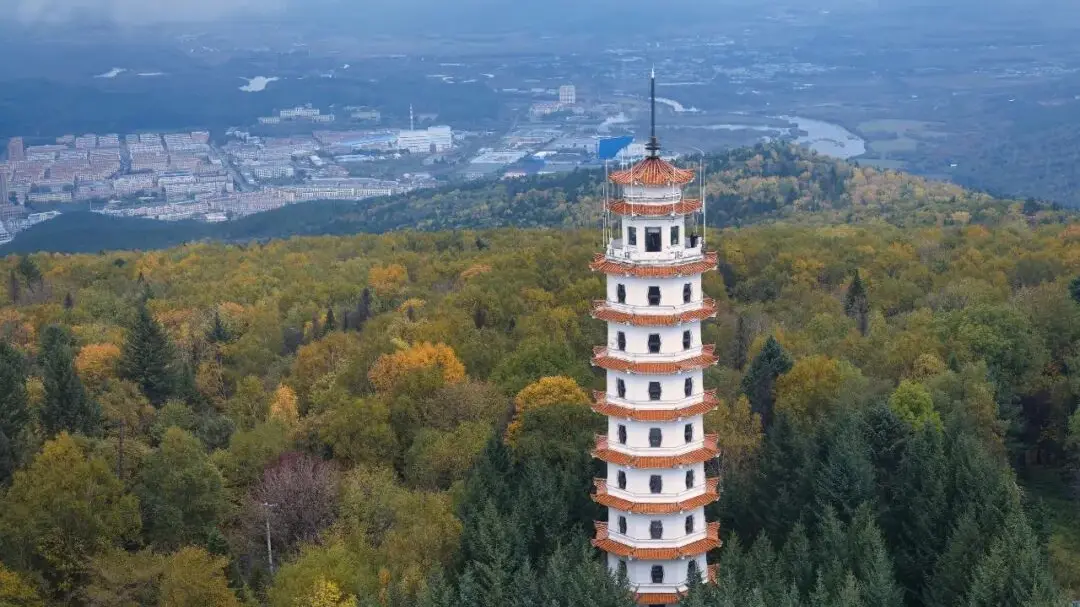
Yichun’s economy has long leaned on forestry, and local officials have been promoting its forests, wetlands and winter landscapes to tourists. A trip that once demanded a full day of travel is now a plausible weekend outing from Harbin, which itself draws visitors for its annual ice and snow festival each winter. Ski resorts and forest parks in the region are expected to see more visitors once the snow arrives.
China’s high-speed rail network is already the largest in the world, with more than 45,000 kilometers of track, and it continues to expand into colder, more remote terrain. Engineers working on northern lines must contend with permafrost, deep frost heave and temperatures that can fall well below minus 30 degrees Celsius, conditions that shape everything from track foundations to how trains are heated and maintained.
The Harbin–Yichun line is a modest entry in that larger story, but it fits a familiar pattern: a piece of infrastructure that is as much about regional policy as it is about transport. Whether it changes the fortunes of the towns along its route will take years to show. For now, the most visible effect is simpler. A journey that used to eat a day now fits into an afternoon, and the far north of China is a little less far away.