China's High-Speed Rail Map Grows as Xi'an Becomes a Crossroads
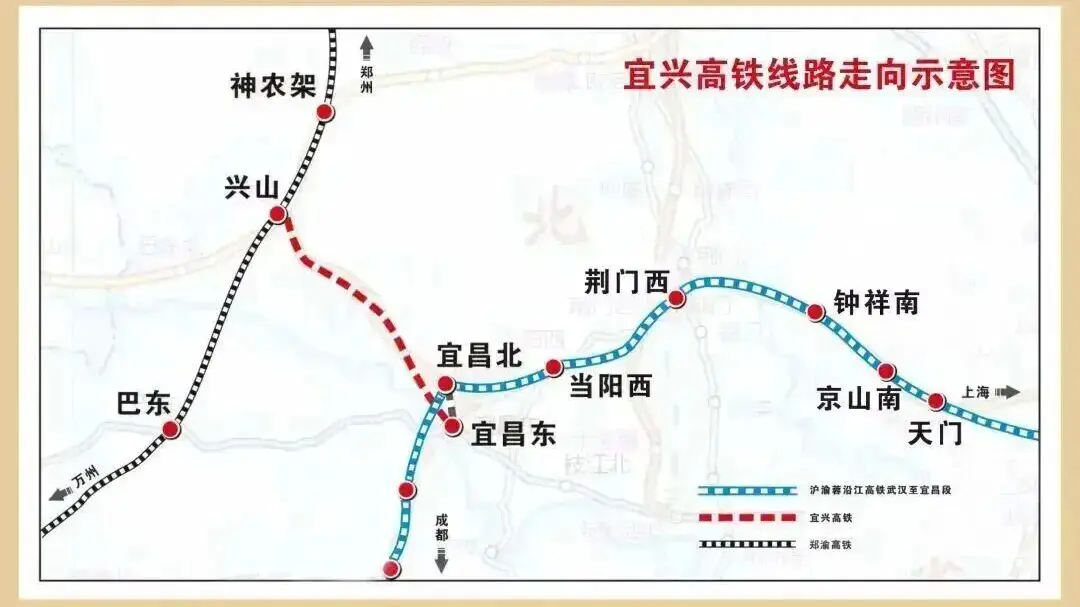
On September 28, four new high-speed rail sections opened across China on the same day, quietly reshaping how the country moves. The new lines link Xiongan with Shangqiu in the north, Xi’an with Ankang in the west, Yichang with Xingshan in central Hubei, and Harbin with Yichun in the far northeast. Together they stretch China’s already enormous high-speed network deeper into regions that had been waiting for faster connections.
The most symbolic of the four is the Xi’an-Ankang line. With it, the ancient city of Xi’an — home to the Terracotta Warriors and a starting point of the old Silk Road — becomes China’s third city to form a “mi-shaped” high-speed rail hub, after Zhengzhou and Hefei. The name comes from the Chinese character 米, which looks like an asterisk: a central point with lines radiating in eight directions. In practical terms, it means travelers can reach major cities north, south, east and west without backtracking through another hub. Xi’an is the first city in western China to reach this milestone.
For years, China’s high-speed rail map was dominated by the wealthy coastal corridor between Beijing, Shanghai, Guangzhou and Shenzhen. The new openings are part of a broader push to give inland cities the same kind of connectivity. Xi’an, already a major aerospace and technology center, gains easier access to the Yangtze River Delta and the southwestern city of Chongqing. Smaller stops along the way — Ankang, Xingshan, Yichun — hope to attract tourists and businesses that previously skipped them.
The Harbin-Yichun line serves a different purpose. It cuts through Heilongjiang province in China’s far northeast, a region known for severe winters and, in recent years, a viral winter tourism boom. Faster trains make it easier for visitors to reach the forests and ski areas around Yichun, and for residents to reach the provincial capital.
China’s high-speed rail network is already the largest in the world, spanning more than 40,000 kilometers. The government has said it aims to expand that to around 70,000 kilometers by 2035, with much of the growth in central and western regions. Building in mountainous terrain like that around Ankang is slower and more expensive than on the eastern plains, which is one reason the west lagged for so long.
Not every new line is an instant success. Some stations in remote areas see sparse ridership, and analysts have questioned whether all the investment will pay off. But the political and economic logic is straightforward: better connections bring jobs, students and tourists, and they tie distant provinces more tightly to the national economy.
The question now is who comes next. Several inland provincial capitals — Chengdu, Wuhan, Changsha, Zhengzhou’s neighbors — are racing to complete their own mi-shaped hubs. For global observers, the takeaway is simple: China’s map of fast trains keeps filling in, and the country’s interior is no longer a place you have to fly over to reach the coast.