Chengdu Becomes the Gateway to Western Sichuan, but Old Sights Miss Out
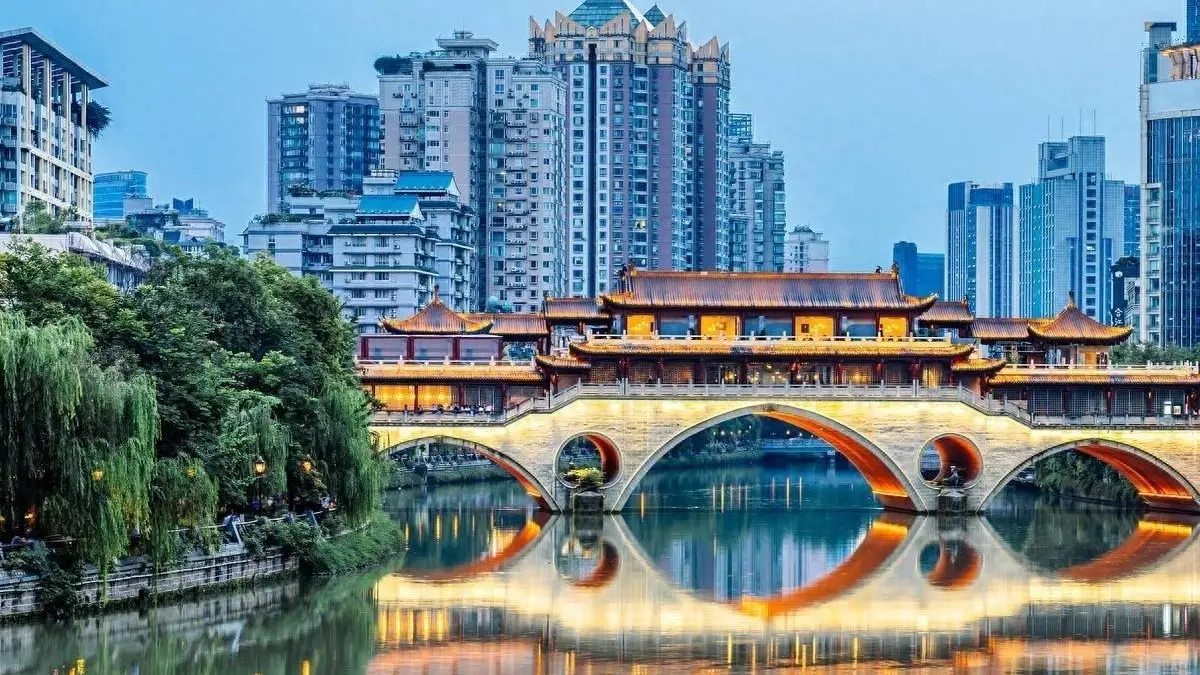
Chengdu has long sold itself as a city you linger in: teahouses, pandas, hotpot and a famously relaxed pace. This National Day holiday, however, the numbers told a different story. Over the first four days of the break, more than 7.4 million outside visitors arrived in the Sichuan capital, according to local tourism data reported by Chinese travel media. The city’s two airports, Shuangliu and the newer Tianfu, barely paused, with nearly 290,000 flight bookings into Chengdu and cumulative hotel orders across the city exceeding 1.9 million.
On paper, that is a triumph. On the ground, the picture was stranger. Districts like Chunxi Road, Taikoo Li and Yulin Road were so crowded that pedestrians had to turn sideways to pass. Yet at older, established scenic spots that charge admission of tens or even hundreds of yuan, the turnstiles spun slowly and crowds were thin. The travelers were there, but many were not spending their time or money inside the city’s ticketed attractions.
The reason is geography. Chengdu sits at the edge of western Sichuan, a region of snow peaks, high grasslands, Tibetan-influenced towns and dramatic valleys that has become one of China’s most sought-after travel destinations. For millions of domestic tourists, Chengdu is not the destination but the transfer hub: the place where you land, rent a car, buy supplies and acclimatize before heading west toward places like Kangding, Danba or the Siguniang Mountains.
That role as a super transfer station brings clear benefits. Airlines, car-rental firms, outdoor gear shops and hotels near the airports all benefit. But it also exposes a weakness. If visitors treat the city as a staging post, the classic attractions that depend on ticket sales lose out, even as the city’s overall visitor count soars. The holiday pattern suggests a growing split between cities that capture spending and cities that merely channel it.
Chengdu is not standing still. Local authorities and businesses have been promoting the city’s cultural districts, night markets, museums and food culture, aiming to convert stopover time into longer stays. The city’s reputation for a comfortable, slow-paced lifestyle remains a powerful draw, and many travelers do build in a day or two for pandas and hotpot before or after a western Sichuan loop. The challenge is to make that stopover longer and more lucrative.
The broader lesson applies well beyond Sichuan. As China’s domestic travel market matures, tourists are increasingly chasing specific landscapes and experiences rather than ticking off city landmarks. Gateway cities that once profited simply from being on the way now have to give people a reason to stay. For Chengdu, the answer may lie less in new ticket gates than in the streets, teahouses and kitchens that already define its character.
For international visitors, the shift is worth noting. Western Sichuan is now more accessible than ever thanks to improved roads and expanded flights into Chengdu’s two airports, and the city remains one of China’s most welcoming entry points. But the holiday data is a reminder that the most crowded places and the most profitable ones are no longer always the same. Chengdu’s next task is to turn its role as a doorway into a destination in its own right.