One Village, Two Countries: Inside China's Strangest Border Town
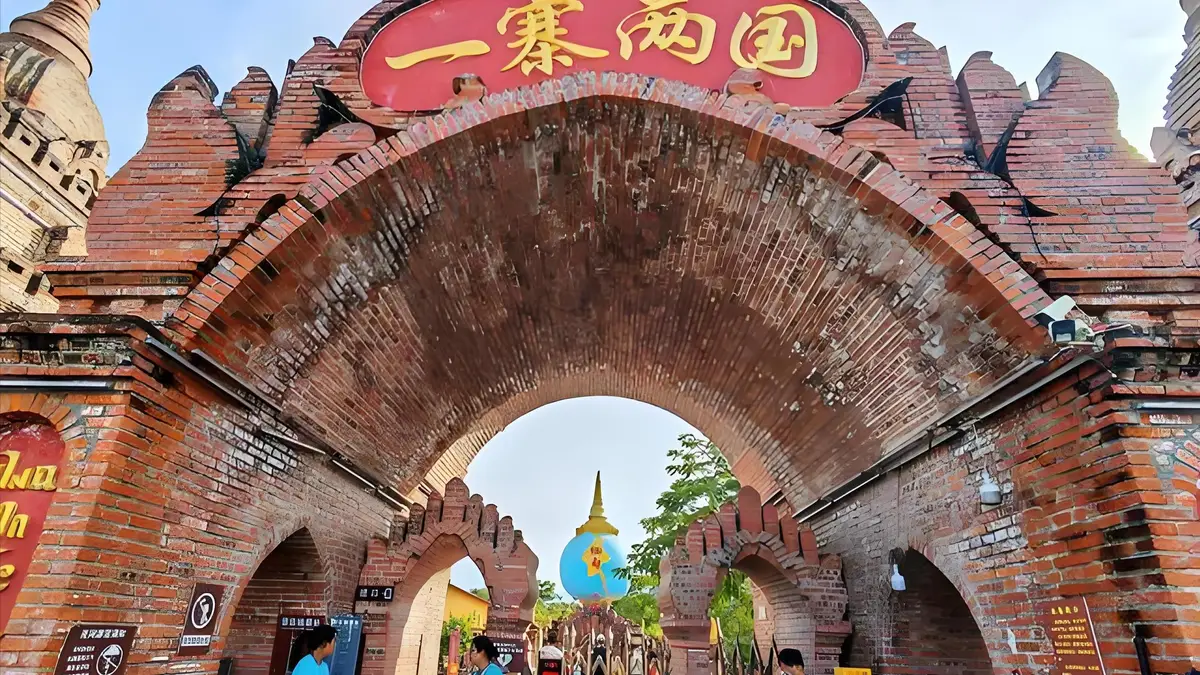
Imagine waking up in China, walking a few steps to make breakfast in Myanmar, and crossing an international border again on the way to the bathroom. That is daily life in Yinjing, a Dai ethnic village in Ruili, a city in China’s southwestern Yunnan province, right on the frontier with Myanmar.
The village sits about 11 kilometers from downtown Ruili, in the Jiexiang township of Dehong prefecture, close to border marker No. 71. When Chinese and Myanmar surveyors drew the boundary line in the 1960s, they split a single Dai settlement in two. The Chinese side became Yinjing village; the Myanmar side is known as Mangxiu. There is no wall, no barbed wire and no guard post between them. The border is a small ditch, a low earth ridge, or, in some cases, simply a line running straight through a family’s house.
Residents tell visitors that one home famously has its kitchen on the Myanmar side and its bedroom on the Chinese side. A trip to the toilet can technically count as an exit from the country. For the Dai families who live here, this is not a tourist gimmick but an inherited fact of geography. Many share the same surname, the same language and the same temples as their relatives a few steps away across the line.
What makes Yinjing workable is a set of practical arrangements that have grown up over decades. Villagers on both sides have long been allowed to move back and forth for farming, trade and family visits. Dai is spoken on both sides of the boundary, and Theravada Buddhism is shared across it, so festivals and temple fairs draw the whole community together regardless of which country they officially belong to. Children from the Myanmar side have historically attended the Chinese village school, learning Mandarin alongside their neighbors.
In recent years, Yinjing has become a modest travel curiosity. Visitors come to see the border marker, the two-country school and the famous cross-border house, and to have their photograph taken with one foot in each nation. Small shops sell souvenirs, and Dai-style restaurants serve dishes that borrow from both sides of the line. The village has also become a quiet lesson in what a border actually means. For people in remote corners of the world, a frontier is often less a barrier than a shared street.
Yunnan has many such places. Its long border with Myanmar, Laos and Vietnam passes through mountains, rivers and ethnic minority communities that predate modern maps. In some spots, residents cross to farm their own fields. In others, cross-border markets open at dawn. Ruili itself is a busy trade town, known for jade, timber and cross-border commerce, and the surrounding area mixes Chinese, Dai, Jingpo and Burmese influences in food, architecture and language.
For travelers, Yinjing offers something increasingly rare: a border you can walk through without a checkpoint, where the line on the map is less real than the family living on top of it. It is a reminder that borders are drawn by states, but lived in by people — and that in some places, the two have learned to coexist, one kitchen at a time.