Xpeng's Missing Product Chief: Why a Car Giant Is Rethinking Itself
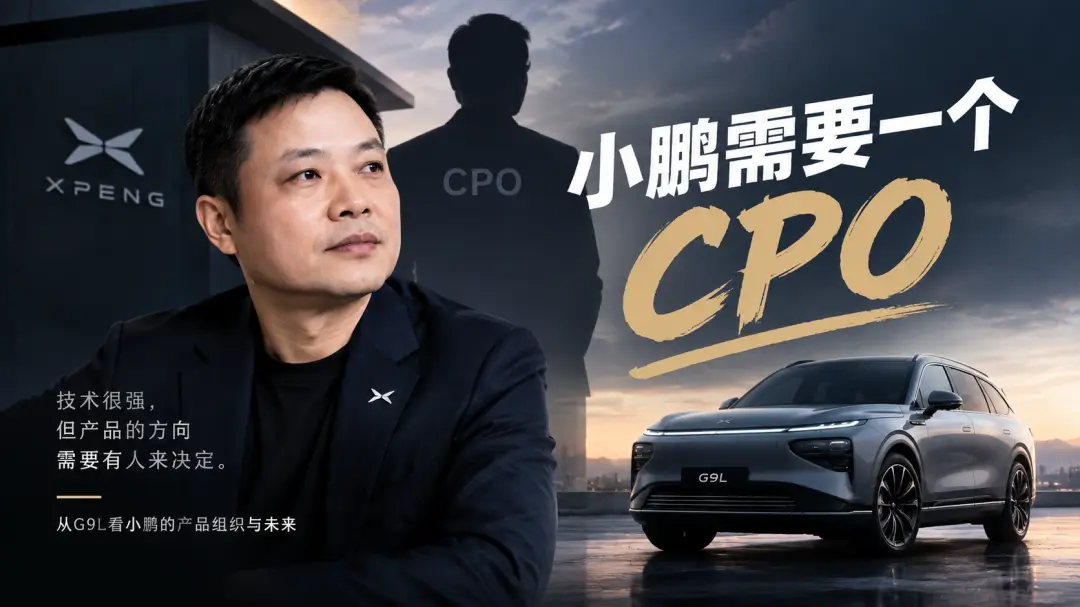
Xpeng, one of China’s best-known electric-vehicle makers, is quietly reshaping how it decides what cars to build. For years the Guangzhou-based company was celebrated for its engineering ambition — advanced driver-assistance software, flying-car spin-offs, humanoid robots. But according to a widely shared industry analysis, it had a glaring gap: nobody clearly owned the product itself.
The critique, published by an automotive commentator and picked up across Chinese tech media, argues that Xpeng lacked a “product number one” — a single leader accountable for what customers actually want. Founder and chief executive He Xiaopeng has acknowledged as much. In a 2025 interview he conceded that in its early years the company had no dedicated product chief, a structural weakness that let engineering priorities crowd out user needs.
The fix came in the form of Wang Fengying, a veteran auto executive who joined Xpeng in 2023 after decades at Great Wall Motor. Wang took over top-level product work, building out a system of matrix general managers and platform product directors. The goal was to shift Xpeng from a technology-first culture to one that starts with the customer.
That is a bigger change than it sounds. China’s EV market has become brutally competitive, with dozens of brands fighting a price war and consumers spoiled for choice. A company that can design elegant software but misjudges interior space, seating comfort or pricing can lose buyers overnight. Rivals such as Li Auto have built their reputations on reading family needs precisely.
The debate also touches a broader question for China’s tech sector: when does an engineering-led company need to grow a product-led one? Xpeng’s founders came from the internet world, where rapid iteration and technical prowess are prized. Cars are different — they are expensive, physical, and bought by people with families, commutes and charging anxieties.
Observers note that Xpeng has already begun showing results. Its newer models have leaned harder into design consistency and clearer positioning, and the company has reorganised internal teams to give product managers more authority. Whether that translates into stronger sales will be the real test.
For global readers, the story is a window into how Chinese EV makers are maturing. The first phase of China’s electric-car boom rewarded speed and scale. The next phase, many analysts argue, will reward companies that can listen. Xpeng’s attempt to install a product conscience at the top is one of the clearest examples of that shift.
It is also a reminder that in the auto industry, technology alone rarely wins. Software can be copied, batteries can be sourced, and factories can be built. Knowing what to build — and for whom — remains stubbornly human. Xpeng’s answer, for now, is to put someone in charge of exactly that.