Why Crowded Planes Are Sending Pilots to the Emergency Room
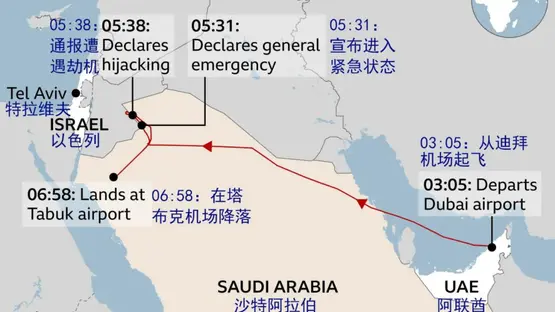
On the morning of September 30, a Dubai carrier’s flight to Tel Aviv took off with 174 people aboard, 27 of them children. Two hours in, according to passenger accounts, the aircraft began a violent descent that felt like severe turbulence — then dove again. Flight-tracking data showed the kind of abrupt plunges that no autopilot commands on its own. What followed, by several retellings, was a struggle inside the cockpit that ended only when an off-duty pilot, a plumber and a dentist in the cabin helped subdue the man who had forced his way to the controls.
It reads like a thriller. But for the scientists who study how humans perform under fatigue, the more interesting question is the one almost nobody asks afterward: how much sleep had the crew had? Aviation medicine has spent decades building a case that pilot fatigue is a chronic, underreported hazard — one that rarely produces a single dramatic moment but quietly erodes reaction time, decision-making and the ability to improvise when something goes wrong.
Research in sleep science is unusually consistent here. After roughly 17 hours awake, reaction times resemble those of someone legally drunk in many countries. Night flights, crossing multiple time zones, and early-morning departures all push the body’s internal clock out of sync with the schedule. The result is not a pilot who falls asleep at the controls, which is rare and dramatic, but a pilot who is slower to notice an anomaly, slower to question a bad instruction, and more likely to fixate on one solution instead of weighing alternatives.
What makes the problem stubborn is that fatigue is invisible on the flight deck. Unlike an engine warning, there is no light that tells a captain their judgment has degraded. Self-reporting is unreliable because tired people are famously bad at judging their own tiredness. Doctors and long-haul truckers face similar traps, but a pilot’s error is measured in hundreds of lives.
Regulators have responded with duty-time limits, mandatory rest periods and, in some countries, fatigue-risk management systems that let airlines model schedules against sleep science rather than just counting hours. The limits are a floor, not a guarantee. Crews routinely fly to the edge of what is legal, and scheduling pressures — weather, delays, shortages — can stretch a legal day into an exhausting one.
The September incident also points to a second layer of safety: the people in the cabin. Cabin crew are trained for disruptive passengers, but the decisive help often comes from whoever happens to be aboard. On that flight, a plumbing worker, a dentist and an off-duty pilot stepped up. That is luck, not a system. Aviation safety has always advanced by turning luck into procedure — smoke detectors, cockpit doors, checklists. The question scientists and safety experts now ask is whether the next step is better screening, better crew rest, or both.
For passengers, the practical takeaway is less about fear than about attention. The same research that explains why tired pilots err also explains why a calm, alert cabin matters. The system worked this time because a handful of strangers did not freeze. The science says the goal should be to make sure it does not have to.