Meet the Silkworm That Isn't: Northeast China's Colorful Oak-Fed Cash Crop
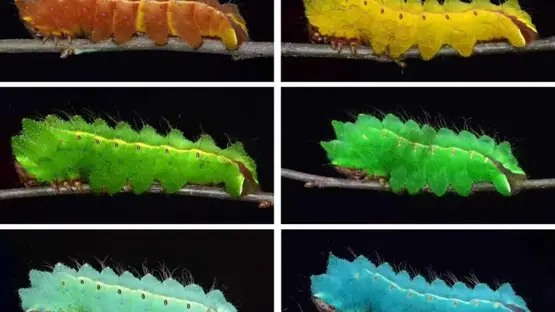
Scroll through the daily vlog of a rural creator in China’s northeast and one image stops you: hillsides where the trees look stripped bare, as if a plague of pests had swept through. The blogger, though, is not worried. Those denuded oaks are a sign of business, not blight. The trees have been grazed by tussar silkworms — a colorful, fat caterpillar that is one of the region’s most valuable and least understood agricultural products.
Tussar silkworms are not the pale, pampered creatures most people picture when they hear the word “silkworm.” The familiar mulberry silkworm is raised indoors on beds of leaves, tended like livestock in a barn. Tussar worms live outdoors, released onto oak trees to feed freely. They are strikingly colored, sometimes green, sometimes gold or amber, and they eat with an appetite that can defoliate a stand of oaks in days. That voraciousness is exactly why farmers in Liaoning and neighboring provinces manage them the way ranchers manage cattle, moving them between wooded slopes as the foliage runs out.
The payoff comes twice. The cocoon can be reeled for silk, a fiber prized for its durability and its distinctive texture. The larva inside, meanwhile, is food. Fried tussar pupae and larvae are a familiar snack in the northeast, sold at markets and roadside stalls, crunchy on the outside and rich inside. Prices reflect the labor and the season: a kilogram of the caterpillars can fetch around 80 yuan, a meaningful sum in rural areas where other cash crops offer thinner margins.
The industry rests on more than tradition. In Liaoning, a national gene bank for silkworm genetic resources conserves tussar breeds, keeping a library of varieties that researchers and farmers can draw on. That collection matters because the worms are exposed to weather, predators and disease in ways indoor silkworms never are. Hardier, better-adapted strains are the difference between a good harvest and a lost one.
For outside observers, the scene can look alarming at first glance. Bare trees in summer read as ecological damage, and social media users unfamiliar with the practice sometimes mistake the stripped hillsides for an insect outbreak. The reality is closer to managed grazing: a landscape shaped by an insect that humans have learned to herd, harvest and eat.
That double identity — textile producer and protein source — is what makes tussar farming unusual. Few insects are simultaneously a fiber crop and a food crop, and fewer still are raised outdoors at scale on trees rather than in sheds. The northeast’s oak woods, long considered too poor for much else, turn out to be ideal for exactly this kind of production.
There is a broader lesson in the stripped hillsides. What looks like ruin to a passing viewer can be a working landscape to the people who live in it — an economy built on an insect that most of the world has never heard of, quietly feeding families and filling frying pans across China’s northeast.