OpenAI Says Its AI Solved 372 Open Math Problems. Mathematicians Are Skeptical
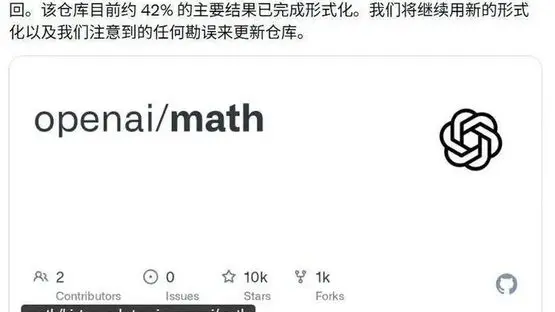
In early October, OpenAI published 722 mathematical manuscripts on GitHub, all generated by a single internal model that the company has never released to the public. According to OpenAI, the system attacked roughly 4,000 open problems across 17 branches of mathematics — number theory, geometry, probability and theoretical computer science among them — and produced results on 372 of them. The announcement landed less than three months after the Chinese mathematician Wang Hong won a Fields Medal, the discipline’s highest honor, for her work on the three-dimensional version of the Kakegawa conjecture. OpenAI’s model, the company suggested, had gone a dimension further.
That framing is what made the release travel. Mathematics has become an unlikely proving ground for artificial intelligence, because unlike essay writing or image generation, a proof can be checked. A correct proof is correct forever; a wrong one can be demolished by any competent graduate student. Fields Medal winners, not marketing departments, are the natural referees.
The trouble is volume. Seven hundred and twenty-two manuscripts is not a paper. It is a small library, and reading it takes the kind of slow, adversarial attention that cannot be outsourced to the same class of model that wrote it. Mathematicians who have started working through the files describe a mixed landscape: arguments that look plausible until one specific step, definitions that quietly shift meaning halfway through, and occasional results that appear genuinely new.
Chinese science writers have been blunter. One widely shared essay compared the release to the discovery of a mountain of waste, with researchers holding their noses and sifting through it for gold. The image is unkind, but it captures the actual labor involved. Someone has to decide, line by line, which of those 372 claimed results survive contact with a human expert.
This is a familiar pattern in machine learning. Systems that generate candidate solutions far outpace the humans available to verify them, whether in mathematics, drug discovery or materials science. Verification becomes the bottleneck, and the bottleneck determines the real value of the tool. A model that proposes ten thousand hypotheses is only as useful as the laboratory that can test them.
There is also a deeper question about what the model is doing. Mathematicians distinguish between finding a proof and understanding why a theorem is true. A machine can search for a chain of valid steps without grasping the structure that makes the result inevitable, and it is that structure that lets humans extend a result to new cases. If the OpenAI manuscripts contain valid proofs but no insight, they may still be useful — but they will not, on their own, change how the field thinks.
For now, the honest answer is that nobody knows. The manuscripts are public, the claims are specific enough to be checked, and the checking has begun. That is how mathematics has always settled disputes, and it is a slower process than a product announcement.
What the episode does show is that AI companies have decided mathematics is the arena where they can make their most credible claims. The field offers something rare in the AI debate: a verdict that does not depend on anyone’s opinion. If even a fraction of those 372 results hold up, the release will be remembered as a milestone. If most collapse under scrutiny, it will be remembered as a lesson about the gap between generating text and producing knowledge.