A 96-Year-Old Father? Inside the Science of Male Fertility
When a 96-year-old man becomes a father, the story travels fast. It sounds like a medical miracle, or a tabloid stunt. But for Guo Jingtao, a researcher at the Chinese Academy of Sciences’ Institute of Zoology, such headlines point to a serious and still poorly understood question: how does male fertility actually work, and why does it fail for so many people?
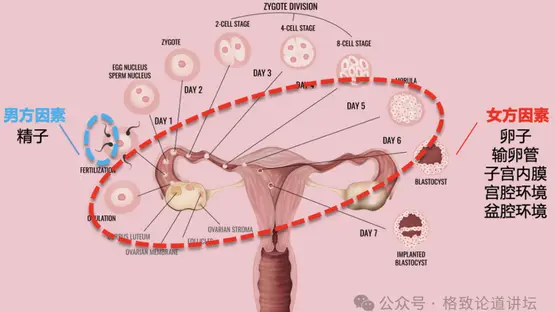
Guo made the case during a public science talk in Beijing, part of a lecture series that invites researchers to explain their work to ordinary audiences. His subject was infertility, a condition he noted is often associated with the small advertisements pasted on utility poles rather than with rigorous science. Yet the numbers are far from marginal. In China, a growing share of couples struggle to conceive, and in roughly half of cases the difficulty involves the male partner.
What makes male infertility so hard to treat is that sperm production is a remarkably complex process. It depends on a tightly coordinated sequence of cell divisions, hormone signals and genetic switches, any of which can go wrong. Unlike many medical conditions, there is rarely a single cause to target. Some men produce too few sperm, some produce sperm that cannot swim properly, and others carry subtle genetic variants that current tests cannot detect.
Age adds another layer. The 96-year-old father is an extreme case, but the biology is real: men can remain fertile late in life because they continuously produce new sperm, unlike women, who are born with a finite supply of eggs. That said, older paternal age is linked to a higher risk of certain genetic changes in offspring, because sperm-producing cells divide many times over a lifetime and errors can accumulate. Guo’s point is not that older fatherhood is good or bad, but that it reveals how much remains unknown about the machinery involved.
Closing that knowledge gap, he argues, will require combining basic science with clinical medicine. Laboratory researchers can map the genes and molecular pathways that govern sperm development, while doctors see the real-world cases that do not fit any textbook pattern. When the two sides work together, they can identify new causes of infertility and design more precise treatments, from targeted hormone therapies to assisted reproduction techniques tailored to a specific defect.
For patients, the payoff would be significant. Infertility carries a heavy emotional and social burden, and many couples endure years of tests and failed cycles without a clear explanation. A better understanding of male reproductive biology could shorten that ordeal, reduce unnecessary procedures and offer hope where medicine currently has little to say.
Guo’s talk was aimed at a general audience, and its message was simple: infertility is not a private embarrassment but a scientific problem worthy of serious attention. The next breakthrough may come not from a single discovery but from a sustained partnership between the lab bench and the clinic, one that treats male fertility as a field in its own right.