Tiny Chinese Indie Game Project DevourSlime Launches on Steam
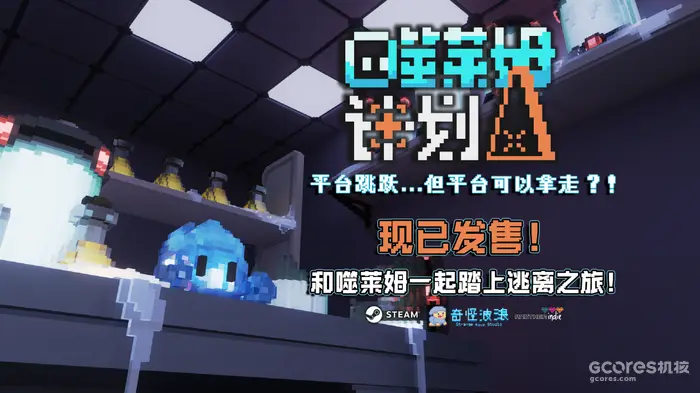
A small Chinese studio is betting that players want to eat the floor. Project DevourSlime, the debut puzzle platformer from Weird Wave Studio, launched on Steam on September 28 at a list price of 18 yuan (about $2.50), with a launch discount dropping it to 16.2 yuan. Publisher Another Indie, a label known for bringing Chinese indie games to a global audience, handled the release.
The hook is simple to describe and strange to play. Instead of only jumping between platforms, your character can devour the platform blocks themselves, then use what it has swallowed to reshape the level. Walls become tools, floors become ammunition, and a genre that has barely changed since the 1980s suddenly has a new verb. Players who grew up on Mario-style running and jumping will recognize the rhythm, but the puzzle logic is closer to a block-sliding brain teaser.
Weird Wave Studio is not a household name even inside China. The team is part of a wave of tiny developers, often fewer than ten people, who use low-cost engines and Steam’s global storefront to reach players directly. Their budgets are modest and their prices reflect it, but so do their risks. A 16-yuan game can afford to be weird in a way a 300-yuan blockbuster cannot.
The game also ships with Steam Workshop support, letting players build and share custom levels. That decision matters more than it might seem. Small puzzle games live or die on content volume, and a level editor turns a short campaign into an open-ended one. It also builds a community around the game rather than just an audience for it, which is how indie titles survive long after their launch week.
Early reception has been driven by the game’s novelty rather than its polish. Chinese gaming outlets highlighted the swallow-and-place mechanic as the standout idea, describing it as a fresh twist on a familiar formula. That framing is telling: in a market flooded with polished but derivative platformers, a single original interaction can be the difference between being noticed and disappearing.
Another Indie’s involvement gives the project a better shot at international visibility. The publisher has spent years translating and marketing Chinese indie games abroad, and Steam’s recommendation systems reward games that generate wishlists and wishlist conversions. A low price plus a distinctive mechanic is a combination that travels well across languages, since the core appeal needs no explanation once a player sees it in motion.
For global players, Project DevourSlime is a useful window into what Chinese game development looks like below the blockbuster tier. The country’s biggest headlines go to mobile giants and global hits, but hundreds of small teams are quietly shipping experimental PC games, often with English support from day one. These studios are not chasing the Chinese market alone; they are launching straight into the global indie scene.
Whether the game becomes a cult favorite depends on whether the mechanic holds up across a full campaign and whether Workshop creators embrace it. But the launch itself is the story: a tiny team, a strange idea, and a price low enough that curiosity is the only barrier.