China's Rayshine Studio Debuts New Hand-Drawn Fantasy Game at gamescom
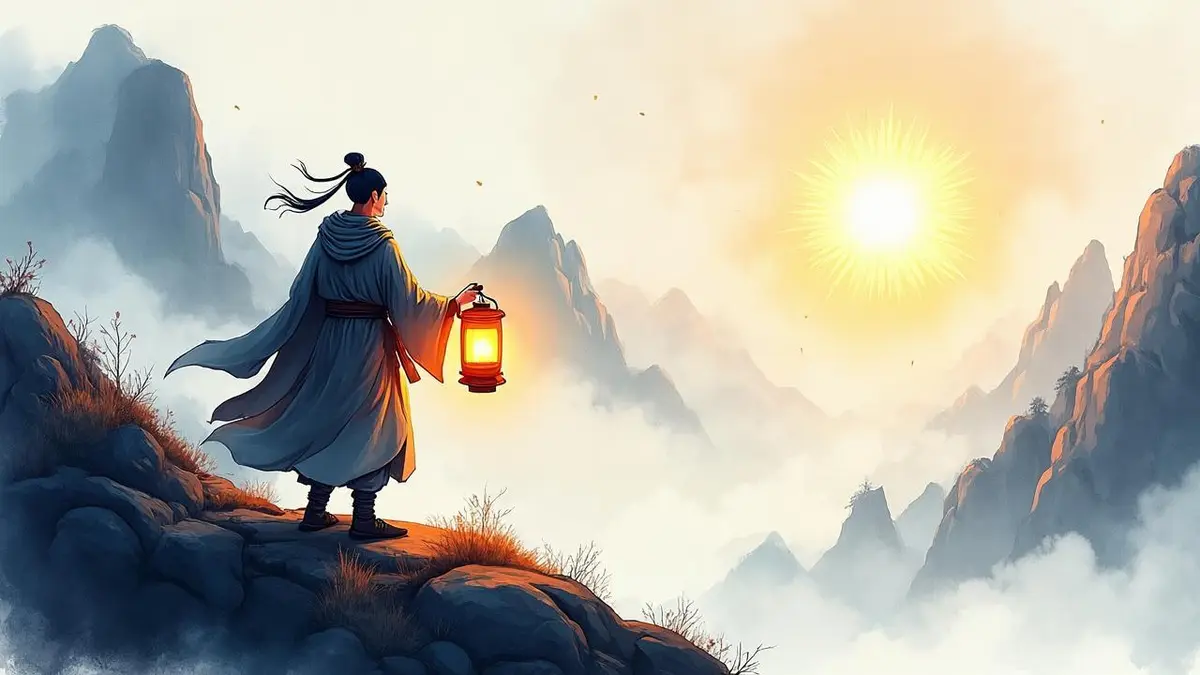
Among the dozens of games shown at gamescom 2026’s Opening Night Live, one of the quieter reveals may end up being one of the more memorable. The Order of Falling Stars, a hand-drawn fantasy adventure from Chinese indie studio Rayshine, got a release date of October 9 and a price that will please players: 98 yuan in mainland China, roughly 14 US dollars, with versions for PC, Nintendo Switch 2 and PlayStation 5.
The studio, based in Chengdu, has spent four years building the game with a small team of about 20 people. Its visual identity is the first thing that grabs attention. Rather than chasing photorealism, the developers drew on traditional Chinese ink-wash painting and the flat, decorative style of old shadow-puppet theatre. Characters move like brushstrokes; landscapes shift from misty mountains to lantern-lit market towns.
The story follows a young cartographer who travels a fractured kingdom after a comet scatters fragments of a fallen star across the land. Each fragment warps the local environment in strange ways, and the hero must decide whether to restore the old order or let something new grow. It is a familiar fantasy setup, but the game’s writing leans on Chinese folklore about stars, fate and the idea that heaven and earth mirror one another.
Combat mixes real-time swordplay with a pause-and-plan system. Players can freeze time to arrange a sequence of moves, then watch them unfold. Early hands-on impressions from gamescom described it as accessible but with room for mastery, closer to a puzzle game than a pure action title. There are also light exploration and collectible elements, with hidden poems and scrolls scattered through each region.
For global players, The Order of Falling Stars arrives at a moment when Chinese-developed games are no longer a niche curiosity. Titles like Genshin Impact and Black Myth: Wukong have shown that studios in China can compete on production values and reach worldwide audiences. What is different here is scale: Rayshine is not a giant, and its game is not a live-service blockbuster. It is a single-player, story-driven project with a fixed price and no in-game purchases.
That choice carries risk. Investors and publishers often push for multiplayer modes and recurring revenue, and a mid-size premium game can struggle to get noticed. But the studio has said it wants players to finish the story and put it down, the way they would a good novel. The October release will test whether that old-fashioned idea still works in 2026.
The game will support Simplified Chinese, Traditional Chinese, English, Japanese and Korean at launch, with more languages planned later. A free demo is expected on Steam in late September, giving curious players a chance to try the opening chapter before committing.
For a global audience used to Chinese games arriving with enormous marketing budgets, The Order of Falling Stars is a reminder that the country’s industry also has room for small, personal projects. Whether it finds an audience outside China will depend on word of mouth as much as marketing. Its release date, at least, is now set.