A Grieving Family, a Pink Birthday, and the Price of Public Memory
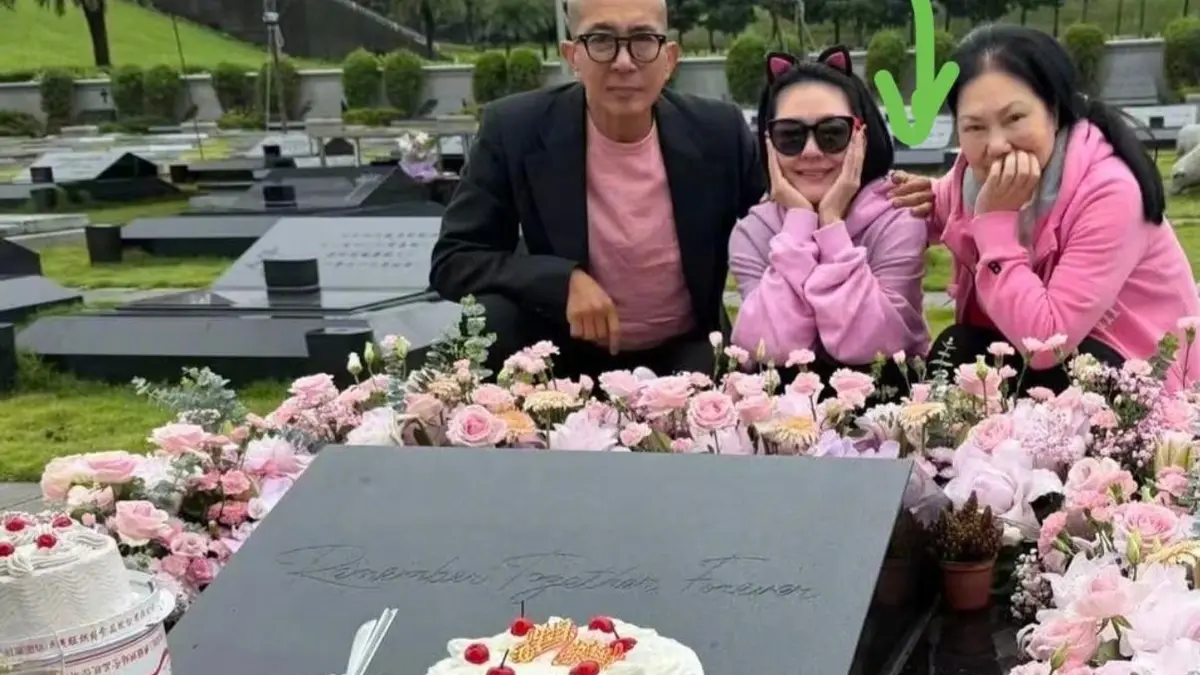
In the hills outside Taipei, a small group gathered this week beside a dark stone grave and covered it in pink. The occasion was a birthday: Barbie Hsu, the Taiwanese actress and television host who died two years ago at 46, would have turned 48. Her mother, her younger sister Dee Hsu, and her husband, the Korean musician Koo Jun-yup, all wore pink, the colour she loved. So did friends who travelled up to join them, including the couple Christine Fan and Blackie Chen. On the grave lay pink bouquets, a bottle of champagne and dishes she was known to order whenever the family ate out.
For readers outside the Chinese-speaking world, Barbie Hsu is best remembered as the star of Meteor Garden, the 2001 drama that turned a Japanese manga about four wealthy schoolboys and the girl who stands up to them into a regional phenomenon. It was the show that introduced a generation of viewers across Asia to Taiwanese pop culture, and it made Hsu, then in her early twenties, one of the most recognisable faces on television. She later built a second career as a host, an author and a beauty brand name, and her marriage to Koo, a reunion of an old romance, became a running story in its own right.
What has kept her in the news is not only the work. Her death was sudden and unexpected, and it arrived at a moment when her private life was being picked apart daily by entertainment outlets and social media accounts. The birthday gathering is the latest chapter in a long, public argument about how a famous family should be allowed to grieve.
Dee Hsu, herself a veteran host, has been the most visible figure in that argument. She has spoken on camera about the strangeness of growing older than a sister who will not age, and she has pushed back, sometimes sharply, at people she believes are using the family’s loss for attention. When she said this week that from next year she would be older than her sister, it was the kind of line that travels fast in Chinese-language media because it is both ordinary and unbearable.
There is a commercial dimension too. In the Chinese-speaking entertainment world, mourning and content are not easily separated. Anniversaries generate traffic; traffic generates comment; comment generates more coverage. Fans who never met Hsu leave messages under old clips and buy the lipsticks she once endorsed. Critics argue the family is performing its grief. Others answer that a family that spent decades in front of cameras has no private room left to retreat to.
For global readers, the story is a reminder of how differently fame works in markets where the audience is enormous, the language is shared across borders, and the line between a star’s work and a star’s household has never really held. Hsu’s films and dramas are still streaming; her birthday still trends. The pink flowers will wilt, and the argument about who gets to decide how she is remembered will not.
Her family has not announced any public memorial. This week’s gathering, according to those who described it, was deliberately small: a cake, a few toasts, a long afternoon at a grave. That it became news at all is the point.