China's Sweet Romance Dramas Trade Innocence for Steamier Scenes
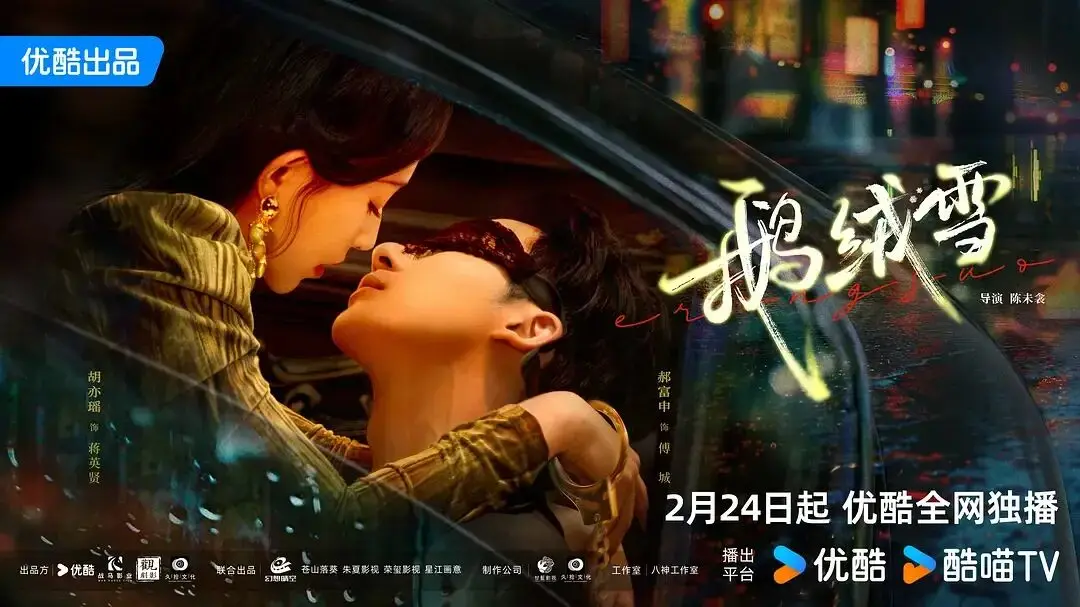
Chinese modern romance dramas — known in the industry as xian’ou, short for xiandai ouxiang ju, or modern idol drama — have long been built on a simple promise: beautiful people, soft lighting, and a love that stays chaste until the final episode. That formula is now being tested. A crop of upcoming series has released trailers in which the leads kiss with an intensity that would once have been saved for the finale, and several entertainment commentators have noted the shift as a deliberate grab for a new kind of audience attention.
The change is being driven partly by short video. On platforms like Douyin, a phrase has circulated widely: “physiological attraction is the only true love.” It is a blunt way of saying that viewers no longer trust a romance unless they can see the physical pull between two people. Producers appear to have listened. Trailers for titles such as Wu Li Qing, Xu Ni Xing He Qian Li, and Xiang Ba Ni He Shi Jian Cang Qi Lai — all modern romance projects now in promotion — show couples locked in long, breathless kisses, with editing that lingers on hands, shoulders and close breath rather than dialogue.
Industry observers describe this as a leap over the era of pure, innocent love — a genre that dominated Chinese screens for more than a decade. In those shows, the couple might hold hands in episode thirty and confess in episode thirty-five. The new approach skips that patience. It sells suggestion instead: a kiss scene, a bedroom scene, and the merchandise and social media clips that follow. The strategy is not subtle, and commentators have been quick to point out that it is less about artistic maturity than about competing for attention in a market where a single viral clip can decide whether a show gets watched at all.
The shift also reflects a broader change in how Chinese audiences talk about romance. A generation raised on short video and streaming platforms is more comfortable discussing desire openly, and less patient with stories that treat it as something to be hinted at. For producers, that means the old markers of a hit — a popular lead actor, a familiar plot — are no longer enough. The trailer itself must deliver a moment that gets screenshotted and shared.
There is risk in the calculation. Chinese streaming platforms operate under content guidelines that limit how explicit scenes can be, and a trailer that promises more than the finished show delivers can backfire with viewers. Several recent dramas have been criticized for exactly that: steamy marketing followed by a cautious, conventional broadcast cut. The gap between promotion and product has become its own talking point among fans.
For now, the trend is moving in one direction. More modern romance projects are in production, and more trailers are being cut to lead with chemistry rather than plot. Whether that translates into better shows is an open question. What is clear is that the era when a Chinese romance could survive on longing glances alone is fading — and the industry is betting that audiences want to see the heat, not just imagine it.