NIO and Geely Join Forces as China's EV Price War Bites
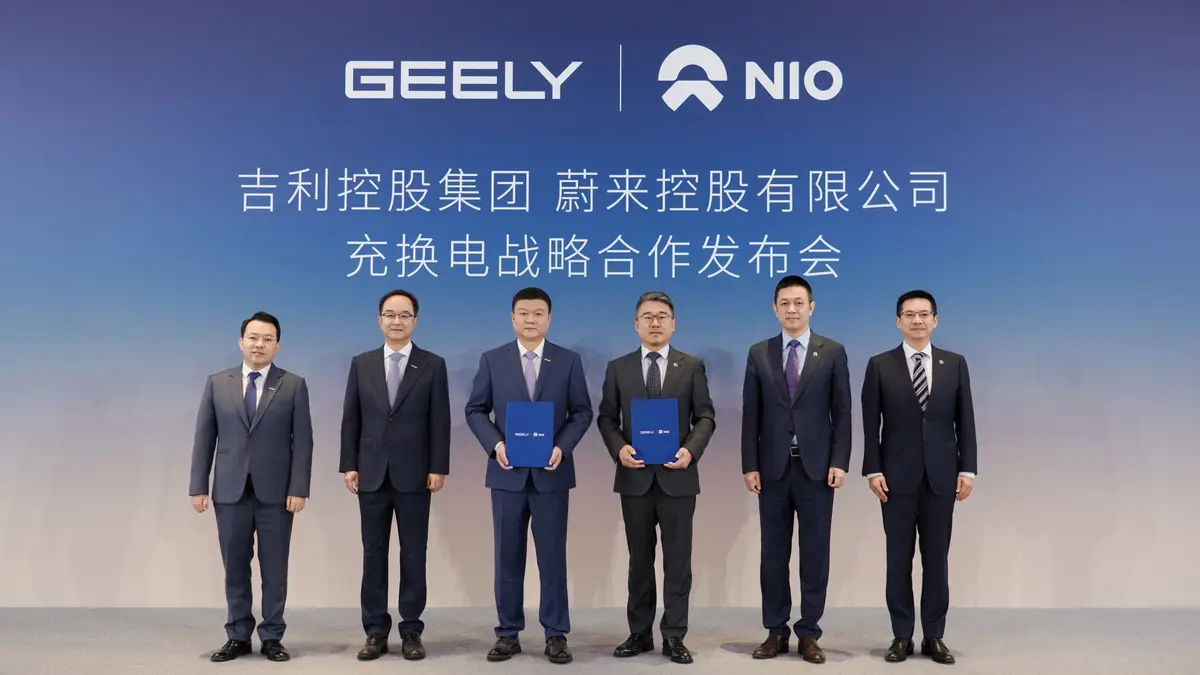
Two of China’s best-known electric-vehicle makers, NIO and Geely, have announced they will team up, a move both companies frame as a way to share resources and push back against an exhausting price war that has hammered profits across the world’s largest car market.
The partnership, confirmed by both sides, is the latest sign that China’s EV industry is shifting from all-out competition to selective cooperation. For years, dozens of brands have slashed prices to win buyers, a strategy that boosted sales volumes but left many manufacturers losing money on every car. Regulators and industry leaders have repeatedly called for an end to what Chinese media call “involution” — destructive, zero-sum rivalry that leaves everyone worse off.
NIO, based in Shanghai, built its reputation on premium electric cars and a network of battery-swap stations, where drivers exchange a depleted battery for a fresh one in minutes rather than waiting to recharge. That network is expensive to build and operate, and NIO has been under pressure to show it can turn a profit. Geely, one of China’s largest privately owned automakers, owns brands including Zeekr, Lynk & Co and Volvo Cars, and has deep manufacturing scale and supply-chain reach.
Analysts say the logic of the tie-up is straightforward: NIO brings battery-swapping technology, premium brand equity and software, while Geely offers volume manufacturing, procurement power and a broad dealer and export footprint. Sharing platforms, components or charging infrastructure could lower costs for both at a moment when margins are thin.
The deal also reflects a broader pattern. Chinese automakers have increasingly partnered on charging networks, battery standards and software platforms, betting that cooperation on shared basics lets them compete harder on the things customers actually notice — design, driving experience and price. Battery giant CATL has similarly struck alliances across the industry, and several state-owned and private groups have pooled research budgets.
For global readers, the significance goes beyond two companies. China produces and sells more electric cars than any other country, and its domestic battles often preview what happens elsewhere. When Chinese firms cooperate on costs, they tend to become more formidable exporters. Both NIO and Geely have been expanding in Europe, Southeast Asia and the Middle East, where they compete with established brands on price and technology.
Still, partnerships between rivals are rarely simple. Executives must decide whose platform wins, how data is shared, and how to keep distinct brand identities alive. Previous Chinese auto alliances have sometimes produced announcements that outran actual results. Whether this one delivers cheaper cars or merely a friendlier headline will depend on execution over the coming quarters.
What is clear is the mood shift. After years of fighting for every sale, China’s electric-car makers are looking for ways to stop bleeding cash. If NIO and Geely can make cooperation work, more deals are likely to follow — and the global auto industry will be watching closely.