China's Hidden Tiankeng Sinkholes Could Redraw Shaanxi's Travel Map
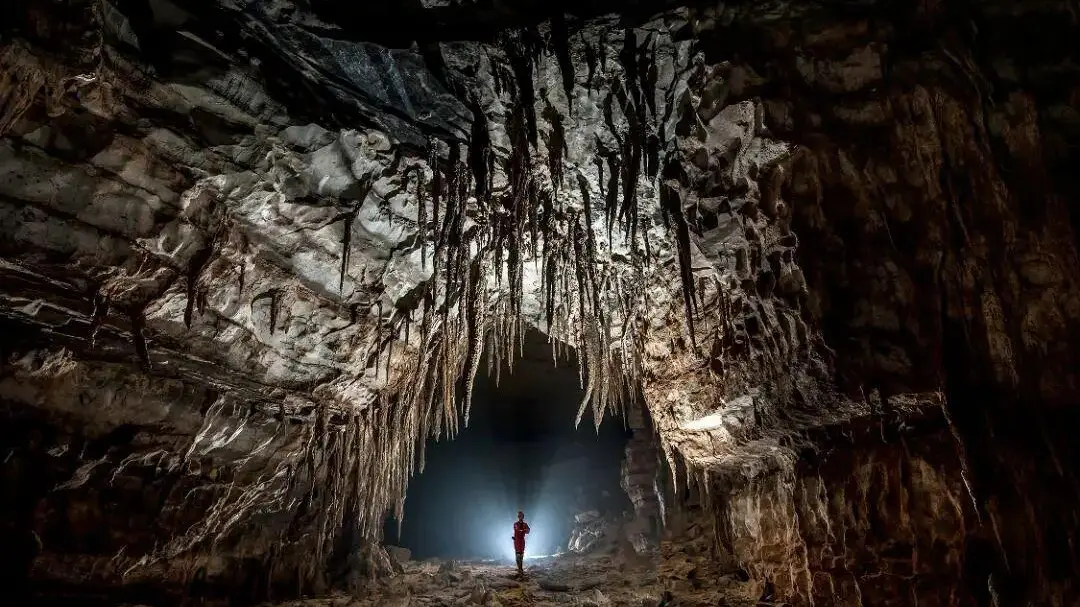
In late 2016, a team of cave explorers announced something that startled geologists: a vast cluster of tiankeng — giant karst sinkholes, sometimes translated as “heavenly pits” — hidden in the mountains around Hanzhong, a city in China’s western Shaanxi province. One of the world’s best-known cave explorers, Jean Bottazzi, reportedly stood at the rim of the Dizhonghe tiankeng in Ningqiang county and called it the most beautiful he had ever seen. For the international caving community, it was a landmark moment. For most travelers, it barely registered.
A tiankeng is not an ordinary cave entrance. The term describes a collapse formed when underground rivers hollow out limestone chambers until the roof gives way, leaving a sheer-walled shaft that can be hundreds of meters deep and wide. Inside, sunlight reaches only part of the way down, creating isolated microclimates. Researchers have found ancient forests, rare plants and animals cut off from the surface for long periods — living laboratories for studying how species evolve in isolation.
Hanzhong’s cluster matters because of its scale and density. The pits sit in a belt of cave systems, underground rivers and forested mountains where the geology is unusually favorable. Speleologists have described the find as one of the more significant karst discoveries of the century, and Chinese researchers have since surveyed dozens of related caves and shafts in the region.
Yet the site remains far from a household name. Hanzhong is better known in China for its spring rapeseed flower fields, its association with the Three Kingdoms era of ancient history, and its wildlife — the crested ibis, a bird once feared extinct, and giant pandas both live in the surrounding Qinling mountains. The tiankeng, by contrast, are known mostly to cavers and geologists.
The obstacles are practical. Sinkholes are not scenic overlooks. Reaching the rim can require hours of hiking on rough mountain tracks, and descending safely demands ropes, technical skill and experienced guides. Weather in the Qinling range shifts quickly, and fog or rain can make the karst terrain treacherous. Any large-scale tourism plan would need to balance access against protecting fragile underground ecosystems that took millennia to form.
That tension is now part of the conversation. Writers and local observers have begun describing the tiankeng as a potential “trump card” for the region’s tourism industry — a natural attraction unlike the temples, old towns and flower fields that anchor most Chinese travel itineraries. Supporters argue that a well-managed geopark, with limited guided access and strong conservation rules, could bring visitors and scientific attention without destroying what makes the site special.
Comparisons are inevitable with other tiankeng regions in southern China, where boardwalks, elevators and viewing platforms have turned geological oddities into major attractions. Hanzhong’s pits are wilder and less developed, which is both their appeal and their vulnerability. Caving groups warn that unsupervised visits can damage formations and endanger tourists who underestimate the terrain.
For now, the tiankeng remain a quiet story: a global-class natural wonder sitting in mountains most visitors cross by train without a second glance. Whether that changes may depend less on geology than on patience — and on whether the region can build a tourism model that lets people peer into these sunken worlds without loving them to death.