The Hidden Tax of 'Treat Yourself': How Consumerism Targets Women
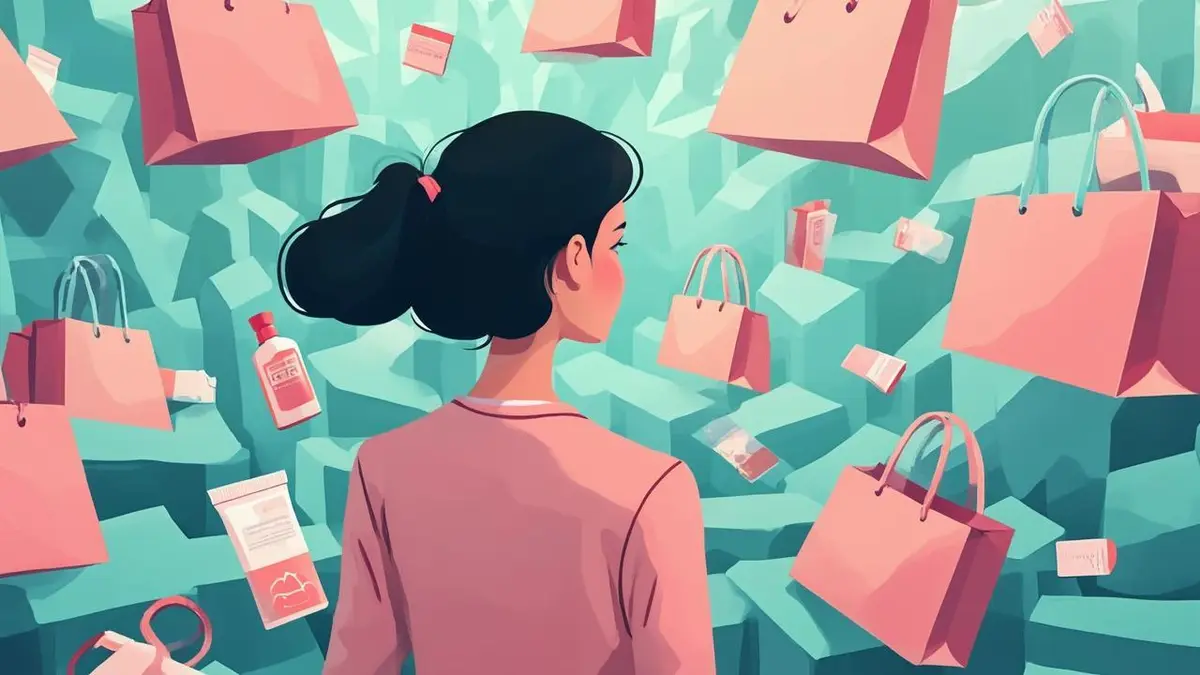
A long post circulating on Hupu’s lifestyle forum has struck a nerve by naming something many young Chinese women feel but rarely articulate: the gap between the salary on their payslip and the debt on their credit card. The essay, titled “The Symbol’s Tax: Unpacking Consumerism’s Secret Harvest of Women,” describes women earning five or six thousand yuan a month — barely enough to cover rent in a big city — who nonetheless carry tens of thousands of yuan in card balances.
The purchases follow a familiar pattern. Full sets of influencer-endorsed skincare. Jewelry sold under the label “light luxury,” a term that promises prestige at a fraction of the price. Limited-edition holiday gift boxes wrapped in the language of ritual and self-care. Weekend trips to photogenic spots that exist mainly to be photographed. Asked why they buy, the women in the essay give almost the same answer every time: life is hard, so I have to be good to myself. Women, the slogan goes, must know how to love themselves.
The author calls this a commercial trap, and argues it is one of the cruelest rules of the market: harvest women by selling them their own self-worth back as products. The mechanism is not new. What is new is how precisely the language of empowerment has been folded into the sales pitch. A cream is no longer a cream; it is a reward. A necklace is no longer a necklace; it is a declaration that you deserve nice things. The cost is abstracted away into monthly installments, while the emotional payoff is immediate.
The essay lands in the middle of a broader conversation about consumption in China. On one side are brands that have built entire product lines around self-gifting and “sense of ceremony.” On the other are younger consumers who have begun to push back, trading conspicuous spending for savings, secondhand goods and quieter hobbies. The debate is not really about whether a face cream works. It is about who gets to define what a good life looks like, and whether that definition should arrive with a price tag attached.
There is also a quieter point buried in the post. The women it describes are not reckless. Many are careful with money in every other part of their lives, cooking at home, taking public transport, delaying bigger purchases. The spending is concentrated in categories that promise transformation or belonging: beauty, fashion, travel, the small luxuries that signal participation in a certain kind of urban life. That makes the debt harder to see and easier to justify.
The essay does not offer a tidy solution, and perhaps that is why it resonated. It ends less with a call to stop buying than with a call to notice the machinery: the influencer scripts, the limited-edition countdowns, the credit products marketed alongside the cosmetics. The first step, the author suggests, is simply to recognize the tax for what it is. Whether readers agree or not, the post has become a mirror for a generation negotiating the space between wanting to feel good and wanting to feel free.