The Commuters Who Cross Provinces by Rail Every Workday
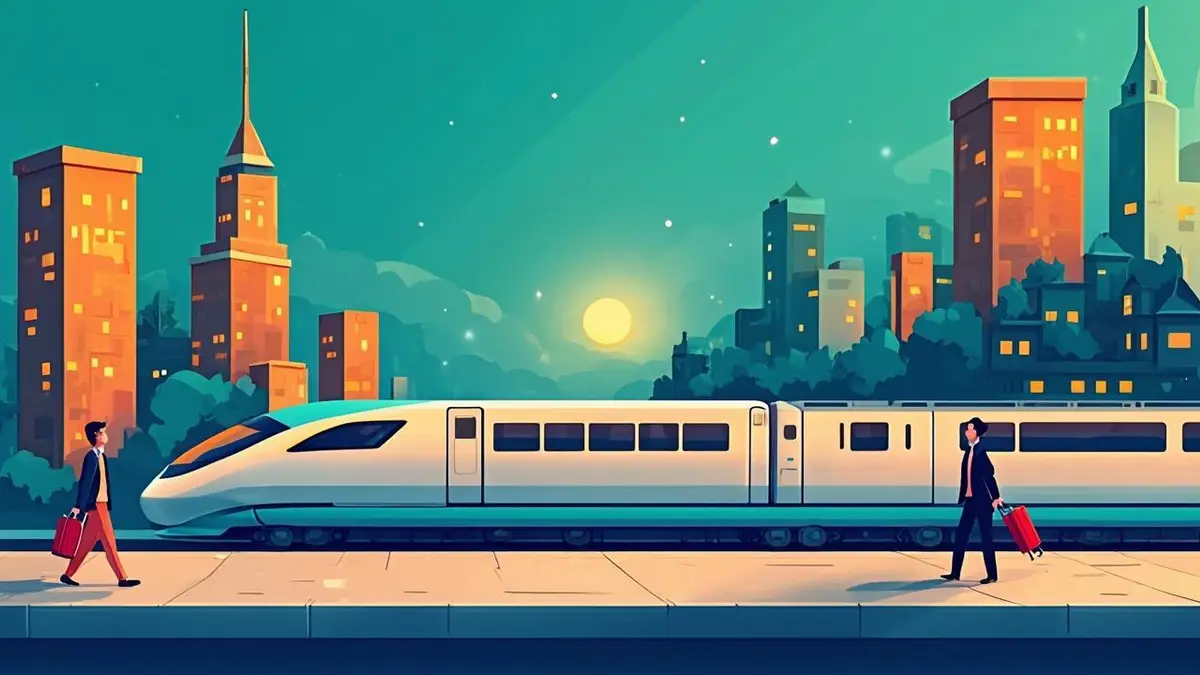
Every weekday morning at six, a young man named Tan leaves his home in Linping, a district on the edge of Hangzhou in eastern China, and boards a high-speed train. One hour later he is in Shanghai, where he switches to the subway and reaches his office before nine. In the evening he makes the same trip in reverse. He does this five days a week, and he is far from alone.
A video Tan posted of his daily routine recently went viral in China, and it struck a nerve with a generation of urban workers weighing the cost of big-city life. A young woman from the same district, who also commutes to Shanghai by rail, wakes at 5:30, drives to a subway station, then takes the train and a final metro leg to her desk. Others in the comments described similar journeys from cities such as Suzhou and Kunshan, turning what sounds like an extreme commute into a recognized lifestyle.
The arithmetic is the heart of the story. Tan spends a little over 3,000 yuan (roughly 420 US dollars) a month on train tickets. That same money could rent a flat in Shanghai, but only in an outlying neighborhood, where the space is small and the subway ride to work is still long. Instead, he keeps his money in Linping, where housing is cheaper, rooms are bigger, and his family and friends are close. His conclusion, as he put it, is that the overall trade-off works in his favor.
China’s high-speed rail network makes this possible in a way it was not a decade ago. The line between Hangzhou and Shanghai is one of the busiest in the country, with trains departing so frequently that regular commuters rarely need to reserve far ahead. Journey times of under an hour have effectively stitched together two major cities into a single labor market, letting people earn big-city salaries while living in smaller, calmer places.
The arrangement is not without costs. Long days leave little room for rest, and bad weather or delays can wreck a schedule. Commuters on social media swap tips on cheap monthly passes, quiet carriages and which station exits shorten the walk. Some admit they sleep on the train, treating it as a mobile bedroom. For parents, the appeal is stronger: children grow up near grandparents, in schools that are less frantic than Shanghai’s.
The trend also reflects a broader shift in how Chinese workers think about city life. For years the dream was to squeeze into a first-tier metropolis at any price. Now, with remote-friendly jobs and fast rail, more people are asking whether the premium is worth it. Employers, meanwhile, gain access to a wider pool of talent that is unwilling to relocate.
Economists caution that the math depends on individual circumstances: ticket prices, work hours and family needs vary widely, and not every city pair is as well connected as Hangzhou and Shanghai. Still, the phenomenon captures something real about modern Chinese life, where geography is becoming less of a barrier and time, rather than distance, is the currency people spend.
For Tan, the routine is simply practical. He gets a job in one of the world’s most dynamic cities, a home in a place he can afford, and a seat by the window twice a day. Whether that adds up is a question every commuter answers for themselves.