A Lipstick King Sells AI Tokens: 2 Trillion in Half an Hour
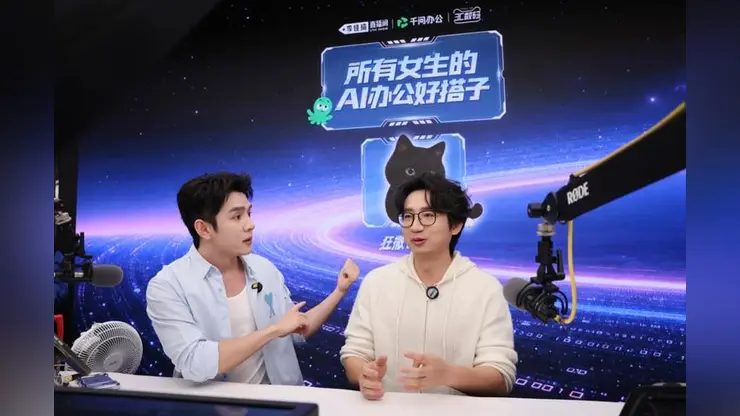
For years, Li Jiaqi was known in China as the “lipstick king,” the livestream host whose five-minute pitch could move 15,000 lipsticks. On the night of November 2, his直播间 — the live-selling format that blends entertainment, demonstration and instant discount — put something less glamorous on the shelf: tokens. Specifically, monthly personal memberships to Qianwen Office, an AI productivity suite. Within half an hour, according to reports on November 3, the room had sold 100,000 of them, a cumulative figure of roughly 2 trillion tokens.
The arithmetic is the interesting part. Selling AI by the token is how cloud and model providers bill developers, not how consumer apps usually bill households. Putting that unit in front of a mass livestream audience reframes a business-to-business commodity as an impulse purchase, bundled with the same urgency mechanics — limited stock, countdown, host enthusiasm — that sell skincare and snacks.
Qianwen Office’s chief executive, Chen Yusheng, joined the broadcast to walk viewers through everyday uses: drafting documents, summarizing meetings, handling the small chores of office life. Li Jiaqi asked whether an AI clone of himself could chat with female fans around the clock. Chen declined the premise, saying AI cannot replace Li Jiaqi, and that he would rather help fans use it to leave work on time, look after pets and care for family. The exchange, clipped and shared widely, did more for the pitch than any spec sheet.
The timing is not accidental. China’s e-commerce calendar peaks around Double 11, the November shopping festival, and AI vendors have spent the year hunting for paying consumers rather than free trial users. Livestreaming remains the country’s most efficient machine for converting attention into transactions, with hosts functioning as trusted reviewers for categories shoppers do not understand. Tokens qualify: most buyers have no clear sense of what a million of them buys.
That is also the risk. Token counts are a poor consumer unit — they vary by task, model and length of output — and a membership sold on volume can invite disappointment when a user’s monthly allowance disappears in a week of heavy use. Whether the 100,000 buyers renew will depend less on the host’s charisma than on whether the software saves them an hour they can name.
Still, the experiment marks a shift in how Chinese AI companies think about distribution. Rather than waiting for offices to adopt tools top-down, they are pushing subscriptions through the same channels that built China’s consumer brands: celebrity hosts, festival discounts and short-video clips. If the model works, expect rival assistants to appear in other top livestream rooms before the next shopping season.
The broader read is that AI in China is being retail-ized. The technology is increasingly sold like fast-moving consumer goods, with all the speed and churn that implies. For global observers, the question is not whether a livestream can sell tokens — it clearly can, at least once — but whether the habit sticks after the festival discounts end.