Ant Group's Lingguang 2.0 Takes On Meta's Muse in Personal AI Agents
China’s biggest online shopping festival, Double 11, is no longer just a test of who has the fastest checkout finger. For many shoppers it begins weeks earlier, with a long list of chores: comparing prices across platforms, stacking coupons and discounts, setting an alarm for the final deposit, then checking days later whether the price dropped and whether a refund is owed. Ant Group thinks that is a job for an AI agent rather than a human with a spreadsheet.
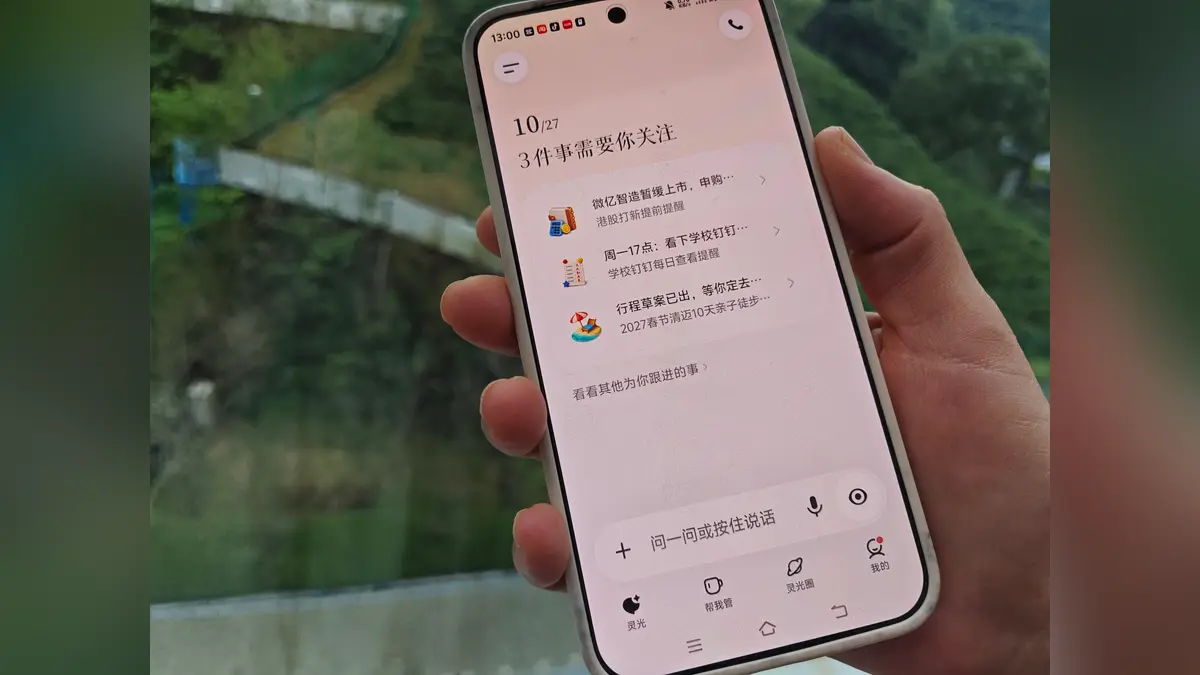
This month Ant launched Lingguang 2.0, a personal AI assistant built to handle exactly this kind of repetitive, multi-step errand. Chinese tech media have described it as the country’s answer to Meta’s Muse, the shopping-oriented assistant Meta introduced in September that reached five million downloads within three weeks. The comparison is hard to avoid: both products are trying to move AI from a chat window that answers questions to an agent that quietly does things on a user’s behalf.
The chores Lingguang targets are mundane but stubbornly time-consuming. Price watching on flights and hotels is one example: a traveler books, then keeps checking whether the fare fell, weighing cancellation fees against a rebooking. Subscription creep is another: a streaming membership taken out for one series keeps renewing long after the show ends, until a bank statement reveals months of charges. Ant’s pitch is that an agent can track these threads continuously and act when something changes, rather than waiting to be asked.
That shift, from answering to acting, is where the personal agent race is now being fought. A shopping assistant has to read prices across different apps, understand promotion rules that change by the hour, and know when a user’s intent is to buy, wait or claim a refund. It also has to be trusted with account access and payment steps, which is a higher bar than a chatbot that only writes text. Ant’s background in payments and consumer finance gives it a natural route into that work, and a reason to push the assistant during China’s most intense retail season.
The timing is deliberate. Double 11, which peaks in early November, is the year’s largest stress test for consumer internet products in China, with hundreds of millions of shoppers hunting discounts at once. An agent that can prove itself useful during the festival has a ready-made audience and a clear measure of success. Rivals are moving in the same direction, and Meta’s Muse has shown that consumer appetite for an assistant that does the boring parts is real.
For global readers, the interesting question is not whether an AI can compare two prices. It is whether users will hand over the small, repetitive decisions of daily life, from renewals to refunds, to software that acts without being asked each time. That is a bigger behavioral leap than adopting a chatbot, and it raises practical questions about permissions, mistakes and who pays when an agent gets a cancellation wrong.
Ant has not disclosed user numbers or pricing for Lingguang 2.0, and the product is still early. But the direction is clear. The next phase of consumer AI in China will be judged less on how clever the model sounds and more on how many errands it can finish correctly while the user is doing something else.