Jimeng AI Launches One-Stop Studio for China's Booming Short Dramas
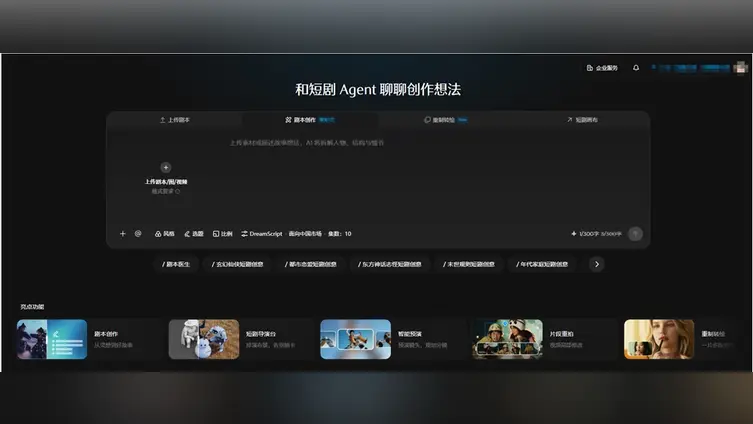
On October 26, the AI video tool Jimeng launched a feature called Short Drama Studio, a single platform that pulls the whole production chain of a micro-drama into one place. Script organization, character and scene management, storyboard generation, video production and post-production adjustments now sit inside one workflow instead of being scattered across separate apps.
For anyone who has watched a Chinese short drama, the appeal is obvious. These are vertically shot serials, usually a few minutes per episode and dozens of episodes long, built on cliffhangers and rapid plot turns. They are cheap, fast and made for phone screens. The new studio is aimed squarely at the people who churn them out, and its pitch is speed: fewer tools, fewer handoffs, less time lost moving files between platforms.
The launch came with a detail that says a lot about how these tools are assembled. Parts of the studio draw on the same capabilities as Xiaoyunque’s short-drama agent, according to reports, a sign that Jimeng is combining in-house work with technology already proven inside ByteDance’s orbit. The goal is a more complete content-creation platform rather than a single-purpose generator.
The timing is not accidental. AI video generation has moved from novelty clips to production lines. Short dramas are one of the few formats where the economics already work: a small team can test many story ideas quickly, and platforms are hungry for volume. A tool that manages characters and scenes across episodes addresses a real pain point, because consistency is where AI video usually falls apart.
That does not mean the work disappears. People who make AI short dramas describe a grind of prompts, retries and editing, with traffic rather than craft as the measure of success. A studio that bundles the steps can cut the busywork, but it also pushes the format further toward assembly-line output.
Jimeng is not alone in chasing this market. Chinese short-drama apps have been adding AI features of their own, and major platforms have been turning written fiction into drama pipelines. The competition is less about who has the best model than about who owns the workflow from idea to finished episode.
What to watch is whether the studio actually shortens the distance from script to screen. If a small team can produce a consistent multi-episode series without leaving one platform, the tool will have earned its name. If creators still stitch together outside software to fix faces and continuity, the one-stop promise will remain a label rather than a change in how the work gets done.