China's AI Film Boom Reshapes the Life of Actors
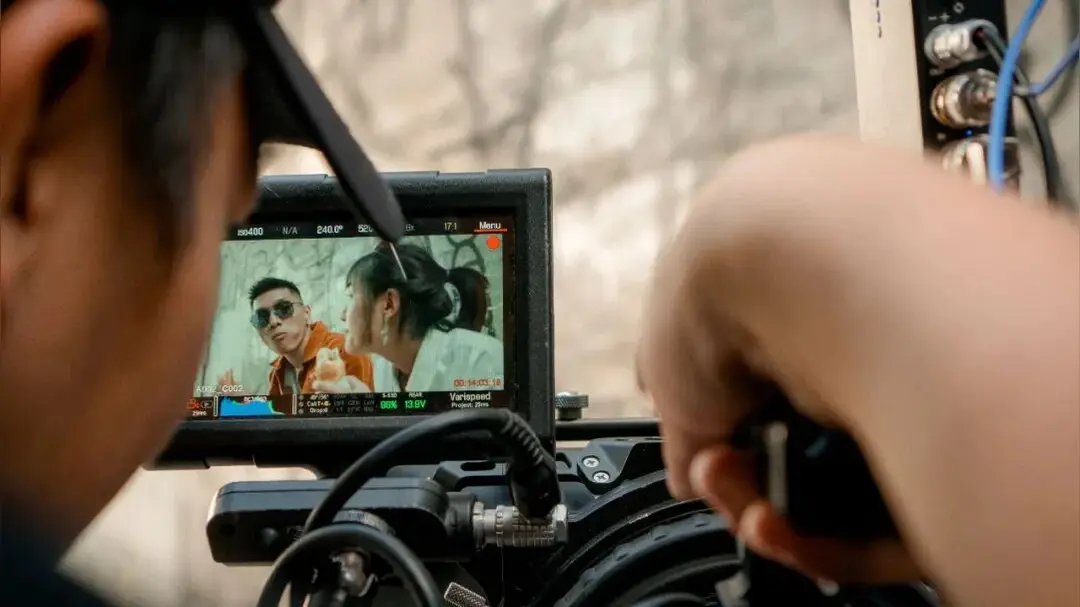
China’s screen industry is going through a quiet upheaval, and the people feeling it most are the actors themselves. According to a report from 36Kr and TMTPost, new drama starts this year have fallen to roughly 30% of last year’s level, while more than 90% of new short dramas are now made with AI. For performers who built careers on being on set, the work has thinned out fast.
The visible sign is a wave of familiar faces disappearing from view. Some top-tier stars are heading abroad to study: Zhang Yixing, known internationally as Lay Zhang, has gone to the United States to pursue a film degree, while actresses Jin Chen and Meng Jia are in Los Angeles to study language together. In the past, such long absences would have been risky for a celebrity, because staying out of the public eye too long could mean being forgotten. Now the calculation has changed.
Not everyone can afford a flight overseas. The report describes a spread of fallback plans. Some actors take work as non-player characters at tourist attractions, dressing up and performing for visitors. Others go home to run small businesses, or take jobs behind the camera at production companies to earn a steady wage. The common thread is that acting alone no longer pays the bills for many people in the trade.
The cause is not a single technology but a change in how content gets made. Short dramas, the fast-turnaround, vertically shot series that have become a major Chinese entertainment format, have proved unusually suited to AI production. Generative tools can produce scenes, voices and even performers at a fraction of the cost and time of a live shoot. As those tools improve, the share of AI-made short dramas has climbed steeply, and the volume of conventional shoots has shrunk in response.
That has knock-on effects across the industry. Fewer shoots mean fewer jobs for supporting actors, crew members and the small studios that serve them. It also changes what audiences see: more content, made faster and cheaper, but with fewer human faces and less of the improvisation that live performance brings. For young actors trying to build a career, the traditional ladder of small roles leading to bigger ones is being pulled away.
The broader question is whether this is a temporary squeeze or a permanent reset. Chinese short-drama platforms have been experimenting aggressively with AI because it lets them test stories quickly and cheaply, and the cost advantage is hard to ignore. If the trend continues, the industry may split into a small number of prestige live-action productions and a much larger volume of AI-generated content, with far fewer opportunities in between.
For now, the actors are adapting individually rather than collectively. Studying abroad, taking service jobs, starting small businesses and moving into production are all attempts to stay connected to an industry that no longer needs as many of them on camera. The next year will show whether those moves are stopgaps or the shape of a new normal.