BYD Built a European Brand in Five Years. Now It Has to Keep It
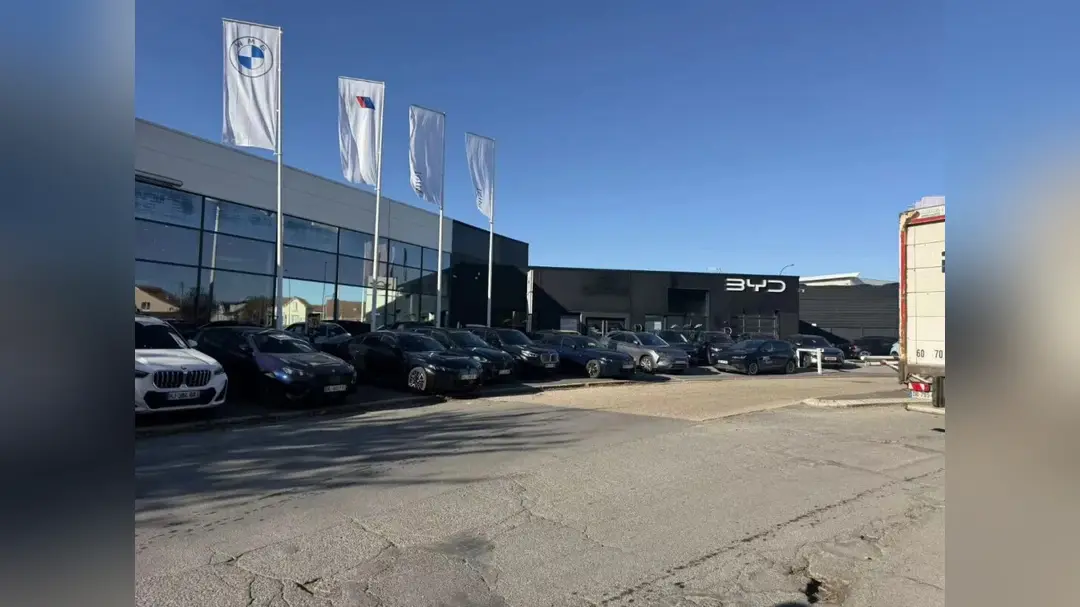
On a weekday afternoon in mid-July, three salespeople at a BYD showroom in central Munich were all busy. One walked a young couple through the display car’s trim levels, another arranged a test drive for an older customer. The tall arched windows frame a BYD sign facing the street, and the roughly 900-square-metre space sits in a century-old building in Lenbachplatz, a short walk from BMW’s headquarters.
The store is run by Harmony Auto, a Chinese dealership group, not by BYD directly. That detail matters. BYD has gone from almost nothing in Europe’s passenger-car market to a familiar name in about five years, a pace that once took rivals measured in decades. Getting there has meant buying visibility rather than waiting for it: prime retail space, local sales staff, and cars placed where German buyers already shop for premium vehicles.
That speed is the story of the past five years. The next five look different. Selling imported cars into Europe is one business; building them there is another, with different costs, different hiring and a different set of expectations from the towns that host the factories.
A month before that Munich afternoon, Leapmotor showed how the second model works. On 16 October 2026 the first Leapmotor B10 rolled off the assembly line at the Figueruelas plant near Zaragoza, Spain. The factory had spent the previous weeks in final commissioning. Leapmotor founder Zhu Jiangming stepped out of the car himself. The Stellantis-owned site, 43 years old, expects the new line to add 450 to 600 jobs and open a night shift; local media have taken to calling the effect by Leapmotor’s name.
The same week brought a less comfortable number. China’s passenger-car association reported domestic sales down 22% in the first three quarters of the year, a reminder that the home market that funded the European push is no longer growing the way it did. For Chinese brands, Europe has shifted from an optional export market to a necessary one.
That helps explain the pattern now emerging. BYD’s Munich store is a retail beachhead; Leapmotor’s Spanish line is a production one. Both are attempts to answer the same question: whether a Chinese car company can become an ordinary local presence rather than a novelty import, with the service network, resale values and brand trust that implies.
The early evidence is mixed but real. Chinese brands now appear in European showrooms, at European auto shows and, increasingly, on European assembly lines. What they have not yet proven is staying power once the first wave of curious buyers has come and gone.
Watch the Spanish night shift. If Figueruelas is still running extra hours a year from now, and if BYD’s Munich staff are still busy in the middle of a working week, the five-year sprint will have turned into something slower and harder to dislodge.