Volvo's XC70 Sells Under 200,000 Yuan as Dealers Lose Money
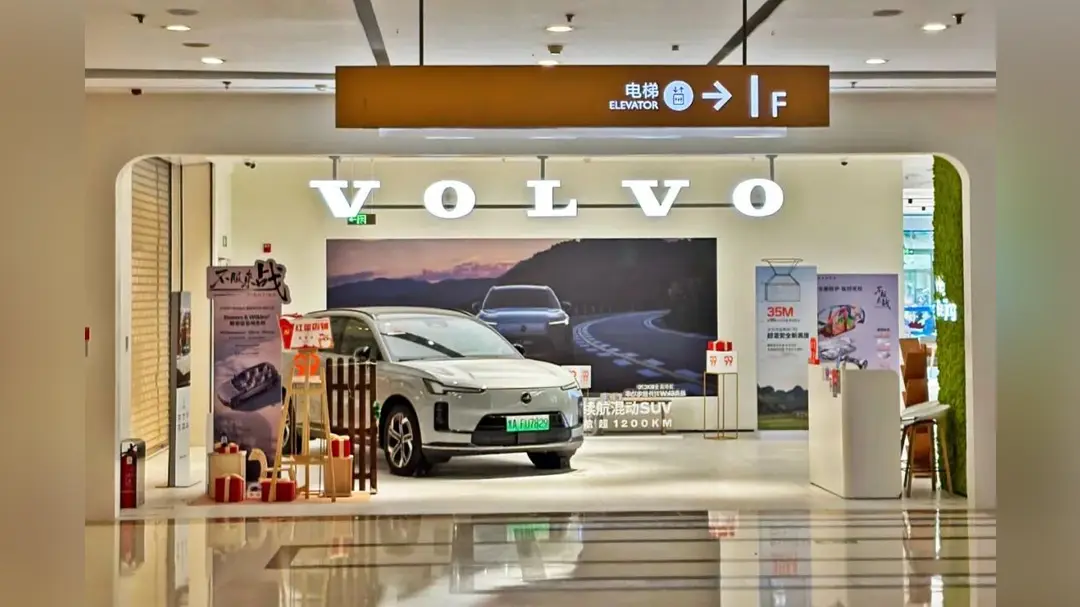
Volvo’s terminal prices in China are sliding fast. During visits to several Beijing dealerships in late October, sales staff quoted on-the-road prices for the two-wheel-drive plug-in hybrid XC70 below 200,000 yuan, according to a report published on November 5. That is a sharp drop for a model whose official guide price sits close to the petrol XC60, a car that has long anchored Volvo’s volume in the world’s largest auto market.
The XC70 is not a stripped-out loss leader on paper. It comes with comfort features including a heated steering wheel, and its sticker price is broadly in line with the XC60. But the actual transaction price now sits well under the XC60’s, opening a gap that dealers say they cannot close with marketing. One salesperson put the pain plainly: selling a single car loses more than 20,000 yuan. The discount is being funded at the retail end, not by a formal price cut from the factory.
The squeeze follows an earlier round of discounting on the S90 sedan, whose on-the-road price had already fallen to around 230,000 yuan. Volvo is not alone in cutting. China’s passenger car market has spent much of the past two years in a price war, and premium brands that once relied on badge value have been forced to compete on monthly payments and trade-in offers. What makes Volvo’s position awkward is that the discounts are landing on plug-in hybrids, the segment meant to bridge its petrol past and electric future.
Dealers are caught in the middle. They carry inventory financed at their own cost, and every month a car sits unsold erodes margin further. When a plug-in SUV undercuts the petrol model it is supposed to sit alongside, showroom staff have to explain to buyers why the newer, more expensive-to-build car is cheaper. That conversation tends to end with the customer asking for an even bigger discount on the petrol car.
The bigger question is what happens when Volvo’s China-specific models arrive. The company has said it will build vehicles tailored to Chinese buyers, with a target around 2027 for the first of them. Those cars will need a reason to command a premium, whether through software, range or service. If the brand’s current lineup is already trading below cost, launching a new generation at a healthy price becomes harder, not easier.
For global readers, the XC70 case is a compact lesson in how China’s car market now works. A European brand with a long safety-and-design reputation can still find itself in a discount spiral when local rivals offer more equipment, more electric range and faster software updates at lower prices. Volvo’s parent, Zhejiang Geely Holding, has deep China roots, but that has not shielded the brand from the same forces pressing on every legacy automaker here.
The signal to watch is whether the discounts spread from the XC70 to the wider plug-in range, and whether dealers keep absorbing losses or start refusing allocations. A brand can survive a quarter of red ink at the showroom. It cannot survive a dealer network that decides the cars are no longer worth pushing.